Can Motorized Shades Save Energy in a Los Angeles Home?
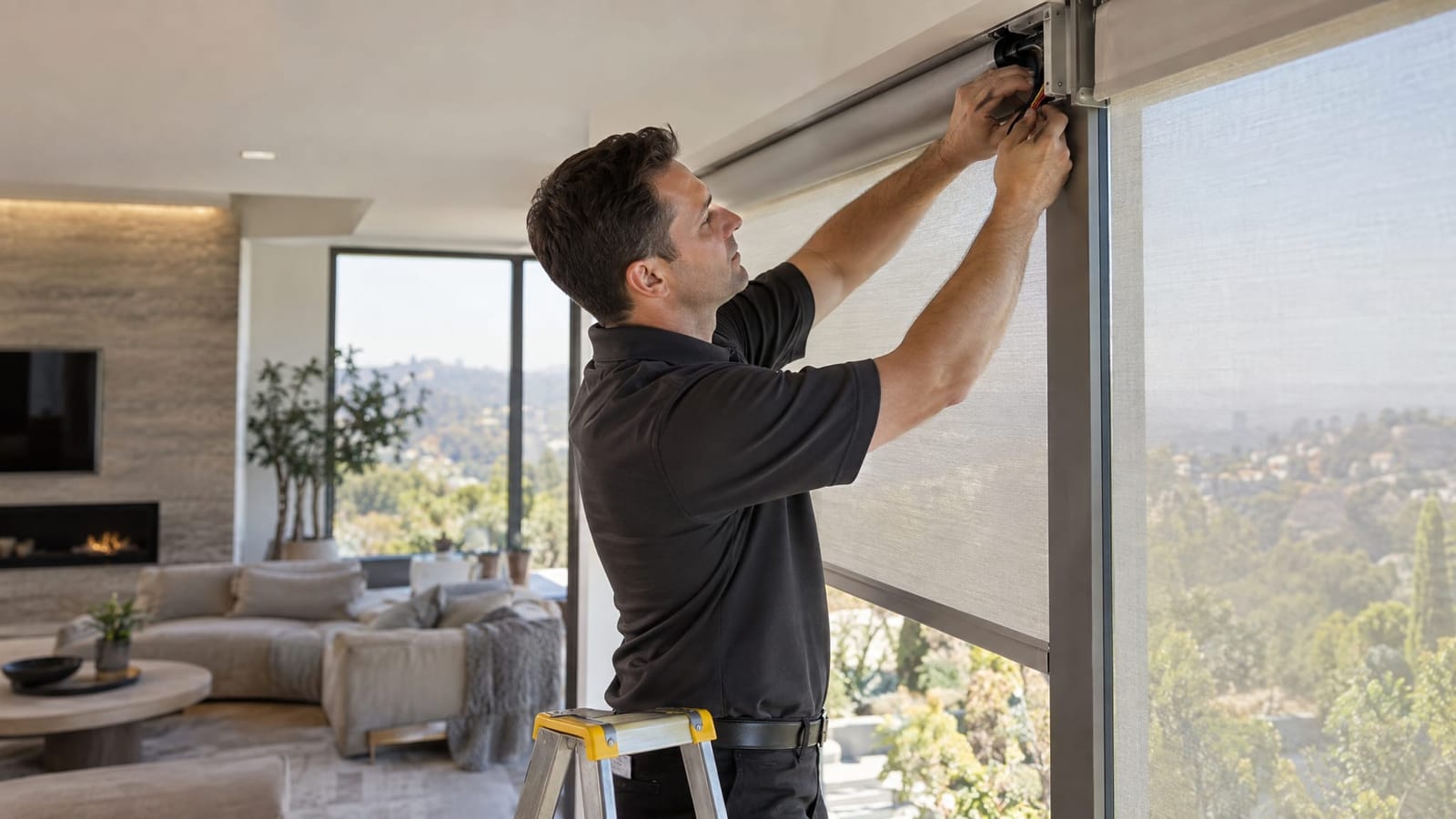
Yes. Motorized shades can reduce cooling demand by limiting unwanted solar heat entering through windows. The benefit comes from the shade’s material, fit, and timing, not from the motor itself. Automation makes it easier to cover sun-exposed glass before a room becomes uncomfortable, including when nobody is home.
For a Van Nuys residence with expansive glazing, the strongest approach is selective rather than simply keeping every shade closed. Window orientation, glass performance, seasonal sunlight, and the way each room is used all influence the opportunity to save energy while preserving daylight and views.
How Shades Reduce the Heat Your Air Conditioning Handles
Sunlight passing through glass warms floors, furnishings, and other interior surfaces. Those surfaces then release heat into the room. Covering the window before strong direct sunlight arrives can reduce that heat gain and the cooling needed to maintain a comfortable temperature.
Interior shades help by reflecting, absorbing, or limiting transmitted sunlight, depending on their construction. They do not eliminate solar gain: some absorbed energy still becomes heat indoors. Exterior shading intercepts sunlight before it reaches the glass, so an overhang or shaded courtyard also changes how much additional benefit an interior shade can provide.
This makes exposure important. A large, unshaded west-facing window presents a different cooling challenge from glass beneath a deep terrace roof. Treating both identically can sacrifice daylight without delivering the same benefit.
What Solar Heat Gain Coefficient Tells You
Solar heat gain coefficient, or SHGC, describes the fraction of solar energy that passes through a window assembly as heat. It includes energy transmitted directly and energy absorbed by the window and subsequently released indoors. Lower values indicate less solar heat gain.
For example, when comparing otherwise similar windows, an SHGC of 0.25 represents less admitted solar heat than an SHGC of 0.50 under rating conditions. These are window-performance figures, not percentages of cooling-cost savings from motorized shades.
Three distinctions make product comparisons more useful:
- Window SHGC describes the glazing assembly. A shade’s effect depends partly on the window behind it.
- Fabric openness describes gaps in the weave. It influences visibility and light transmission, but it is not an SHGC rating or an energy-savings percentage.
- Insulation is a separate property. Resistance to heat transfer matters alongside solar control, particularly when indoor and outdoor temperatures differ.
When comparing shade performance information, look for the glazing, mounting arrangement, and test conditions associated with the figures. Results for one window-and-shade combination do not automatically describe another.
Choose the Shade Around the Window’s Job
A living room overlooking a garden and a bedroom requiring darkness need different solutions. Energy performance belongs in that decision, alongside appearance and daily use.
- Solar-screen roller shades: Useful where filtering direct sun while retaining some outward visibility is a priority. Fabric openness, reflectance, and color affect the balance between view, glare, and heat control.
- Insulating cellular shades: Their air pockets help resist heat transfer. They offer a different balance of insulation, light filtering, and outward visibility than an open-weave screen.
- Layered treatments: A solar screen paired with a separate room-darkening treatment allows different settings for daytime use and evening privacy, but requires more space and design coordination.
Fit also matters. Side gaps and the distance between the fabric and glass influence how a treatment performs. Recessed pockets can keep the installation visually discreet, but their dimensions need coordination with the selected shade rather than being determined solely by appearance.
Schedule Shades Before Direct Sun Becomes a Problem
Automation is most useful when it responds to each elevation rather than lowering every shade at the same hour.
- East-facing rooms: Morning sunlight may justify an earlier closing schedule, especially where direct sun reaches seating or work surfaces.
- West-facing rooms: Lowering shades before afternoon exposure can limit heat accumulation ahead of evening use.
- South-facing rooms: Seasonal sun angles and roof overhangs deserve particular attention. A schedule that works in summer may be unnecessarily restrictive during cooler weather.
Consider a living room with west-facing glass and a shaded north-facing window. Closing the west-facing shades before direct sun reaches the floor, while leaving the shaded window open to daylight, preserves a more comfortable balance than darkening the entire room.
Schedules based on sun position can follow seasonal changes more closely than fixed clock times. Where supported, sunlight sensors can refine that behavior on cloudy days. A straightforward manual override preserves control when the room is being used differently.
Coordinate Shades With Climate and Lighting Controls
Shade automation and climate control perform different jobs. Shades manage part of the incoming heat; the cooling system manages the room’s temperature. Coordinating them means reducing avoidable solar gain before asking the air conditioning to compensate.
Closing shades does not automatically justify changing the thermostat setting. Comfort preferences, occupancy, and outdoor conditions still matter. Likewise, lowering every shade can increase electric-light use, so a balanced routine preserves useful daylight wherever direct sun is not creating a problem.
At Smart Homes Innovations, we integrate motorized shades with lighting control and tailor the system to how you use your home. A shared daytime scene can coordinate shade positions and lighting levels instead of treating each as an isolated adjustment.
Evaluate Savings Without Confusing Them With Comfort
Less glare or a cooler-feeling seat beside a window is valuable, but neither measures whole-home energy savings. Cooling use also changes with weather, thermostat settings, occupancy, and other household activity.
A useful comparison records shade schedules alongside thermostat runtime or available energy-use information across periods with similar weather and household routines. Keep thermostat settings consistent during the comparison. Whole-home electricity totals need context because they include uses beyond cooling.
This approach also reveals unnecessary closures. If a shaded room gains little from a particular schedule, leaving its shades open may better support daylight and views.
Frequently Asked Questions
Do motorized shades save more energy than manual shades?
The same shade in the same position has the same thermal effect whether moved manually or by a motor. Automation’s advantage is consistent timing, especially for tall windows, multiple rooms, or periods when the home is unoccupied.
Are blackout shades always the most energy-efficient option?
No. Blackout describes light blocking, not overall thermal performance. Fabric construction, reflectance, fit, and the window assembly all matter. A darker room does not automatically mean a better-insulated one.
Can shades help during cooler months?
Yes. Insulating treatments can reduce heat transfer when closed, while opening shades during useful sunshine can admit warmth. Cooler-season routines therefore need a different balance from summer solar-control schedules.
The Bottom Line
Motorized shades can support lower cooling demand when the right treatment covers the right glass at the right time. The most thoughtful design limits unwanted heat without making daylight, views, or everyday control feel like a compromise.