Can You Add Healthy Smart Home Features Without a Full Renovation?
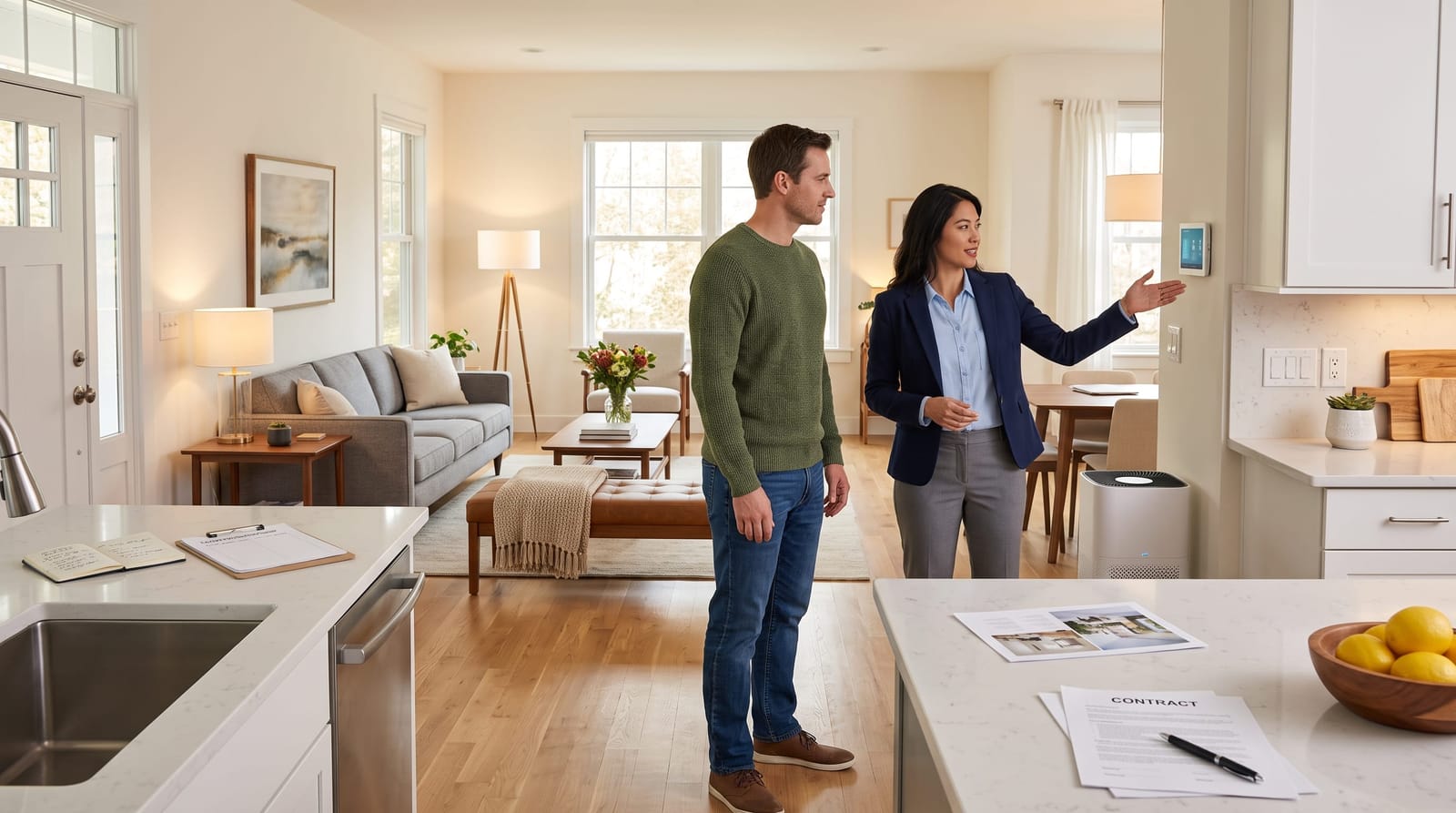
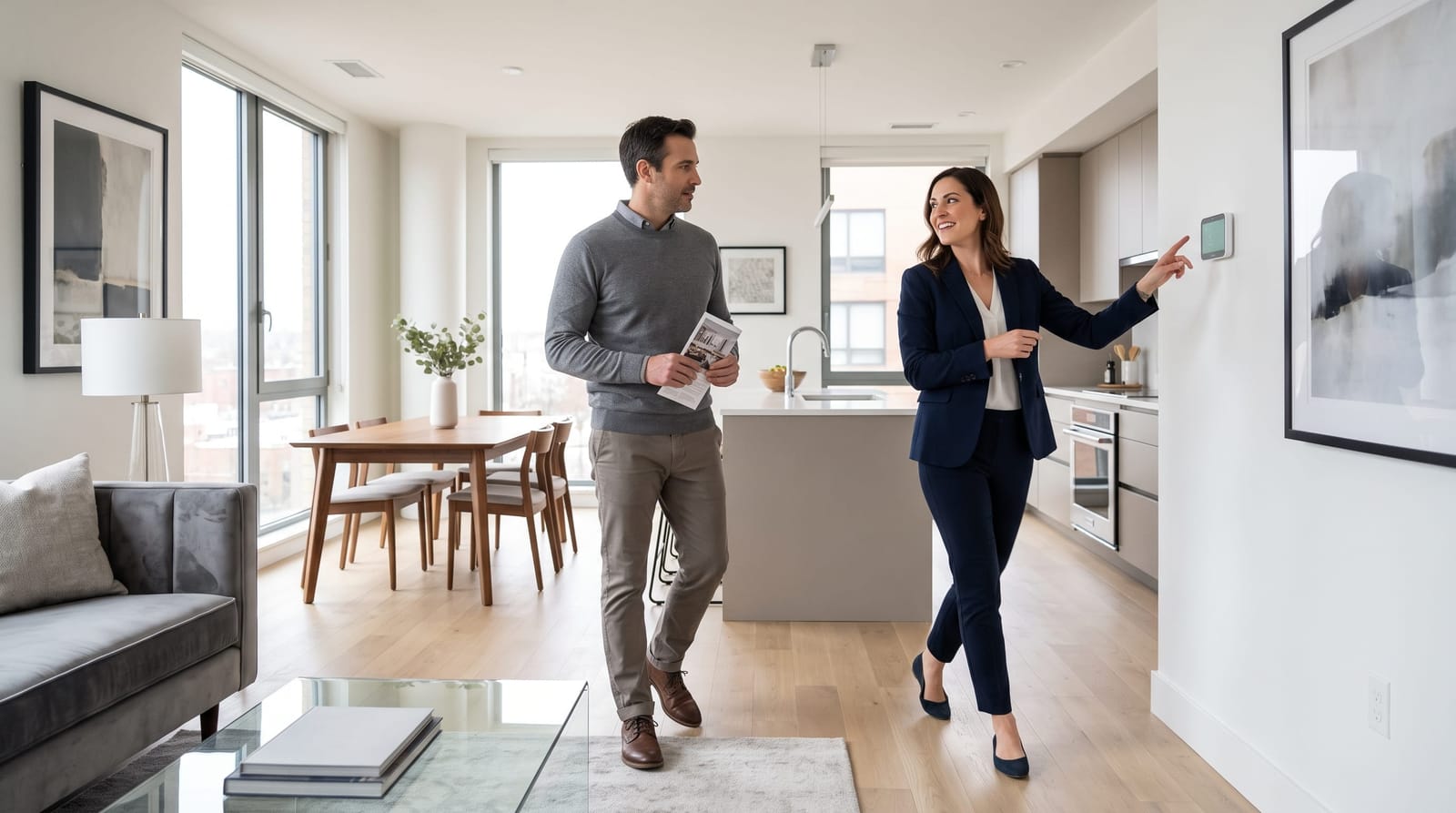
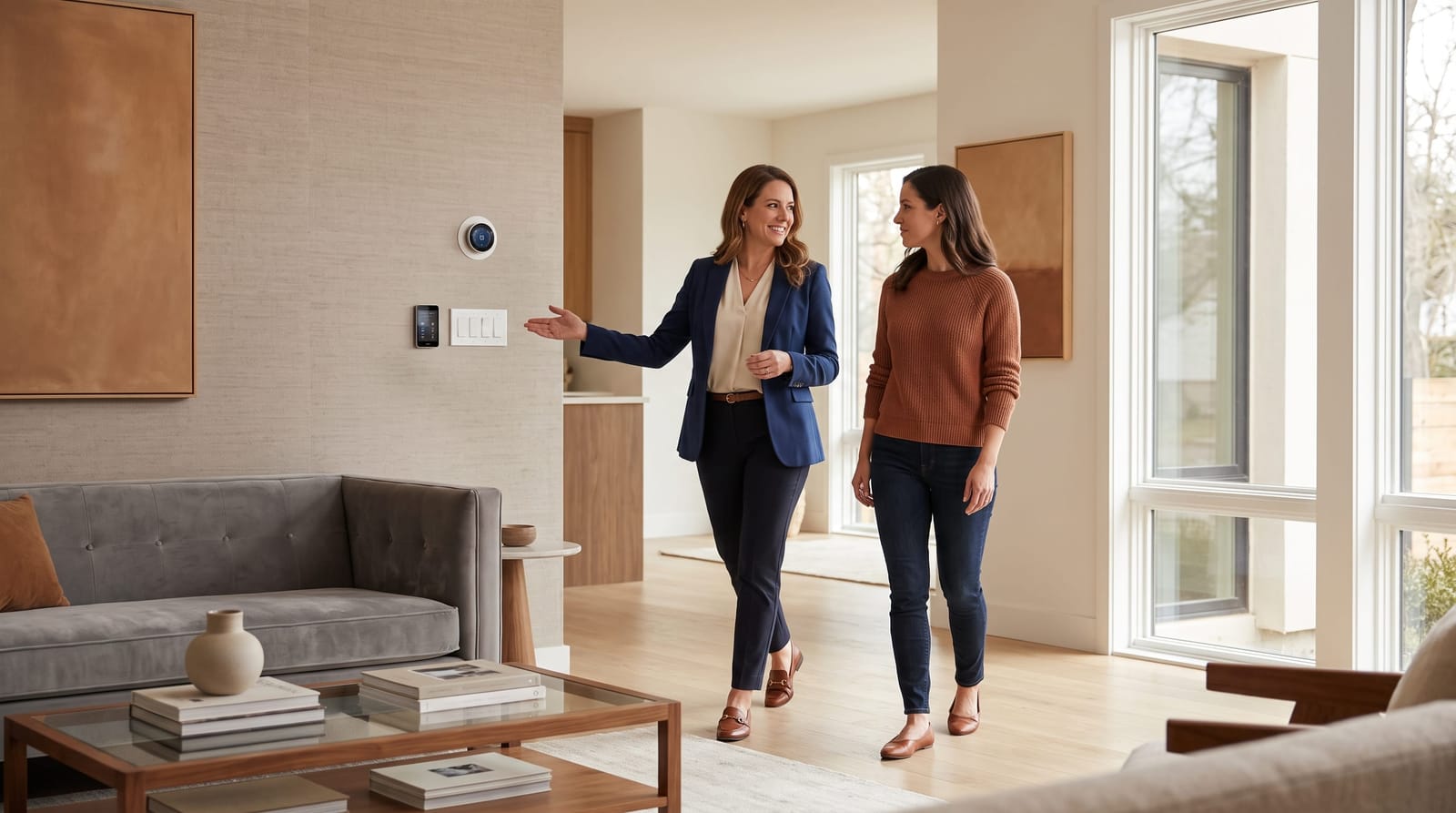
Yes. Many features associated with a healthy smart home can be added without a full renovation. Wireless lighting controls, air monitors, battery-powered shades, connected audio and compatible thermostat upgrades can work within a finished interior.
The distinction is between avoiding major construction and avoiding all installation work. Some options simply plug in. Others involve replacing switches, mounting brackets or adapting existing wiring. The right approach starts with the experience you want, then identifies what your home can accommodate without compromising its finishes.
Option 1: Air Monitoring and Targeted Filtration
Best for: Understanding indoor conditions before choosing equipment.
A tabletop or wall-mounted air monitor is a low-disruption starting point. Choose it by what it measures, such as particles, carbon dioxide or humidity, rather than assuming every device provides a complete picture of indoor air quality.
Monitoring and treatment serve different purposes. A monitor reports conditions; a suitable air cleaner filters certain airborne pollutants. Particle filtration does not remove carbon dioxide, and running an HVAC fan does not necessarily introduce outdoor air.
For a bedroom or study, compare filtration suitability, operating sound, placement and filter access. If automated responses are a priority, the monitor, control platform and connected equipment need compatible interfaces. A sensor alone cannot add ventilation capability to an existing system.
These features manage the indoor environment, not medical conditions. A licensed healthcare professional can assess concerns specific to your health.
Option 2: Lighting That Changes With Your Routine
Best for: Improving everyday lighting control while retaining existing interiors.
Lighting offers several retrofit paths, each with a different design tradeoff:
- Smart bulbs: Useful for selected lamps and compatible fixtures. They need power available to receive commands, so switching them off at the wall interrupts connected control.
- Replacement dimmers: Preserve familiar wall controls and operate compatible existing lighting. Fixture type, wiring and electrical load determine suitability.
- Wireless scene controls: Add convenient control locations without running a new control cable to each keypad. They still need a compatible lighting system.
Brightness control and color adjustment are separate capabilities. An ordinary dimmer cannot make a fixed-color fixture shift from cooler to warmer light. That requires compatible tunable light sources and controls.
For lighting that complements sleep routines, consider a softer evening scene alongside brighter task lighting where needed. Evaluate the light on artwork, stone and fabrics before extending the selection throughout the home.
Option 3: Motorized Shades Without New Power Wiring
Best for: Managing daylight, glare and privacy while keeping window treatments coordinated.
Battery-powered motorized shades can avoid new electrical wiring at suitable windows. Installation still involves measuring, mounting and planning access for charging or battery replacement. That last detail matters especially at tall glazing or windows above staircases.
Fabric selection is as important as automation. An open-weave solar fabric can retain an outward view while filtering daylight, but it is not equivalent to a privacy or blackout treatment. Blackout fabric also does not eliminate light gaps around an installation.
A useful starting scene might lower shades across west-facing glazing in the afternoon while adjusting interior lighting. Keep a convenient manual override so the schedule accommodates changing activities rather than dictating them.
Option 4: Connected Audio Without Opening Ceilings
Best for: Bringing music into daily routines without installing new concealed speakers.
Freestanding wireless speakers offer a straightforward retrofit path, although most still need nearby power. Placement affects both sound and appearance, so outlet locations, furniture and visible cables belong in the design discussion.
Where in-ceiling speakers already exist, a compatible connected amplifier may allow their reuse. Speaker condition, wiring and amplifier requirements determine the fit. New concealed speakers generally introduce more installation work than freestanding alternatives.
We offer whole-home audio and AV integration, including Sonos-based systems. Audio can complement morning lighting routines or create different listening environments across rooms. Select music and volume for personal enjoyment rather than expecting therapeutic outcomes.
Option 5: Climate Controls That Respect Existing Equipment
Best for: Making temperature schedules and everyday adjustments easier.
A compatible thermostat replacement can add connected control without replacing the heating and cooling system. Suitability depends on the equipment, control wiring and available power, not simply whether a new thermostat fits the wall.
Remote temperature sensors can give a compatible system readings from rooms beyond the thermostat's location. They do not create independently controlled zones. If one bedroom runs warmer than another, additional sensing may clarify the issue without resolving an underlying airflow or equipment limitation.
Likewise, automated humidity management or fresh-air operation requires equipment capable of performing those functions. Controls coordinate existing capabilities; they do not substitute for them.
Choose a Cohesive System, Not Five Separate Apps
Before selecting devices, define a small set of useful routines. An evening scene might lower selected shades, soften living-room lighting and start music, while leaving kitchen task lighting independently adjustable.
Then evaluate three practical requirements:
- Compatibility: Check the exact models and supported functions. A shared connectivity label does not establish that every desired scene will work.
- Connectivity: Assess coverage where devices will operate. Mesh networking can extend coverage, but placement and the home's construction affect performance.
- Everyday control: Plan accessible wall controls and understand which functions remain available during an internet interruption.
At Smart Homes Innovations, we tailor integrated systems to individual routines and architectural priorities, serving Bel Air, Beverly Hills, Brentwood, Malibu and other Los Angeles communities. For a finished home, the meaningful comparison is between installation disruption, visible hardware and the level of coordinated control you want.
Planning Installation and Future Expansion
What determines the installation timeline?
Room count, wiring conditions, shade fabrication, network work and programming all affect the schedule. Distinguish equipment delivery from on-site installation, then allow for testing scenes and adjusting controls. A plug-in addition and a coordinated whole-home retrofit are different scopes.
Can a retrofit become part of a later renovation?
Yes, when future compatibility is part of the selection. Document device models, control requirements and existing wiring. Reusable speakers, compatible controls and a planned network can provide a foundation, but not every component will suit every future system.
A successful retrofit begins with a specific improvement, such as easier evening lighting or better daylight control. Resolve that experience first, preserve the finishes that matter, and expand only where additional integration adds genuine convenience.