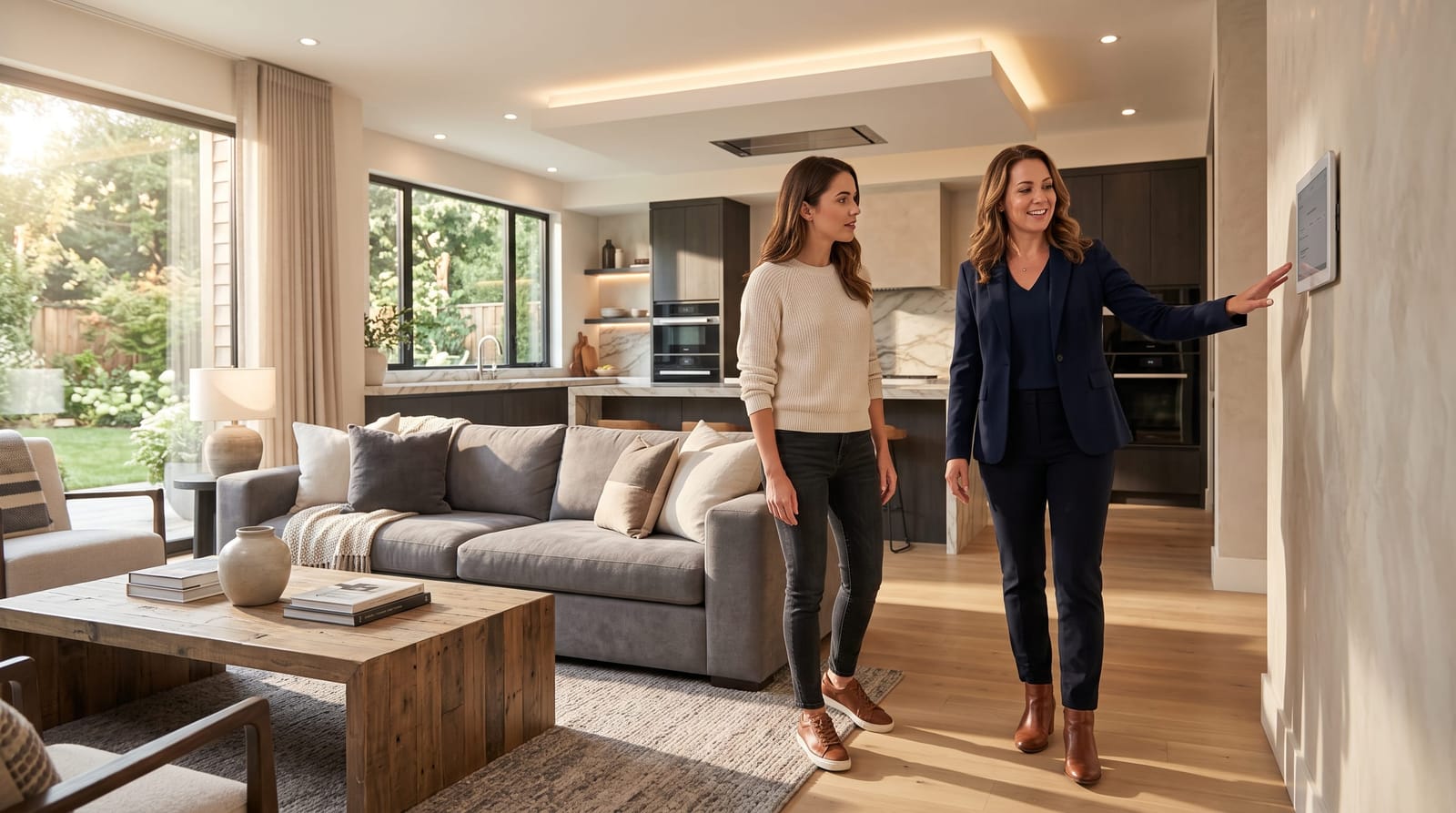
How Does a Smart Home Increase Property Value in Beverly Hills and Bel Air?

When a Beverly Hills home is listed at $4 million or more, buyers arrive with a specific set of expectations, and increasingly, a professionally integrated smart home system is near the top of that list. But does smart home technology actually move the needle on property value, or is it simply a luxury feature that buyers enjoy without paying a premium for? This overview answers that question directly. Drawing on what luxury real estate professionals and high-net-worth buyers in the Beverly Hills and Bel Air markets are observing in 2026, we'll cover which systems generate the most perceived value, how integrated technology compares to fragmented app-based setups, and how to properly document your installed technology when it's time to sell.
Why Smart Home Technology Matters in the $3M+ Beverly Hills Market
The median sale price in Beverly Hills reached approximately $4.42 million in early 2026, according to Redfin data: a market where buyers are not just purchasing square footage, but an entire lifestyle experience. At this price tier, custom features like home theaters, whole-home audio, advanced lighting control, and automated climate systems have shifted from being differentiators to being baseline expectations.
Luxury real estate professionals in Beverly Hills consistently note that affluent buyers, many of them technology executives, entertainment industry principals, and international high-net-worth individuals, arrive at showings already familiar with what premium smart home integration looks like. When a property has it, conversations move forward. When it doesn't, buyers either discount the asking price mentally or move on entirely.
The distinction that matters most in this market is between professionally integrated systems and consumer-grade, app-based setups. A home with a unified control platform, where lighting, HVAC, security, shading, and entertainment all operate through a single interface: signals quality, craftsmanship, and long-term thinking to discerning buyers. A home with a dozen disconnected smart plugs and a voice assistant on the kitchen counter signals the opposite.
For homeowners considering a smart home upgrade, understanding this distinction is the starting point for making decisions that support, rather than undermine, resale value.
Which Smart Home Systems Add the Most Perceived Value to Luxury Properties
Not every smart home feature carries the same weight with luxury buyers. Based on what Beverly Hills and Bel Air real estate professionals report buyers respond to most, several categories consistently stand out.
- Whole-Home Lighting Control: Architectural lighting with scene-based programming, where a single command shifts the entire home from "entertaining" to "evening wind-down", reads immediately as a premium feature. Systems like Lutron Homeworks are widely recognized by luxury buyers as the gold standard.
- Integrated Security and Access Control: High-resolution surveillance, smart lock systems, and video intercoms that operate through a unified platform are considered essential in hillside neighborhoods and gated communities throughout Bel Air and Beverly Hills.
- Motorized Window Treatments and Solar Shading: In a market where privacy and indoor-outdoor living are central to property appeal, automated shading systems, particularly those that respond to sun position or integrate with HVAC for energy management, are a visible, tangible luxury upgrade.
- Whole-Home Audio and Home Theater: Distributed audio and a dedicated theater or media room remain among the most emotionally resonant features for luxury buyers, particularly those in the entertainment industry.
- Climate and Energy Management: Multi-zone HVAC control, integrated with occupancy sensing and remote management, reflects both comfort and responsible ownership: qualities that resonate with buyers who may use the property part-time and want systems that manage themselves.
The unifying factor across all of these is professional installation and platform integration. Buyers in this market can tell the difference between a thoughtfully designed system and one that was assembled piecemeal over time.
How to Document Installed Smart Home Technology for Resale
One of the most overlooked steps in leveraging smart home investment at resale is proper documentation. A beautifully integrated system that a buyer cannot understand, verify, or easily take ownership of loses significant perceived value: regardless of what was spent to install it.
The following documentation practices are worth establishing well before a listing goes live:
- Create a System Overview Document: Work with your integrator to produce a clear, non-technical summary of every system installed: what it does, what platform it runs on, and what devices it controls. This document becomes part of the property disclosure and marketing package.
- Retain Installer Records and Warranties: Keep invoices, warranty documentation, and any manufacturer registration records for every major component. Buyers and their agents will ask for these during due diligence, and having them organized signals credibility.
- Prepare a User Handoff Package: A short video walkthrough of the control interface, recorded by the integrator, can dramatically increase buyer confidence. Being able to show, not just describe, how the system operates removes a significant purchase hesitation.
- Ensure Transferability of Licenses and Accounts: Some platforms require account transfers or new licensing agreements upon change of ownership. Coordinate with your integrator in advance so this process is clean and documented before closing.
Luxury real estate transactions in Beverly Hills typically involve thorough physical and environmental investigations during the due diligence period. Smart home system documentation should be prepared to the same standard as geological reports and sewer scoping records: organized, complete, and professionally presented. Consult with your real estate professional for guidance specific to your listing and transaction.
Professional Integration vs. Consumer-Grade Systems: What Buyers Can See
A common misconception among homeowners is that adding smart home devices, even high-quality ones, automatically translates to value at resale. The reality is more nuanced. Luxury buyers and their representatives have become increasingly sophisticated about distinguishing genuine integration from the appearance of it.
Professionally integrated systems are designed around the home's architecture and the owner's lifestyle. Keypads are flush-mounted and match the design language of the space. Control interfaces are intuitive and require no technical knowledge to operate. Systems communicate with each other through a unified backbone, when the home enters "away mode," lights turn off, shades close, thermostats adjust, and security arms as a single coordinated action.
Consumer-grade setups, by contrast, tend to be visible in their limitations: mismatched hardware on walls, systems that require multiple apps, and automation routines that work inconsistently. During a showing, these details register, even subconsciously, as indicators of the overall quality of the home's finishes and systems.
For homeowners considering an upgrade before listing, this distinction is where the investment decision becomes meaningful. A well-executed professional integration project, even completed in the months before a sale, can reframe how buyers perceive the entire property.
Frequently Asked Questions
Does smart home technology increase the appraised value of a Beverly Hills property?
Smart home technology is generally treated as a value-influencing feature in the luxury market, but formal appraisal treatment can vary depending on the appraiser's methodology and the comparables available. In practice, professionally integrated systems tend to affect buyer perception and offer competitiveness more than they appear as line items in an appraisal. For guidance on how specific improvements may affect your property's appraised value, consult a licensed real estate appraiser with experience in the Beverly Hills and Bel Air markets.
What smart home platform do luxury buyers in Beverly Hills prefer?
Buyers at this price tier are most familiar with, and respond most favorably to, enterprise-grade platforms used by professional integrators, such as Control4, Crestron, and Savant. Lutron Homeworks is widely recognized as the standard for lighting control. Consumer platforms like Google Home or Amazon Alexa, while useful, are not typically associated with luxury integration and may actually signal a lower level of investment to sophisticated buyers.
Is it worth upgrading smart home systems before selling a luxury home?
In the Beverly Hills and Bel Air markets, where buyers at the $3M+ tier expect integrated technology as a baseline, upgrading a fragmented or outdated system before listing can meaningfully affect time-on-market and buyer engagement. The case is strongest when the existing home has architectural bones that match the luxury segment but lacks the technology layer buyers expect. The specific return on any upgrade depends on the property, the market at time of sale, and the quality of the integration: factors best evaluated with your real estate professional.
How do buyers verify that a smart home system is fully functional during due diligence?
During the due diligence period, buyers or their representatives may request a live demonstration of the smart home system, review documentation from the installing integrator, and verify that all components are operational. Having your integrator present for a walkthrough, or providing a recorded demonstration, is one of the most effective ways to build buyer confidence. Ensuring all warranties, service agreements, and account credentials are transferable before closing eliminates a common friction point in luxury transactions.
The Bottom Line for Beverly Hills and Bel Air Homeowners
In a market where the median sale price exceeds $4 million and buyers arrive with sophisticated expectations, a professionally integrated smart home system is no longer a bonus: it's part of the property's value proposition. The systems that matter most are those that are unified, intuitive, and architecturally considered. Equally important is documenting what's installed so that value is visible and transferable at the point of sale. Whether you're preparing to list or making long-term investments in your home, understanding how smart home integration fits into the broader picture of luxury property appeal is essential. For a deeper look at how whole-home automation is planned and executed at this level, explore our complete guide to luxury smart home automation in Los Angeles.