How Lighting Control and Motorized Shades Work Together in a Smart Home
When homeowners explore luxury lighting control systems, they often focus on what happens after dark: the carefully composed scenes, the dimmable fixtures, the warm evening transitions. But some of the most sophisticated lighting design happens in full daylight. Motorized shades and lighting control systems, when integrated thoughtfully, work in continuous dialogue to manage how light enters and fills a space throughout the entire day. This guide explains exactly how that integration works, why it matters, and what it looks like in a well-designed Los Angeles residence.
Step 1: Understand Why Light Has Two Sources in Every Room
Before understanding the integration, it helps to recognize a fundamental truth about interior lighting: every room has two light sources operating simultaneously, natural daylight coming through the glass and artificial light from your fixtures. Most lighting strategies address only one of these at a time. A truly integrated approach manages both together.
In Los Angeles, where sunlight is abundant and often intense, uncontrolled natural light creates real challenges:
- Glare on screens, artwork, and reflective surfaces
- Uneven brightness that makes rooms feel harsh rather than inviting
- UV exposure that fades upholstery, rugs, and wood finishes over time
- Excessive solar heat gain that forces HVAC systems to compensate
- Disruptive light that interferes with circadian rhythm lighting goals by delivering the wrong intensity or color temperature at the wrong time of day
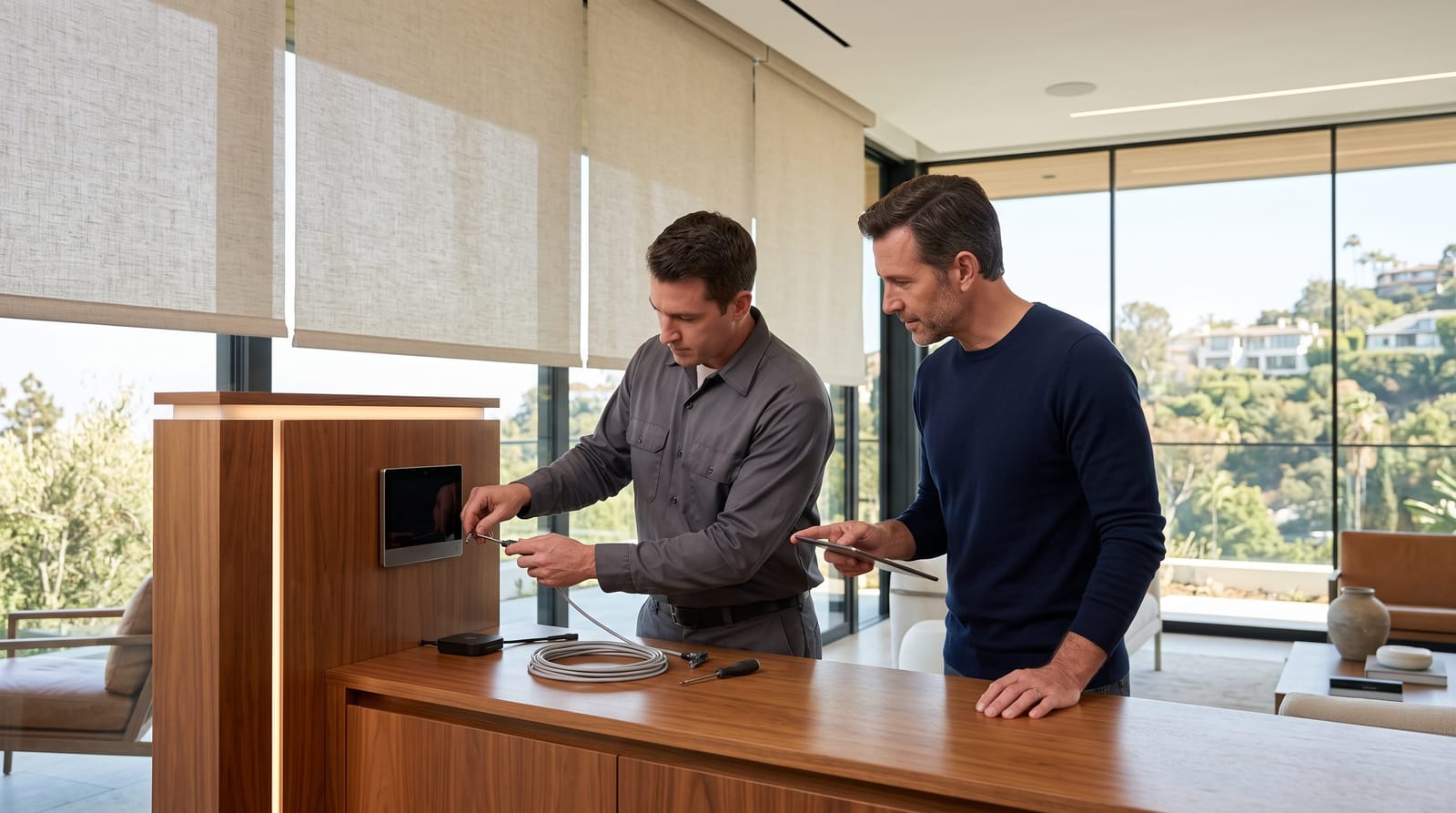
Motorized shades give your lighting control system a way to manage the natural light side of this equation, which is precisely why the two technologies are designed to operate as a single, unified system rather than as separate devices you manage independently.
Step 2: Connect the Systems Through a Unified Control Platform
The integration between lighting control and motorized shades is made possible through a shared control platform: typically a whole-home automation system that communicates with both systems using the same programming logic. When both systems speak the same language, they can respond to the same triggers, follow the same schedules, and serve the same scene.
Here is how a typical integration is structured in a luxury residence:
- A single control platform (such as Lutron, Control4, or Crestron) manages both the lighting fixtures and the motorized shade motors through a unified interface.
- Shade positions and lighting levels are programmed together as part of the same scene, not set separately.
- Time-of-day scheduling allows the system to shift both shade positions and lighting color temperature in concert as the day progresses.
- Sensors and conditions (such as measured daylight, time, or occupancy) can trigger automatic adjustments without any manual input.
- Keypads, touchscreens, and mobile apps give residents a single point of control for both systems simultaneously.
The result is a home environment that adjusts holistically rather than requiring the homeowner to toggle between separate shade and lighting apps: a distinction that matters considerably in high-end residential design.
Step 3: Program Scenes That Use Both Systems in Tandem
The real design power of this integration emerges in scene programming. A scene is a saved state for an entire space, not just which lights are on, but at what level, what color temperature, and with shades at what position. When a scene is activated, every element shifts together in a single, fluid movement.
Consider how this plays out across a typical day in a Los Angeles home:
- Morning scene: Shades rise gradually to welcome early daylight while fixtures deliver a cooler, energizing color temperature: supporting the body's natural wake cycle without flooding the room with harsh light.
- Midday work scene: In a home office or study, shades drop to a filtered position that eliminates screen glare while artificial lighting adjusts to compensate for reduced natural light: maintaining consistent illumination without eyestrain.
- Afternoon reading scene: In a west-facing living room, shades manage the low afternoon sun while fixtures provide even, warm-toned fill light: protecting furniture and art from UV exposure while keeping the room comfortable.
- Evening entertaining scene: As daylight fades, shades close fully for privacy and to eliminate reflections, while the lighting system transitions to warmer, lower-intensity scenes designed for relaxed social settings.
- Sleep preparation scene: A single tap dims all fixtures to a soft amber and lowers shades throughout the home, signaling the body that the day is ending: a deliberate, wellness-informed sequence without making dramatic health claims.
This kind of scene architecture is what separates a thoughtfully designed lighting control motorized shades integration from simply owning two automated products that happen to share a Wi-Fi network.
Step 4: Use Solar Sensors and Scheduling to Automate the Transitions
Manual scene activation is useful, but the most refined integration operates largely without prompting. By incorporating solar sensors, astronomical time clocks, and indoor daylight sensors, the system can monitor actual lighting conditions and adjust shade positions and fixture output in real time.
For example, a south-facing great room in Brentwood might have shades that automatically descend when measured sunlight exceeds a set threshold, protecting a custom rug and preventing glare on the kitchen island, while the lighting system simultaneously adds a small amount of warm fill light to keep the space feeling bright and welcoming rather than dim and closed.
This kind of automation is also central to circadian rhythm lighting goals. Just as architects designing smart lighting home office Beverly Hills environments consider how light intensity affects focus and comfort throughout the workday, whole-home integrations use shade and lighting coordination to deliver the right quality of light at the right time: naturally, without the homeowner managing a single setting.
Step 5: Design the Integration Before Installation Begins
The most important step in achieving a seamless integration is also the earliest one: designing both systems together before either is installed. Retrofitting motorized shades into an existing lighting control system, or vice versa, is possible, but it introduces limitations. The ideal approach is a coordinated design process where shade selection, motor specification, lighting fixture layout, and control programming are all planned as a unified system.
Key considerations during the design phase include:
- Fabric selection: Shade fabrics have different openness factors that affect how much natural light they allow in: a decision that directly informs how the lighting system needs to compensate at various times of day.
- Motor and control compatibility: Not all shade motors communicate with all lighting control platforms. Specifying compatible systems from the outset avoids costly workarounds later.
- Scene logic and priorities: Deciding in advance which scenes take precedence (scheduled automation vs. manual override, for example) makes the system more intuitive to live with.
- Architectural integration: Shade pockets, fascia details, and hardware finishes should be coordinated with the interior design: technology that disappears into the architecture is the hallmark of a luxury installation.
Frequently Asked Questions
Can motorized shades and lighting control be added to an existing home, or is this only for new construction?
Both systems can be installed in existing residences. Wireless shade motors and lighting control components have made retrofit installations significantly more practical than they were even a few years ago. The scope of work depends on the home's existing infrastructure, but integration in occupied residences is a routine part of residential automation projects in Los Angeles.
Do both systems need to be from the same brand to work together?
Not necessarily. Many professional-grade control platforms are designed to communicate with products from multiple manufacturers. That said, specifying systems that are known to work well together, and having them programmed by an experienced integrator, produces a more reliable and refined result than assembling components independently.
What happens to the system if the internet goes down?
Professionally installed control systems typically operate on a local network, meaning core functions like scene activation, scheduling, and shade control continue to work without an active internet connection. Remote access from outside the home requires connectivity, but in-home operation remains unaffected.
How does this integration support circadian lighting goals?
Circadian rhythm lighting involves adjusting the color temperature and intensity of artificial light throughout the day to complement the body's natural rhythms. When shades are integrated, the system can manage both how much natural light enters and how artificial light supplements it: maintaining a more consistent and intentional light environment from morning through evening. This is informational in nature; for any specific wellness concerns, consult a qualified healthcare professional.
Bringing It Together
Lighting control and motorized shades are two of the most visible and livable elements of a sophisticated smart home, and their integration is where the real design intelligence lies. When programmed together, they create environments that respond to time, light, and lifestyle with a fluidity that no single system can achieve alone. For homeowners considering a luxury lighting control system in Los Angeles, this integration deserves to be part of the conversation from the earliest design stage. Schedule a consultation with Smart Home Innovations to explore how a coordinated approach can be designed for your residence.