How Quiet Are Motorized Shades? What to Expect from a Professional Installation
Well-designed motorized shades typically produce a soft hum or whir while moving. They can be unobtrusive during conversation yet remain audible in a still bedroom. Quiet operation is a realistic expectation; complete silence is not.
The result depends on the motor, the shade it moves, and how the assembly connects to the building. A premium motor cannot compensate for fabric rubbing against a recess or a bracket transmitting vibration into cabinetry. At Smart Homes Innovations, based in Van Nuys, we integrate motorized shades with lighting control, tailoring the system to the way each home is used.
What Does Normal Shade Noise Sound Like?
Listen for consistency as much as volume. A restrained, even motor sound is different from rattling, scraping, or repeated clicking. A shade that moves smoothly but remains faintly audible is not necessarily poorly installed. A distinct mechanical interruption deserves closer attention.
The room also changes what you hear:
- Background sound: Conversation, ventilation, and outdoor activity can make the same shade less noticeable than it is late at night.
- Interior finishes: Glass, stone, and other hard surfaces reflect sound, while rugs and upholstered furnishings absorb some of it.
- Listening position: Sound beside the window can feel quite different from sound at the bed or sofa.
For a bedroom, the useful question is not simply whether the motor is quiet. It is whether its sound is unobtrusive from the pillow in an otherwise still room.
Budget vs. Premium Motors: What Actually Matters?
A higher price alone is not an acoustic specification. The meaningful differences are how smoothly the drive mechanism operates, how well it matches the shade’s load, and how effectively the complete assembly limits vibration.
When comparing a budget option with a premium system, examine these details:
- Motor and shade matching: The drive needs to suit the fabric weight, dimensions, and lifting mechanism. An oversized window calls for evaluation of the full-size assembly, not assumptions based on a small sample.
- Mechanical refinement: Motor vibration, gear noise, and movement within the assembly all contribute to what reaches the room. Quiet operation requires attention to the entire mechanism.
- Starting and stopping: Listen for abrupt engagement or a pronounced stop. Where adjustable movement settings are available, evaluate their effect on both sound and travel time.
When evaluating Lutron or another premium system, judge the specific shade configuration rather than the brand name alone. Descriptions such as “near-silent” are less useful than hearing a comparable shade complete its travel.
Construction matters, too. Roller shades and Roman shades move fabric differently. Understanding the types of motorized shades available for luxury homes helps keep comparisons relevant to the treatment being specified.
How Professional Installation Reduces Vibration and Noise
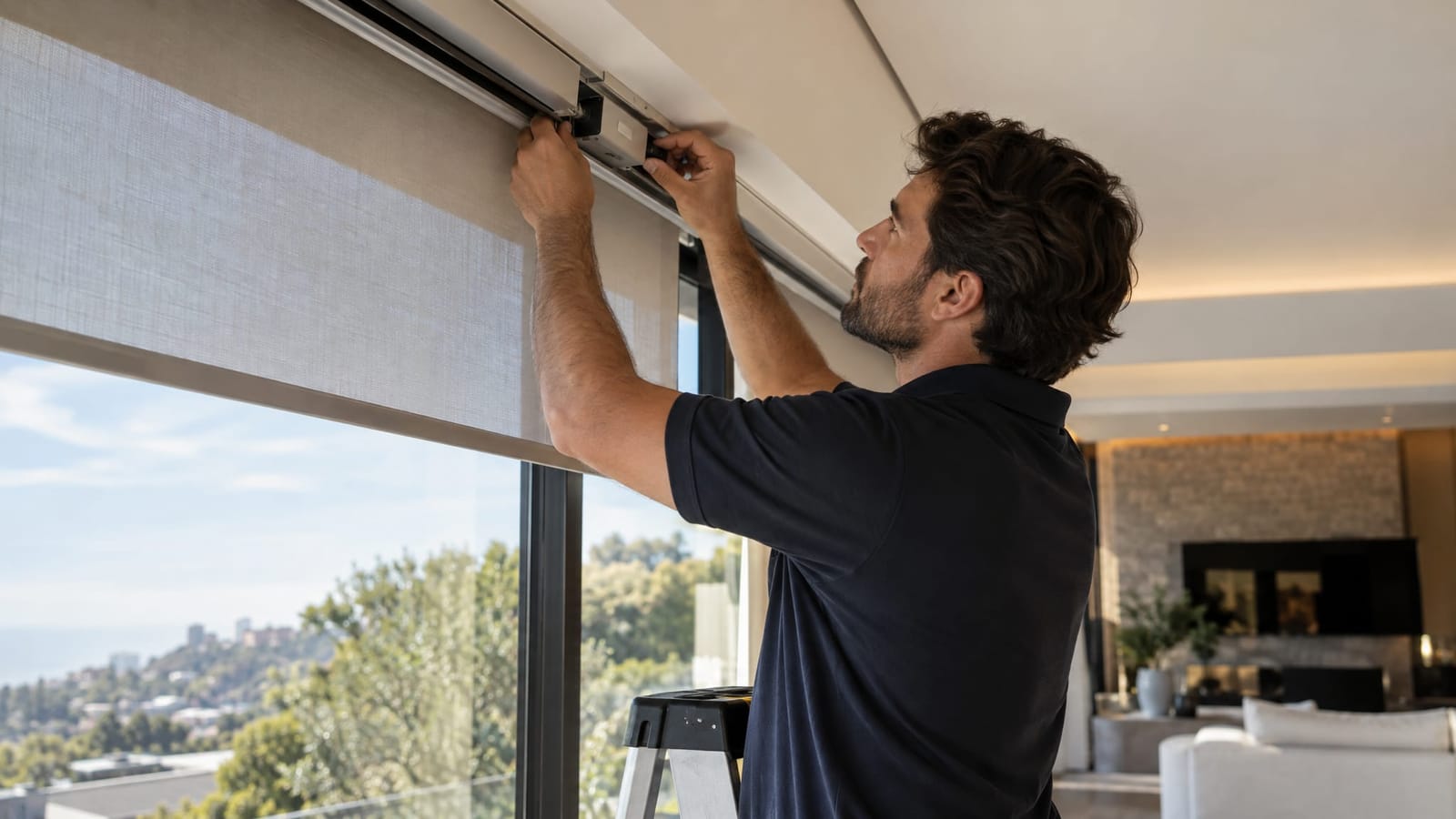
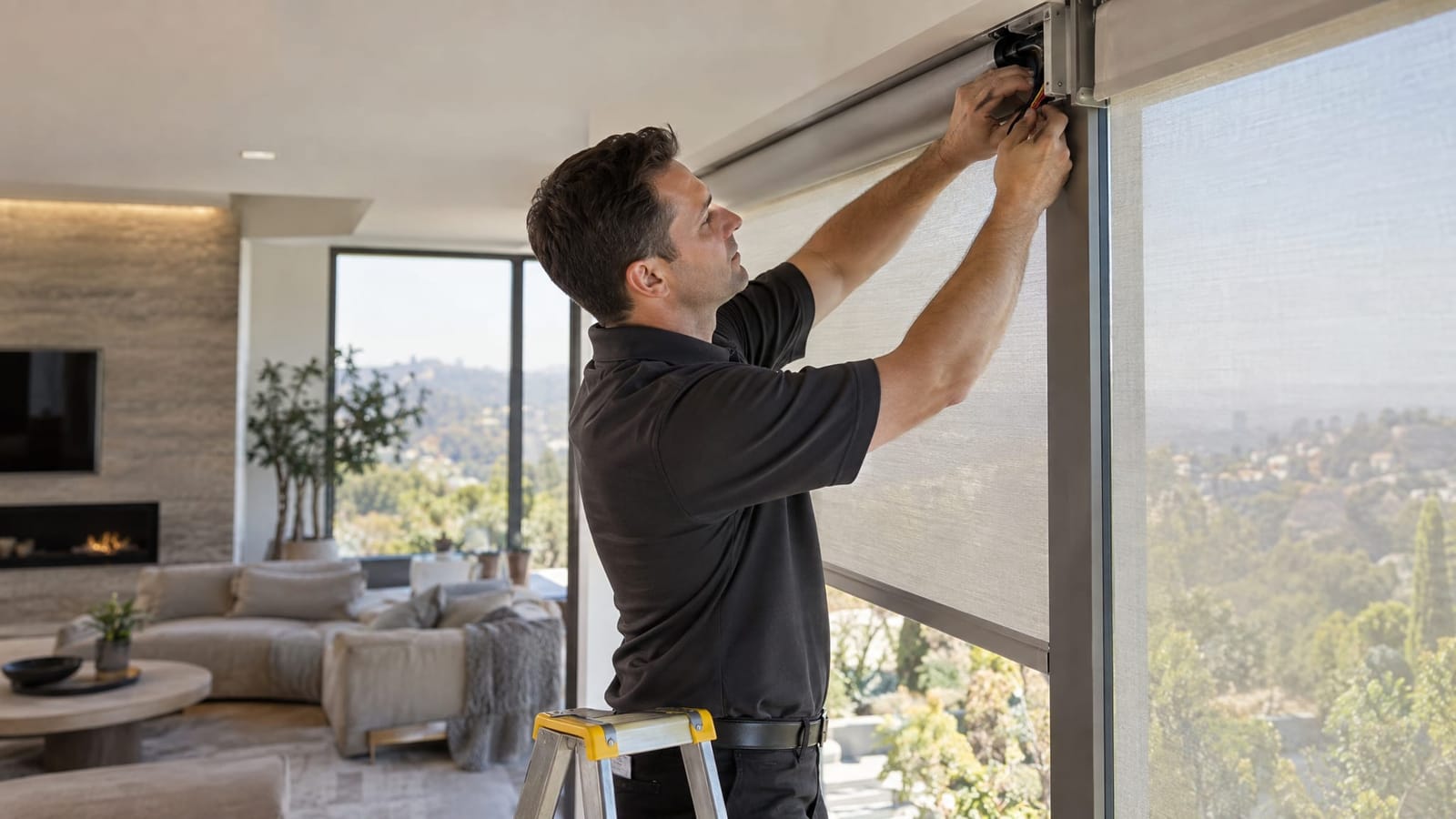
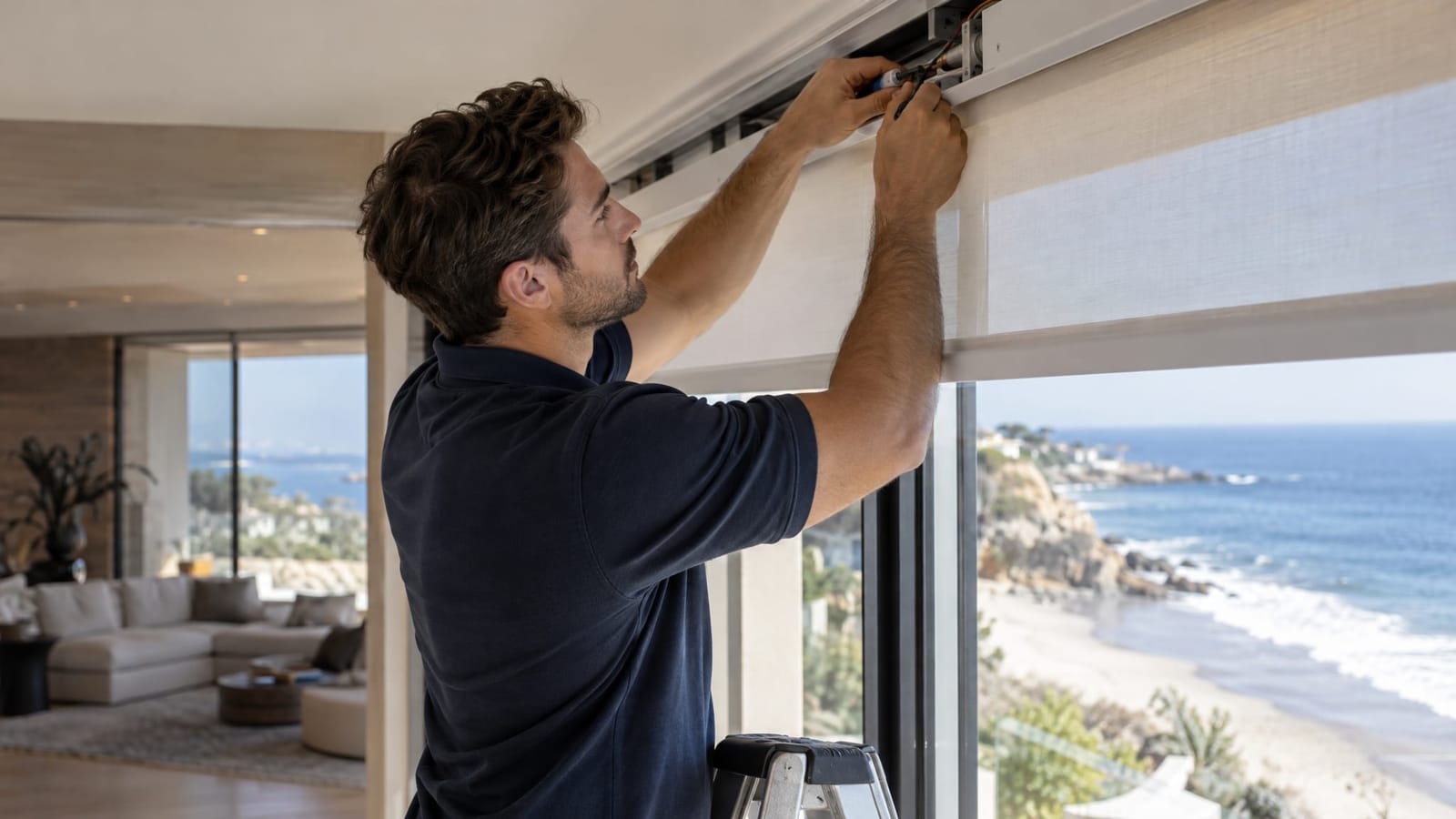
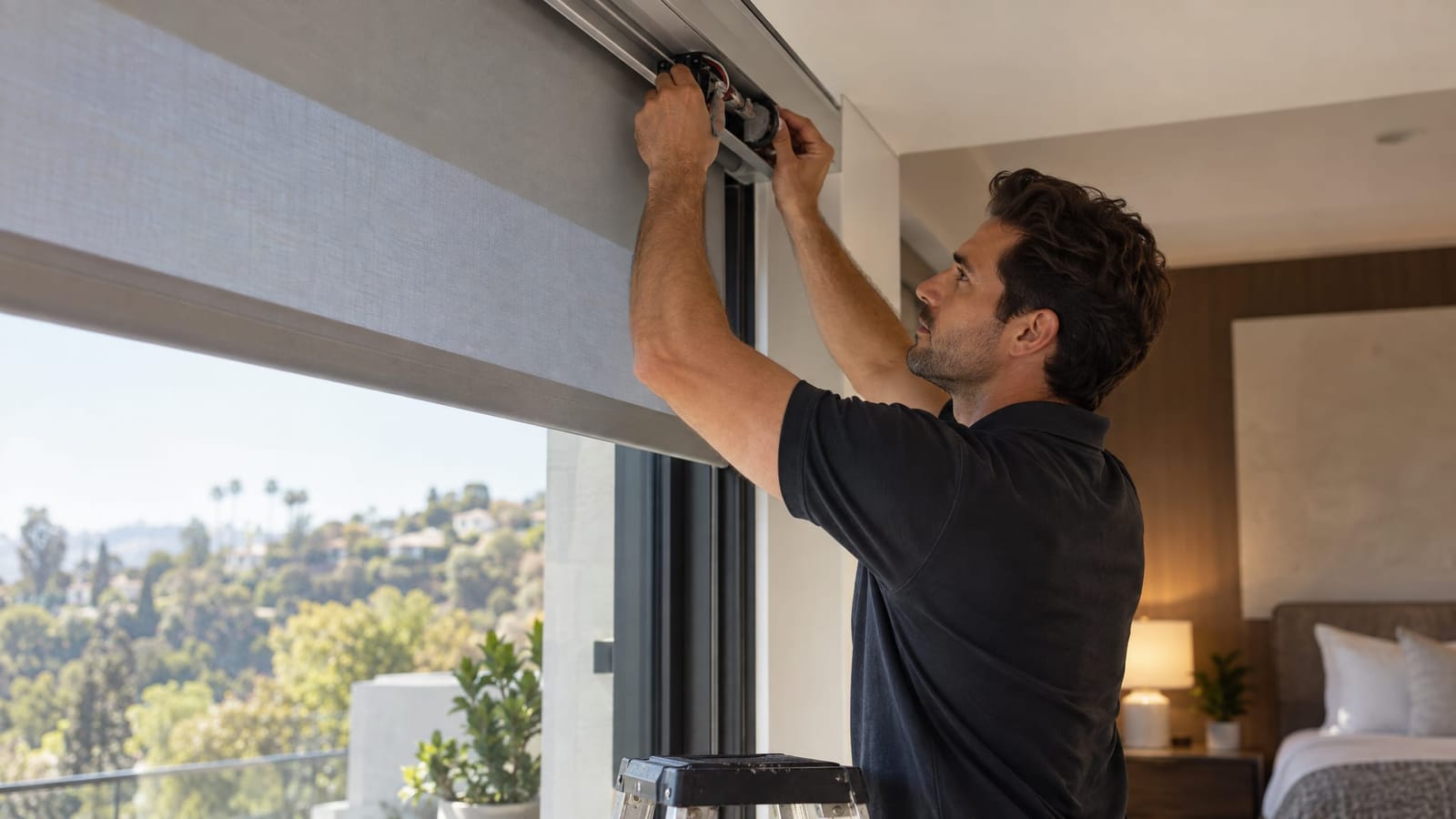
The installation cannot erase a motor’s inherent sound, but it can prevent avoidable rubbing, rattling, and vibration transmission. These details deserve attention before the surrounding finishes are complete.
Stable, correctly aligned mounting
Brackets need suitable support, correct spacing, and alignment appropriate to the shade assembly. Loose fixings can rattle, while misaligned components can interfere with smooth travel. Simply tightening everything harder is not a substitute for correct positioning.
Mounting surfaces matter as well. A hollow enclosure or lightly supported decorative panel can resonate with motor vibration. Where vibration isolation is appropriate, it needs to follow the system’s mounting requirements rather than rely on improvised padding.
Clearance throughout the shade’s travel
A recessed shade may look beautifully concealed while still brushing the pocket lining, window trim, or adjacent treatment. Clearances need to account for the moving fabric, bottom bar, and changing roll diameter, not just the shade’s appearance when fully raised.
Correct alignment also helps fabric roll evenly instead of drifting toward one side. Repeated rubbing is not a desirable characteristic of quiet operation.
Thoughtful pockets and accessible hardware
Concealment works best when coordinated with the architecture. A shade pocket needs room for movement and access for adjustment or servicing. Hiding the mechanism behind a tightly fitted finish panel can make later corrections unnecessarily disruptive.
Full-travel testing
Final adjustment includes checking the upper and lower stopping positions and observing the entire movement. Testing only a short section of travel can miss interference near the sill or housing. For a group of shades, listening to the complete group also reveals the experience the homeowner will actually hear.
How to Evaluate Quietness Before Making a Selection
A useful demonstration resembles the intended installation as closely as possible. A compact display shade in a busy showroom cannot fully represent a broad window beside a bed.
- Compare similar configurations: Keep shade style, dimensions, fabric, and mounting arrangement as comparable as practical.
- Listen through a complete cycle: Note the start, steady movement, and stop in both directions.
- Evaluate from the living position: Stand or sit where the shade will normally be heard, rather than only beside the motor.
- Consider sound character: A faint, high-pitched tone may be more noticeable to you than a slightly fuller, even hum.
If comparing published decibel figures, look for matching measurement distance and test conditions. Figures measured differently do not provide a dependable like-for-like comparison.
Frequently Asked Questions
Are battery-powered shades quieter than wired shades?
Power source alone does not determine operating noise. Motor design, shade load, mounting, and mechanical alignment are more useful comparison points. Choose the power arrangement for the project’s wiring and maintenance needs, then evaluate the sound of the actual assembly.
Can existing motorized shades be made quieter?
Adjustment can help when noise comes from loose hardware, rubbing fabric, or incorrect alignment. It will not necessarily change the inherent sound of the motor and drive mechanism. Identifying whether the sound comes from movement, contact, or vibration is the first useful distinction.
Can scheduled shades be distracting in a bedroom?
Even a quiet shade can be noticeable during sleep. Scheduling movement after the usual waking time, or retaining manual control for bedroom shades, avoids making low motor noise the only consideration. The routine matters alongside the hardware.
The Right Expectation: Discreet, Smooth Movement
Quiet motorized shades combine a well-matched mechanism with careful mounting and unobstructed travel. The most useful standard is a smooth, restrained sound evaluated from where the room is lived in. That is a more meaningful measure of discreet integration than a promise of absolute silence.