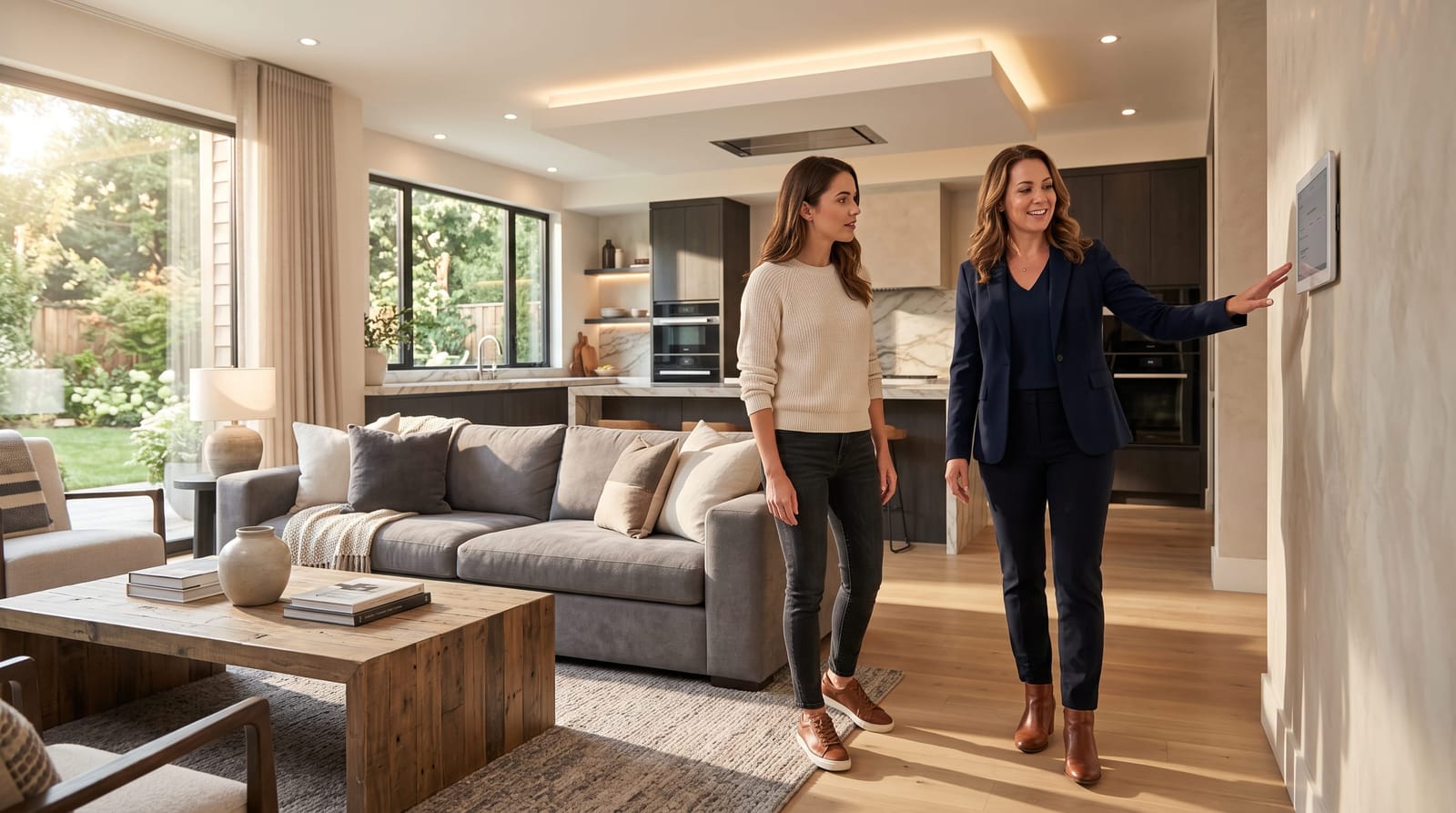
How Smart Home System Integration Works: Unifying Every Device Under One Platform
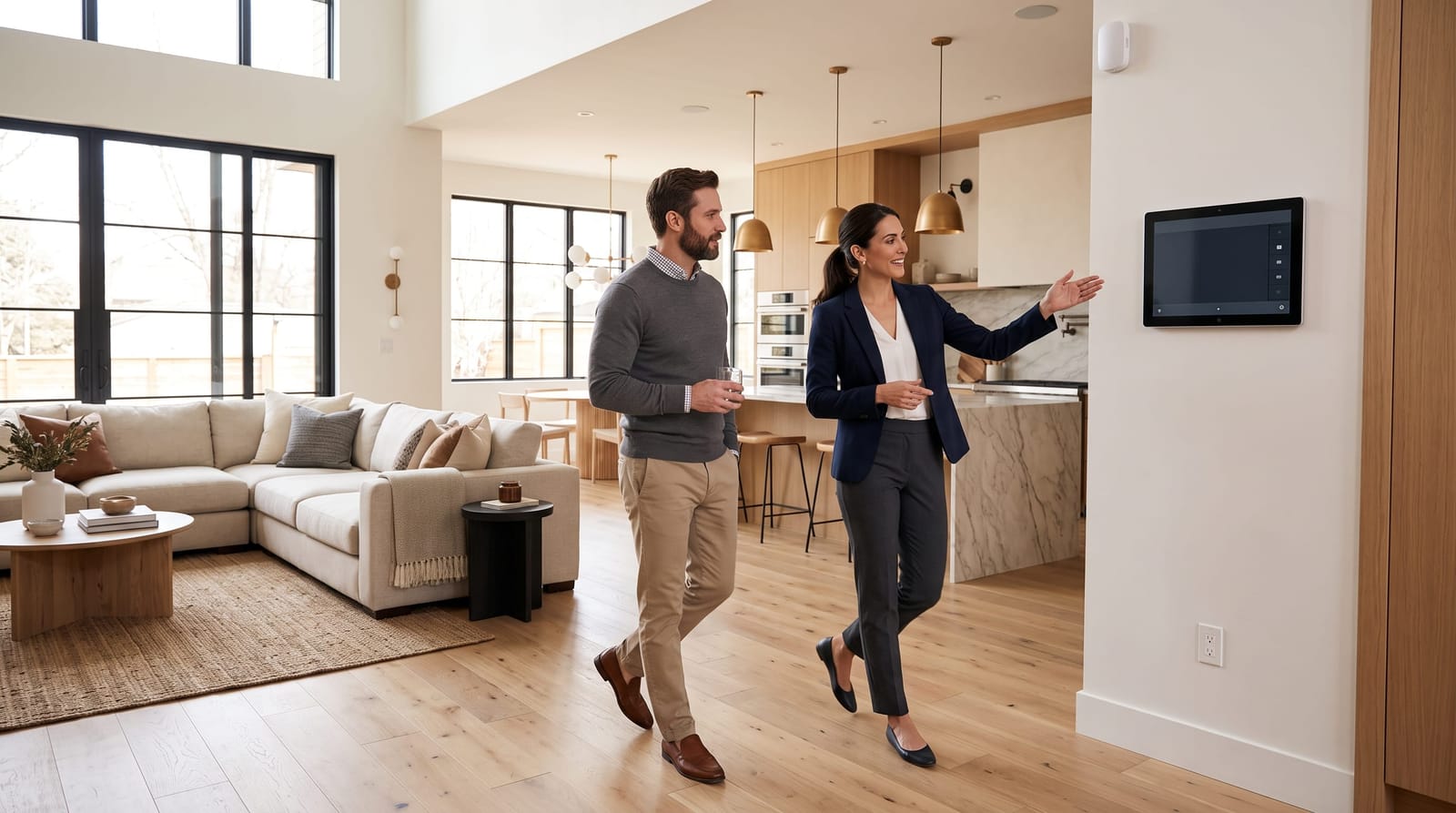
When most people think about a smart home, they imagine individual devices: a voice-controlled thermostat here, a video doorbell there, maybe a few smart bulbs scattered across the house. But that collection of gadgets isn't a smart home. It's a fragmented tech stack that creates as many problems as it solves. True smart home system integration is something fundamentally different: a unified architecture where every device, system, and subsystem in your home communicates through a single platform, responding to your life rather than demanding your attention. For homeowners exploring the full spectrum of what's possible, as outlined in our complete guide to luxury smart home automation in Los Angeles, understanding how integration actually works is the essential first step. This article breaks down what smart home system integration means in practice, why professional-grade platforms outperform consumer ecosystems, and how unification changes daily life in ways that fragmented apps simply cannot.
What Smart Home System Integration Actually Means
Smart home system integration is the process of connecting every controllable system in a residence, lighting, motorized shades, HVAC, audio/video, security, access control, and networking infrastructure, into a single, cohesive control environment. Rather than opening five separate apps to leave the house in the morning, an integrated system executes a single "Goodbye" scene that dims the lights, locks every door, arms the security system, adjusts the thermostat to an away schedule, lowers the shades for privacy, and pauses whatever was playing in the media room. One tap. One outcome.
The integration layer is what makes this possible. At its core, smart home system integration relies on a central controller, sometimes called a processor or hub, that speaks the communication languages of every device on the network. These languages include proprietary protocols like Lutron's Clear Connect for lighting, standard IoT protocols like Z-Wave and Zigbee for sensors and locks, IP-based communication for AV components and cameras, and increasingly, Matter: the newer open standard designed to improve cross-brand compatibility.
The Role of the Central Controller
Think of the central controller as the conductor of an orchestra. Each instrument, each lighting circuit, each shade motor, each HVAC zone, plays its own part, but the controller ensures they perform in harmony and on cue. Without it, you have musicians warming up independently. With it, you have a symphony. Professional integrators program this controller with the logic, timing, and conditional rules that make automation feel intuitive rather than mechanical.
Communication Protocols and Why They Matter
Not every device speaks the same language, and this is where consumer DIY setups routinely break down. A professional smart home system integration approach accounts for protocol differences from the design phase, selecting hardware that communicates reliably and building redundancy into the network so that a single device failure doesn't cascade into a system-wide outage. This is especially critical on large estates in Los Angeles where hundreds of devices may be operating simultaneously across multiple buildings.
Ecosystem-Locked Platforms vs. Professional-Grade Integration
Consumer smart home platforms from Google, Amazon, and Apple have made significant inroads in mainstream households, and for good reason: they're accessible, relatively affordable, and easy to set up. But for homeowners managing 5,000 to 15,000 square feet of living space with multiple subsystems, these platforms reveal their limitations quickly.
The Ceiling of Consumer Ecosystems
Google Home, Amazon Alexa, and Apple HomeKit are ecosystem-locked platforms. They work best when every device carries their certification badge, and they struggle, or simply fail, when devices fall outside their approved vendor lists. Firmware updates pushed by the platform manufacturer can break integrations overnight. Automation logic is limited to simple if/then rules. And critically, these platforms are designed around individual devices, not whole-home system behavior. They are retail products built for mass-market appeal, not engineered for architectural precision.
The app experience reflects this. A typical tech-forward homeowner using consumer platforms might juggle the Nest app for climate, the Lutron Caséta app for lighting, the Ring app for security, the Sonos app for audio, and a manufacturer app for motorized shades: none of which talk to each other in any meaningful way. This is the app clutter problem, and it's not a minor inconvenience. For busy professionals and families in Los Angeles, managing a 10,000-square-foot estate through five separate apps with different interfaces, different reliability profiles, and different update cycles introduces daily friction that compounds over time.
Professional-Grade Platforms: Control4, Savant, Crestron
Professional smart home system integration platforms: Control4, Savant, Crestron, and Josh.ai among them: are designed from the ground up for whole-home unification. They support thousands of device drivers, maintained by certified integrators, that allow virtually any piece of audiovisual, lighting, climate, or security hardware to join the system regardless of brand. Their automation engines support complex conditional logic: "If it's a weekday, after 6 PM, and the garage door opens, run the 'Evening Arrival' scene, but only if the exterior lights aren't already on." That level of nuance is simply not available in consumer ecosystems.
These platforms also offer single-interface control, one app, one touchscreen, one remote, that replaces every manufacturer app on your phone. The interface is custom-designed for your home's specific layout and your household's specific routines, not templated for generic use cases.
The Six Core Systems That Smart Home Integration Unifies
Effective smart home system integration doesn't pick favorites among subsystems. A truly unified platform brings together every major system in the home:
- Lighting: Whole-home dimming, color temperature control, occupancy-based automation, and scene sequencing across every fixture and zone.
- Motorized Shades and Window Treatments: Automated based on time of day, sun position, temperature, or privacy scenes: integrated with lighting scenes so shades and lights adjust together.
- HVAC and Climate: Multi-zone control with scheduling, occupancy sensing, and integration with weather data for predictive adjustments.
- Audio/Video: Whole-home audio distribution, dedicated media rooms, outdoor entertainment zones, and source management, all controlled from the same interface as every other system.
- Security and Access Control: Camera systems, alarm panels, smart locks, video intercoms, and gate access integrated so that a security event triggers appropriate responses across lighting, cameras, and notifications simultaneously.
- Networking Infrastructure: Enterprise-grade Wi-Fi, managed switches, and network segmentation that ensures every device maintains a reliable connection: the foundation everything else depends on.
When these six systems are integrated, the interactions between them create automation scenarios that no single-system approach can replicate. A motion sensor detecting activity at the front gate can simultaneously illuminate the driveway, unlock the front door for recognized faces, announce the arrival through whole-home audio, and display the gate camera feed on the kitchen display, all before the car reaches the front door.
How Integration Simplifies Life on Large Los Angeles Estates
The daily friction of managing a large, technologically complex home is easy to underestimate until you're living it. Lights left on in wings of the house no one is using. Shades that need manual adjustment as the California sun moves throughout the day. HVAC systems running full tilt in unoccupied guest suites. Security cameras that require a separate login to review. These inefficiencies accumulate, in energy costs, in time, and in cognitive load.
Smart home system integration addresses these inefficiencies structurally rather than symptomatically. Occupancy-based automation ensures lights and climate adjust to actual usage patterns, not schedules. Smart home automation scenes explained, scenes like "Morning," "Movie Night," "Guest Mode," and "Away", compress dozens of individual device adjustments into single commands that execute instantly and consistently. Over time, a well-programmed integrated system learns the rhythms of household life and reduces the number of decisions homeowners need to make about their environment to near zero.
Voice Control and Mobile Access
Professional integration platforms support voice control through assistants like Josh.ai, which is built specifically for privacy-conscious luxury homeowners, without surrendering system-level control to a consumer ecosystem. Remote access through a secure mobile app means that whether you're in the driveway or on a flight to New York, you have the same complete view of and control over your home.
Considerations Specific to Los Angeles Properties
Los Angeles properties present integration challenges that are genuinely unique. Hillside homes with sprawling footprints require careful RF planning to ensure wireless devices maintain reliable connections across elevation changes and reinforced concrete construction. The region's wildfire risk makes integration between smart home systems and environmental monitoring sensors increasingly relevant, though homeowners should consult with their security and insurance professionals for guidance specific to their property and circumstances. For a closer look at how these challenges play out in practice, explore our coverage of smart home automation for hillside homes in Los Angeles, which addresses the architectural and technical nuances of these properties specifically.
The Integration Process: What to Expect
Professional smart home system integration is not a product you purchase: it's an engineered outcome delivered through a process. That process typically unfolds in five phases:
- Discovery and Design: The integrator conducts a detailed assessment of the home's architecture, existing systems, homeowner lifestyle preferences, and technical requirements. A system design is produced that specifies every component, every control point, and every automation sequence.
- Infrastructure: Structured wiring, network infrastructure, and equipment rack installation, the physical backbone of the system, are installed, typically in coordination with the general contractor or electrician on new construction or renovation projects.
- Device Installation: Every endpoint, keypads, sensors, cameras, speakers, shades, thermostats, is installed and physically connected to the infrastructure.
- Programming and Configuration: The central controller is programmed with all automation logic, scenes, schedules, and user interfaces customized to the homeowner's specific routines and preferences.
- Commissioning and Training: The system is tested end-to-end, adjusted based on real-world performance, and the homeowner is trained on how to use and personalize it. Ongoing support and remote monitoring are established.
This process is what distinguishes professional smart home system integration from a self-installed consumer setup. The design phase alone prevents the majority of problems that plague DIY smart home attempts: incompatible devices, insufficient network infrastructure, and automation logic that works in theory but fails in practice.
Related Topics Worth Exploring
Smart home system integration is a broad discipline with significant depth in several directions. If you're interested in how integrated systems create seamless daily routines, understanding how smart home automation scenes work is a natural next step: scenes are the primary mechanism through which integration delivers its most visible everyday benefits. Homeowners with hillside or architecturally complex properties in Los Angeles will also find specific value in exploring smart home automation solutions for hillside homes in Los Angeles, which addresses the technical challenges that standard integration approaches don't fully account for.
Conclusion
Smart home system integration is the difference between owning smart devices and living in a smart home. When lighting, shades, climate, audio/video, security, and networking are unified under a single professional-grade platform, the result isn't just convenience: it's a fundamentally different relationship with your home. The app clutter disappears. The daily friction dissolves. And the home begins to respond to your life rather than requiring your constant management. For homeowners in Los Angeles managing large, complex estates, professional smart home system integration isn't a luxury upgrade: it's the architectural decision that makes everything else in a sophisticated home work as it should. To explore what a fully integrated system could look like for your property, reach out to our team for a consultation.