How Smart Shading Protects Your Health in a Southern California Home
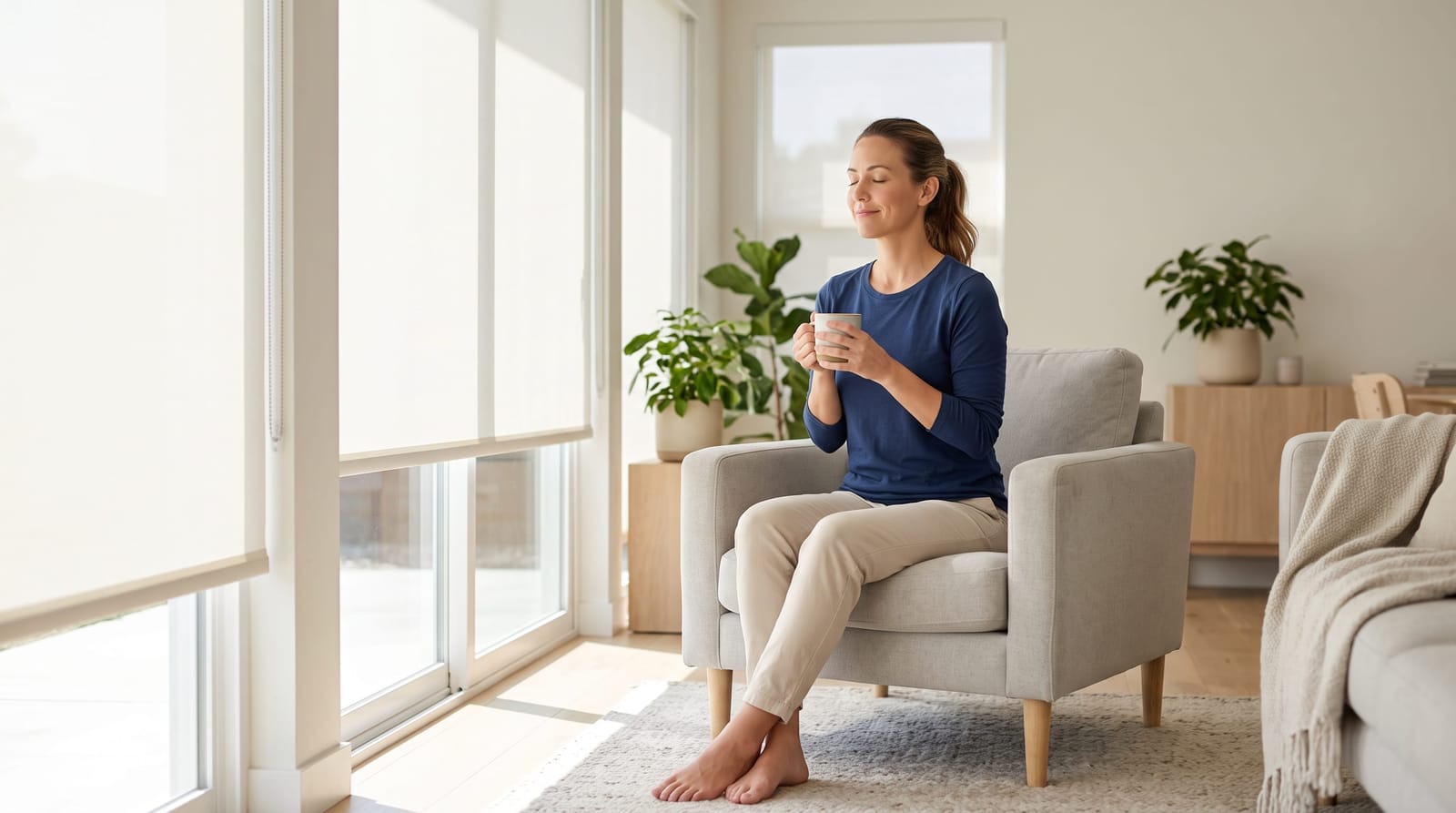
Smart shading manages glare, privacy and daylight by making window coverings easier to adjust throughout the day. Its protective value depends on the fabric, window glazing and installation, not simply on whether a shade is motorized.
For Southern California homes with expansive glass walls and indoor-outdoor living spaces, the goal is balance: preserve the view when it is comfortable, soften direct sunlight when needed, and create privacy after dark. A thoughtful plan starts with each room’s exposure and daily use.
Step 1: Map Sunlight Where You Actually Spend Time
Evaluate windows from the places people sit, work and relax, rather than from the center of an empty room. A living room can feel comfortable overall while a reading chair beside the glass receives strong direct sunlight.
Record three conditions during a typical day:
- Glare: Note when sunlight crosses a desk, television screen, kitchen worktop or seating area.
- Heat: Identify spaces that become uncomfortable near the glazing, especially during afternoon use.
- Privacy: Check sightlines from neighboring properties and outdoor spaces, both in daylight and with interior lights on.
An outdoor forecast of UV Index 10 or 11 during summer months does not measure exposure inside a particular room. Glazing, coatings, shade fabric and uncovered gaps all affect what reaches the interior.
Group windows by exposure and purpose. West-facing living room shades may need to close while shaded courtyard windows remain open, preserving daylight without treating the entire home as one zone.
Step 2: Choose Fabric for the Job, Not Just the Color
Begin with the room’s priority, then evaluate fabric samples against the actual glass and interior finishes.
- Solar screen fabric: Useful when reducing glare while retaining some outward visibility is the priority. It does not automatically provide privacy at night.
- Light-filtering fabric: Softens incoming daylight for a more diffuse interior atmosphere. Check how silhouettes appear when the room is illuminated after dark.
- Blackout fabric: Appropriate where darkness matters, such as bedrooms and media rooms. The complete installation determines how much light enters around the edges.
- Layered treatments: A solar shade paired with a blackout shade or drapery separates daytime view control from nighttime privacy.
Fabric openness describes the gaps in the weave. It is not a complete UV or heat-performance rating. Compare the stated UV transmission, visible light transmission and solar performance for the exact fabric and color being considered.
For large glazed walls, examine coverage as carefully as fabric. Adjacent shade panels, corner windows and narrow side gaps can leave strips of direct sunlight across furniture. Where exterior shading is part of the architectural plan, it can intercept sunlight before it reaches the glass, but mounting and exposure require separate consideration.
Step 3: Build Schedules Around Daily Life
Light is an important cue for melatonin production and circadian rhythm regulation. That makes daylight timing relevant to bedroom planning, without making automated shades a treatment for sleep problems. A licensed healthcare professional can address personal concerns about light sensitivity or persistent sleep difficulties.
Use room-specific routines rather than a rigid whole-home timetable:
- Morning: Admit daylight into occupied spaces while retaining shade where low-angle sunlight creates glare.
- Midday: Lower the shades on exposed windows rather than darkening rooms that remain comfortable.
- Late afternoon: Address west-facing glare before it crosses seating areas or screens.
- Evening: Close privacy treatments and coordinate them with the room’s lighting scene.
Let bedroom schedules reflect actual waking times, including different routines for guest rooms. Where the control system supports sunrise and sunset scheduling, distinguish that seasonal adjustment from a fixed clock time. Neither replaces testing the room in use.
Step 4: Coordinate Shades With Lighting and Architecture
Standalone motorized shades provide meaningful benefits. Integration adds the ability to coordinate shade positions and lighting through a shared control, rather than adjusting each separately.
At Smart Homes Innovations, we integrate motorized shades with lighting control and home automation, tailoring the system to each household’s routines. An evening dining scene, for example, can pair closed privacy shades with selected lighting levels. This coordination is one aspect of the healthy home technology Los Angeles homeowners can incorporate into everyday life.
Define the controls as carefully as the scenes. Decide where a wall control belongs, how individual windows remain adjustable, and when a manual change gives way to the next scheduled action. Automation feels more natural when it remains easy to override.
For discreet integration, resolve shade pockets, exposed hardware, power access and service access alongside the interior design. Concealment is most successful when maintenance remains practical.
Step 5: Protect Finishes and Test the Completed Settings
Sunlight can contribute to fading and deterioration of artwork, upholstery, wood flooring and other finishes. UV is only part of that exposure; visible light and heat also matter. A UV-filtering fabric does not make a sunlit display location suitable for every object.
Track where direct sunlight falls across the room, especially on delicate textiles and artwork. Positioning sensitive pieces outside that path can complement shading without keeping every window covered.
Then test the system under the conditions it is intended to manage:
- Check glare from seated eye level and from the usual screen-viewing position.
- Evaluate nighttime privacy with interior lights on.
- Inspect bedroom edge gaps during daylight.
- Review schedules as the seasonal sun path changes.
These checks turn a general automation schedule into a room-specific plan, preserving openness where possible and applying coverage where it has a clear purpose.
Frequently Asked Questions
Can motorized shades work with existing windows?
Many installations retain the existing glass. The main planning factors are mounting depth, window dimensions, trim, power access and the desired coverage. In new construction, early pre-wire planning creates more options for concealed power and integrated shade pockets.
Are shades still useful with tinted or solar-control glass?
Yes. Glazing provides fixed characteristics, while shades add adjustable glare control, privacy and room darkening. Evaluate them together rather than assuming either one replaces the other.
What determines the cost of a whole-home shading system?
Key factors include window sizes, fabric selections, the number of independently controlled shades, power requirements, concealed mounting details and automation scope. Prioritizing bedrooms, exposed living spaces and privacy-sensitive windows is a practical way to define the initial scope without compromising the overall design plan.