How to Customize a Wellness Smart Home System to Your Lifestyle
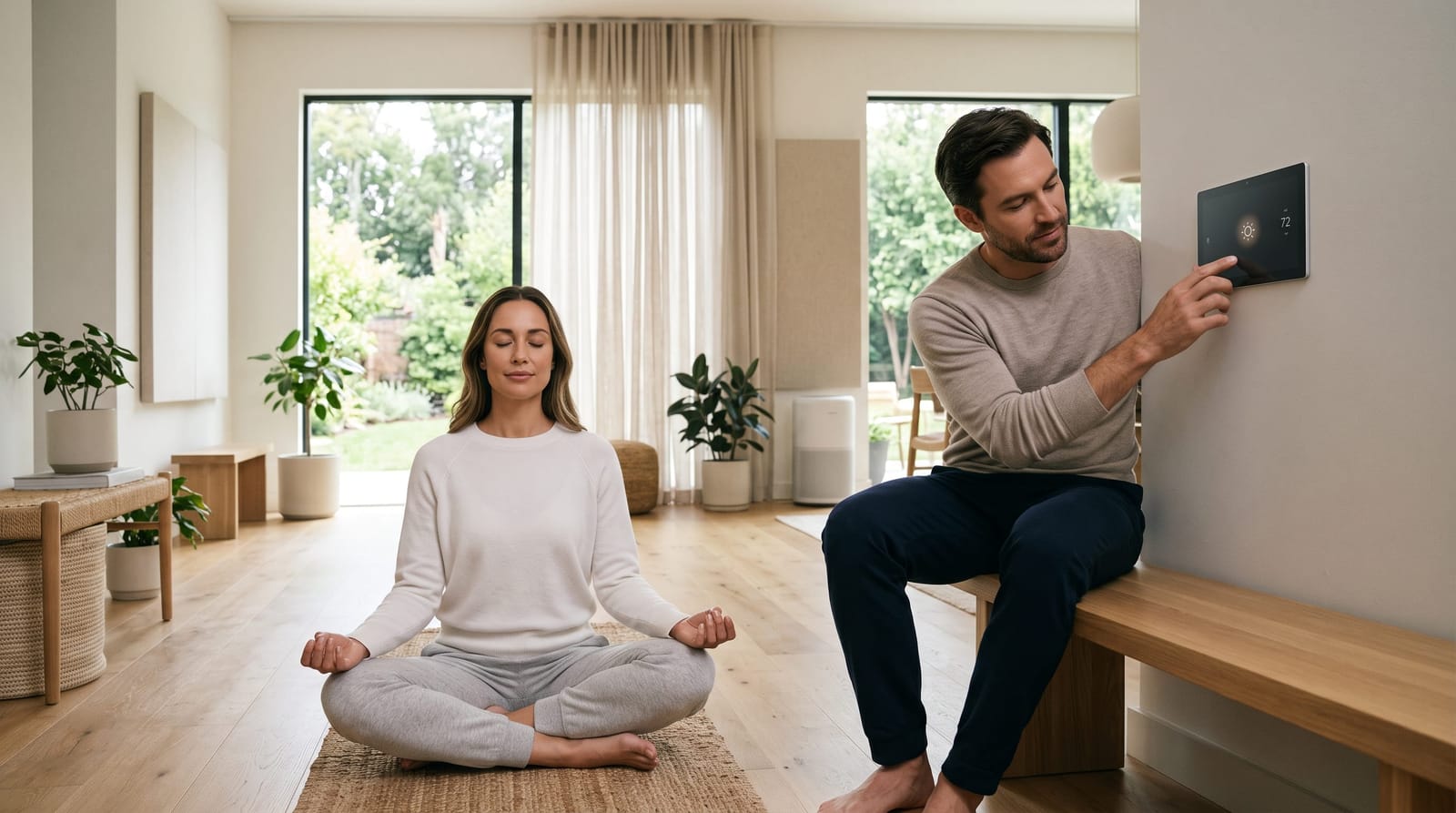
A custom wellness smart home system is not a product you select from a catalog: it is a living environment engineered around the specific rhythms, priorities, and health goals of the people who inhabit it. As explored in our complete guide to Wellness Smart Home Systems for luxury homeowners in Los Angeles, the most effective integrations begin not with technology, but with a deep understanding of how you actually live. For homeowners in Los Angeles who have invested in a property that reflects their values, the next logical step is a home that actively supports their wellbeing. This guide walks through the exact process Smart Homes Innovations uses to design and build a bespoke custom wellness smart home system, from the first discovery conversation to the final calibration of your environment.
Step 1: Define Your Wellness Priorities Before Touching a Single Device
The single most common mistake in smart home projects is leading with technology rather than intention. A custom wellness smart home system that genuinely improves your health is built on clarity about what wellness means to you personally, not a general checklist of available features.
During Smart Homes Innovations' initial consultation, the conversation centers on four core questions:
- What does a perfect morning feel like, and what currently prevents it?
- Where in your day does stress peak, and what environmental factors contribute?
- How would you describe your ideal sleep environment?
- Which health goals, energy, recovery, focus, calm, matter most right now?
These questions surface insights that no product brochure can anticipate. One homeowner may identify that their biggest friction point is an unpredictable morning routine with young children. Another may describe a recurring problem with poor air quality that disrupts sleep. A third may be a high-performance executive whose custom wellness smart home system needs to support deep focus during remote work hours and genuine recovery in the evenings.
The technology decisions, which sensors, which automation protocols, which control interfaces, are all downstream of this foundational clarity. Skipping this step produces a home filled with impressive features that nobody uses consistently.
Step 2: Map Your Daily Routines to Environmental Triggers
Once your priorities are defined, the next phase of building a custom wellness smart home system involves mapping your actual daily schedule to the environmental conditions that either support or undermine it. This is where consultation becomes genuinely granular.
Morning Architecture
A well-designed morning sequence in a custom wellness smart home system might begin 30 minutes before your alarm, gradually warming bedroom lighting from 0% to 40% at a color temperature that mimics natural dawn, nudging bedroom temperature from a cool sleep-optimized setting to a more alert waking temperature, and queuing the kitchen coffee system. None of this requires you to interact with an app. It simply happens, consistently, because it was engineered to your schedule.
Daytime Focus and Energy Management
For home offices, a custom wellness smart home system can automatically shift lighting to high-intensity, cool-spectrum illumination during peak work blocks, then transition to warmer tones in the early afternoon to counteract the natural energy dip many people experience. Air quality sensors can trigger HVAC adjustments and fresh-air exchanges to maintain CO₂ levels that support cognitive performance: a detail that dramatically affects concentration and that most homeowners never consider until they experience the difference firsthand.
Evening Wind-Down
The transition from activity to rest is where many wellness-focused homeowners find the most meaningful return on their custom wellness smart home system investment. Automated shading that reduces blue-light exposure from exterior sources, progressive lighting scenes that signal the nervous system to downshift, and temperature adjustments that prepare the bedroom for optimal sleep all occur without requiring conscious effort, which is precisely the point.
Step 3: Audit the Physical Environment for Integration Opportunities
A custom wellness smart home system does not exist in the abstract: it is woven into a specific architectural space with its own strengths, constraints, and character. This step involves a thorough walk-through of your home to identify where technology can be integrated seamlessly and where workarounds might be needed.
For homeowners in wellness smart home design Los Angeles projects, this audit typically surfaces several categories of opportunity:
- Air quality control points: Identifying where sensors should be placed for the most accurate readings: typically in bedrooms, home offices, and high-occupancy living areas rather than hallways.
- Lighting zones: Mapping which spaces need the most nuanced control based on how they are actually used throughout the day, versus which spaces can be served by simpler automation.
- Acoustic environment: Understanding how sound, both beneficial and disruptive, moves through the home, which informs decisions about sound masking, speaker placement for therapeutic audio, and smart shading that also contributes to acoustic softening.
- Network infrastructure: Assessing whether the existing wired and wireless infrastructure can support the sensor density and reliability that a true custom wellness smart home system requires.
Homeowners who are adding a custom wellness smart home system to an existing property may want to explore wellness smart home retrofit options for existing homes to understand what is feasible without major construction.
Step 4: Design the System Architecture Around Simplicity, Not Complexity
One of the most counterintuitive principles in custom wellness smart home system design is that the most sophisticated systems feel the simplest to live with. The goal is never to add a layer of technology management to your life: it is to remove friction entirely.
Smart Homes Innovations approaches system architecture with a "set and live" philosophy: scenes and automations are configured with enough intelligence that the home responds correctly to real-world conditions without requiring constant manual input. This means investing in quality sensors that can distinguish between a workday morning and a Saturday, integrating weather data to adjust interior conditions proactively, and building in override mechanisms that are intuitive rather than buried in an app menu.
Control Interface Design
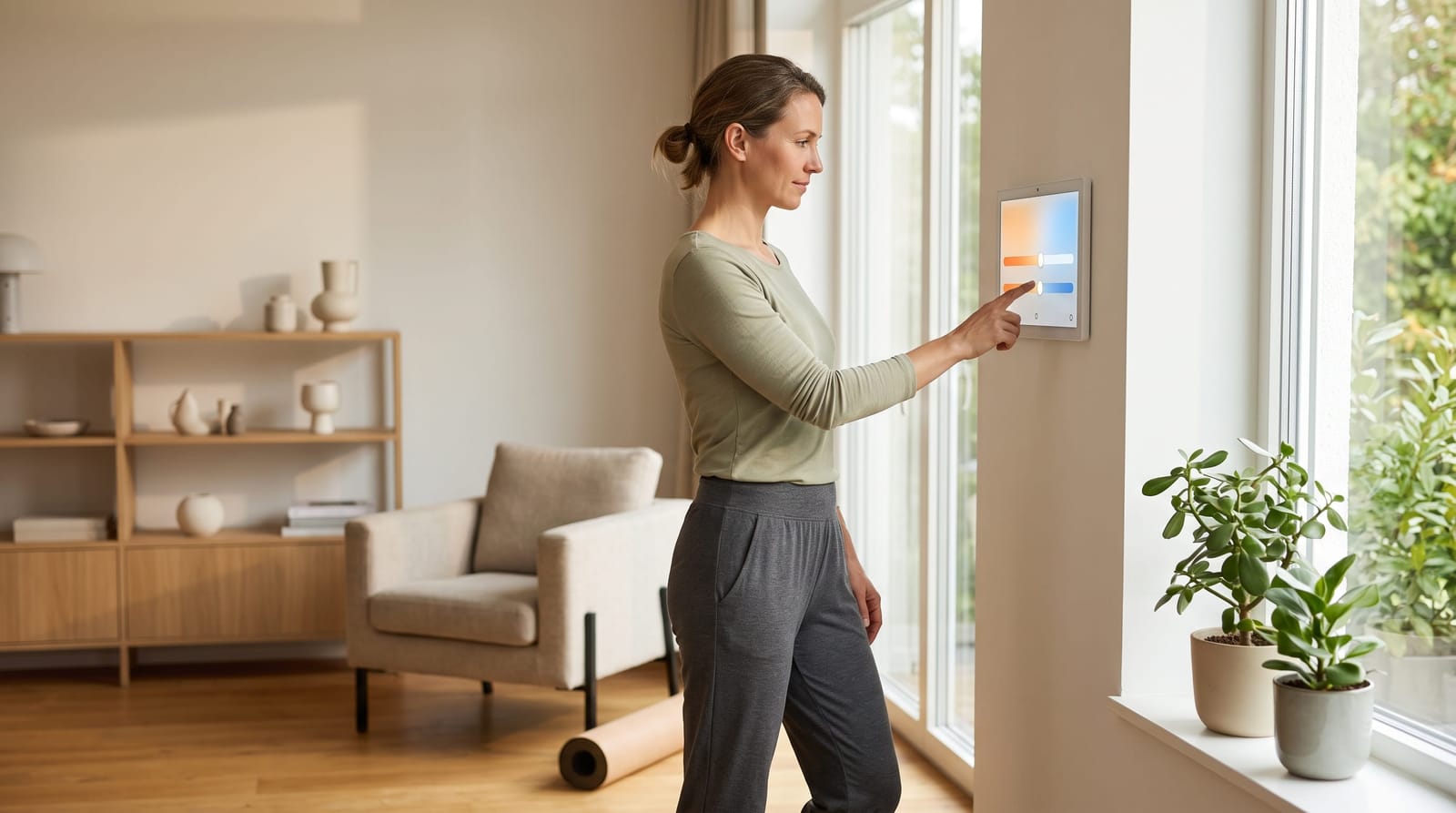
For a custom wellness smart home system to deliver on its promise, every family member needs to be able to interact with it comfortably. This influences decisions about control interfaces significantly. Some households prefer a single elegant keypad in each room. Others want voice control as the primary interface. Many high-performance households want a mobile app for adjustments when traveling but expect the home to require no input at all during normal routines.
Redundancy and Reliability
Wellness depends on consistency. A custom wellness smart home system that works brilliantly 80% of the time and behaves unpredictably the other 20% creates stress rather than reducing it. Reliable system architecture, professional-grade networking, and thoughtfully designed failover states are non-negotiable components of any serious wellness integration.
Step 5: Calibrate, Learn, and Refine Over Time
Even the most thoughtfully designed custom wellness smart home system requires a calibration period after installation. Living with the system in real conditions surfaces preferences that cannot be fully anticipated in a consultation: the precise lighting level that feels right for a Tuesday evening dinner versus a weekend gathering, the exact temperature that makes your specific bedroom feel restorative rather than just cool.
Smart Homes Innovations conducts structured follow-up sessions at 30 and 90 days post-installation specifically to refine these details. This is not a support call: it is a deliberate part of the design process. The goal is a custom wellness smart home system that improves with time as it is tuned to increasingly precise knowledge of how you live.
Modern custom wellness smart home systems also incorporate data feedback loops. Air quality dashboards, sleep environment reports, and energy usage patterns give homeowners visibility into how their environment is performing against their wellness goals, and where further optimization is possible. For context on how these systems support daily life over the long term, see how a wellness smart home system improves daily life in luxury Los Angeles homes.
Step 6: Align Technology Choices with Aesthetic and Lifestyle Standards
For homeowners at the $3M+ property level, a custom wellness smart home system must integrate with the design language of the home, not contradict it. This is a dimension of customization that purely technical vendors often underserve.
Keypads need to complement hardware finishes. Sensors should be positioned or concealed to maintain architectural integrity. Speaker grilles, shading hardware, and control panels are all visible design elements that require the same level of consideration as any other fixture in a luxury home. The best home wellness technology is technology you never notice because it is executed so well it simply becomes part of the environment.
This alignment extends to lifestyle compatibility. A household that entertains frequently needs wellness automation that transitions gracefully into hospitality mode. A family with young children needs scenes that are intuitive enough for a babysitter to manage. A couple that travels extensively needs remote monitoring and control that provides genuine peace of mind. These are not edge cases: they are the lived reality of the households for whom a custom wellness smart home system is designed.
If you are considering the investment involved, reviewing information about wellness smart home system costs in Los Angeles can help you frame expectations before your consultation.
Related Details Worth Exploring
The process of customizing a wellness smart home system connects to a range of specific considerations that deserve deeper attention. Whether you are working with an existing property or planning a new build, understanding the scope of what is possible, and what it entails, helps you arrive at your consultation better prepared and ensures the system delivered reflects your actual life, not a generic wellness template.
Conclusion
A custom wellness smart home system is one of the most personal investments a homeowner can make, because it is built entirely around how you live, recover, focus, and rest. The six steps outlined here, defining priorities, mapping routines, auditing the physical environment, designing for simplicity, calibrating over time, and aligning with aesthetic standards, represent the disciplined process that separates a genuinely transformative wellness environment from a collection of expensive devices. Smart Homes Innovations brings this methodology to every project, ensuring the system delivered is one that supports your health seamlessly and reflects the standards of your home. To begin the conversation about your custom wellness smart home system, contact Smart Homes Innovations for a private consultation.