Landscape and Pool Lighting Automation: How It Works on a Large Estate
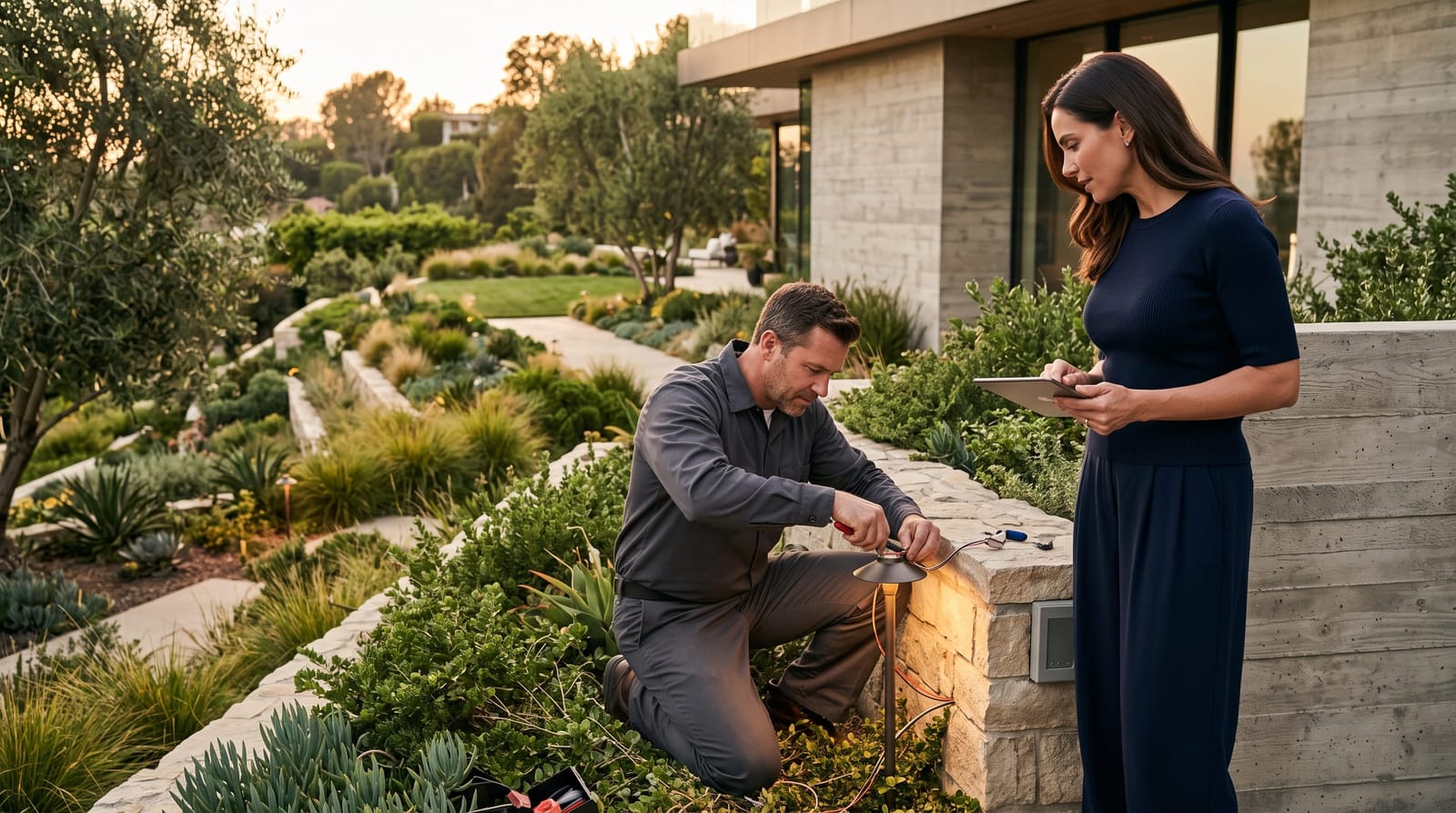
Managing outdoor lighting across a large estate is not simply a matter of flipping a switch at dusk. A well-designed automated landscape lighting system for a luxury estate coordinates dozens of zones, pathways, gardens, water features, pool decks, and motor courts, into one seamless, scheduled experience. This post walks through exactly how that system is built, programmed, and controlled. It is part of our broader exploration of luxury lighting control systems for Los Angeles homes, extending those principles from interior spaces to the full property.
Step 1: Map and Zone the Property
Every automated landscape lighting project begins with a detailed site analysis. A lighting designer and systems integrator walk the property together, identifying functional areas and assigning each one to a dedicated zone. This zoning structure is the foundation of the entire system.
On a typical Los Angeles estate, zones might include:
- Entry gate and motor court
- Front garden and specimen trees
- Perimeter pathways and steps
- Pool and spa surround
- Water features such as fountains or waterfalls
- Rear entertaining terrace
- Sport court or secondary structures
Each zone is wired back to a central low-voltage LED controller. Low-voltage systems, typically operating at 12 or 24 volts, are the standard choice for high-end outdoor installations. They use significantly less energy than line-voltage alternatives while delivering precise, consistent light quality. A large estate may include anywhere from 40 to 120 individual fixture points spread across these zones.
This zoning work is what allows the system to behave differently in each area, subtle garden uplighting in one zone, brighter security-grade illumination in another, all without manual intervention.
Step 2: Program Astronomical Timers and Schedules
Once zones are established, the system is programmed with intelligent scheduling. The most important tool here is the astronomical timer, which automatically calculates local sunrise and sunset times based on geographic coordinates. In Los Angeles, this means the system adjusts its on and off times throughout the year without any manual reprogramming.
Astronomical timers offer several advantages over basic clock-based schedules:
- Lights activate precisely at dusk, not too early, not too late
- Offsets can be programmed (for example, 20 minutes after sunset for a softer transition)
- Seasonal shifts are handled automatically across all 365 days
- Different zones can follow different offset rules
Beyond the daily schedule, scenes can be programmed for specific occasions. A dinner party on the terrace might activate a warmer, lower-intensity scene across the pool zone and garden beds. A holiday schedule might introduce color-tunable lighting into tree canopies or architectural features. These scene-based schedules are stored in the system and recalled with a single command.
Most professional platforms allow up to 100 or more distinct scheduled events to be stored simultaneously, giving estate owners granular control over how their property looks on any given evening.
Step 3: Configure Motion-Triggered Security Lighting
Automated landscape lighting on a luxury estate includes more than ambiance. Security lighting is integrated into the same control platform, but designed to feel purposeful rather than reactive or harsh.
Motion zones are typically placed at:
- Entry gates and driveways
- Side yard passages and service areas
- Pool equipment areas and secondary structures
- Perimeter fencing with limited ambient light
When motion is detected in one of these zones, the system can respond in several ways. It may raise the brightness level of existing fixtures from a low ambient setting to full output. It may activate a specific set of fixtures that are otherwise off during normal evening operation. Or it may send a quiet notification to a mobile device, without any alarm or dramatic visual response.
The key distinction in a well-designed automated landscape lighting system for a luxury estate is restraint. Security responses are confident but not theatrical. The property remains beautiful and composed even when the system is working in a protective capacity. This integration is handled through the same control platform that manages all other lighting: there are no separate apps or disconnected systems.
Step 4: Integrate Pool, Spa, and Water Feature Lighting
Pool and water feature lighting deserves special attention, both for its visual impact and its technical requirements. Submersible LED fixtures used in pools and fountains must meet specific safety and waterproofing standards. Once properly installed, however, they integrate into the control system just like any other outdoor zone.
Color-tunable pool lighting is one of the most requested features in luxury estate installations. A single fixture can produce thousands of color combinations, and scenes can be designed to coordinate pool lighting with the surrounding landscape. For example:
- A warm white evening scene pairs soft pool illumination with amber path lighting
- A celebration scene shifts the pool to a deep blue while increasing brightness on the terrace
- A late-night mode dims all exterior lighting to a low, relaxed setting
Waterfalls, fountains, and reflection pools each receive their own zone programming. A waterfall may be lit from below using directional fixtures to create a dramatic cascading effect after dark. A still reflection pool may use grazing light from the pool edge to emphasize water movement and texture.
These scenes are recalled from the same interface, a touchscreen panel, a mobile app, or a voice command, that controls the rest of the home's lighting system. There is no separate pool remote or secondary controller.
Step 5: Unify Outdoor and Interior Lighting on One Platform
The defining characteristic of automated landscape lighting on a true luxury estate is full integration. Outdoor zones do not operate as a separate system from interior lighting. They share a single platform, respond to the same scenes, and are controlled through the same interface.
This integration enables some genuinely useful capabilities. When a "Good Evening" scene is activated inside the home, it may simultaneously dim the great room chandelier, lower motorized shades, and bring the garden and pool lighting to their programmed evening levels, all with one touch. When the last person leaves for the night, a departure scene can shut down all interior lights while leaving the perimeter and pathway lighting active for security.
Platforms such as Lutron are widely used in high-end residential installations because they offer reliable performance across both indoor and outdoor environments and integrate cleanly with broader home automation systems. A properly designed system can manage lighting across estates of 10,000 square feet or more, including the full exterior, without any perceptible delay or complexity for the homeowner.
Our approach to scene-based lighting control for luxury residences applies the same principles outdoors: every moment on the property should feel intentional, effortless, and composed.
Frequently Asked Questions
Can outdoor lighting zones be controlled independently from interior lighting?
Yes. Each outdoor zone is programmed independently and can be adjusted or overridden at any time. While they are unified on the same platform as interior lighting, they operate on separate zone channels. A homeowner can raise the pool lighting without affecting any other area of the property.
How many outdoor zones does a typical luxury estate require?
This varies significantly by property size and design complexity. A mid-sized estate in Los Angeles might require 12 to 20 outdoor zones. Larger properties with extensive gardens, multiple water features, and separate guest structures may require 30 or more. The number of zones is determined during the initial site analysis and design phase.
Do astronomical timers need to be updated seasonally?
No. Astronomical timers calculate sunrise and sunset times automatically based on the property's geographic coordinates. Once configured, they adjust on their own throughout the year. There is no need for seasonal reprogramming or manual schedule adjustments.
Can landscape lighting scenes be changed remotely?
Yes. Most professional control platforms include a mobile app that allows homeowners to adjust scenes, override schedules, or activate specific zones from anywhere. This is useful for preparing the property before arriving home or making changes for a scheduled event.
Bringing the Full Estate Together
An automated landscape lighting system for a luxury estate is not an afterthought added to the exterior of a home. It is a carefully designed layer of the property's overall lighting architecture: one that coordinates dozens of zones, responds intelligently to time and conditions, and integrates fully with interior systems. From astronomical scheduling to pool color scenes and motion-aware security lighting, every element is purposeful. This is what distinguishes a truly integrated estate from a home with outdoor fixtures on a timer.
To explore how these principles apply to your specific property, schedule a consultation with our team and we will walk through your site, your lifestyle, and your vision together.