Motorized Shades for Van Nuys Homes: Privacy and UV Solutions for Large Windows
For expansive windows, the most effective motorized shade plan separates three functions: filtering daylight, providing privacy after dark, and managing sunlight exposure on interior finishes. A single translucent fabric rarely handles all three equally well. Daytime solar shades, a separate privacy layer where needed, and room-specific automation offer a more considered approach.
At Smart Homes Innovations, based in Van Nuys, we integrate motorized shades with lighting control and tailor their operation to the household’s routine. The design begins with the room, its sightlines, and its architecture, rather than the controls.
The Design Example: Glass-Walled Living, Private Bedrooms, and a Pergola
Consider a Van Nuys home with a glass-walled living room opening onto a terrace, a bedroom visible from a neighboring property, and a pergola used for afternoon entertaining. The interiors feature pale upholstery, timber flooring, and carefully positioned artwork.
Each space needs a different response. The living room needs comfortable daylight without unnecessarily closing off the view. The bedroom needs dependable visual privacy. The pergola needs shading suited to outdoor exposure and the direction of the sun.
This layout illustrates why matching every window with the same fabric and schedule can compromise both comfort and design.
The Living Room: Preserve the View Without Leaving Finishes Exposed
A solar-screen fabric is a useful starting point for the living room. Its woven construction filters incoming light while retaining some outward visibility. The tradeoff is important: a more open weave preserves more visual connection but also leaves more openings for light to pass through.
Fabric openness is not the same as a complete UV-protection specification. Selection involves the fabric’s stated light-transmission and UV characteristics, its color, and how it looks against the actual glazing.
For this room, compare samples from the primary seating positions, not just beside the window. Look at:
- Reflections on the television and glossy furniture.
- How clearly the garden remains visible through the fabric.
- Brightness at seated eye level.
- Direct sunlight reaching artwork, rugs, and timber surfaces.
UV exposure contributes to fading, but visible light and heat also affect materials. Shades help manage exposure; they do not make furnishings fade-proof. A useful schedule addresses the period when direct sunlight reaches sensitive finishes, rather than closing every shade throughout the day.
The Bedroom: Treat Nighttime Privacy as a Separate Requirement
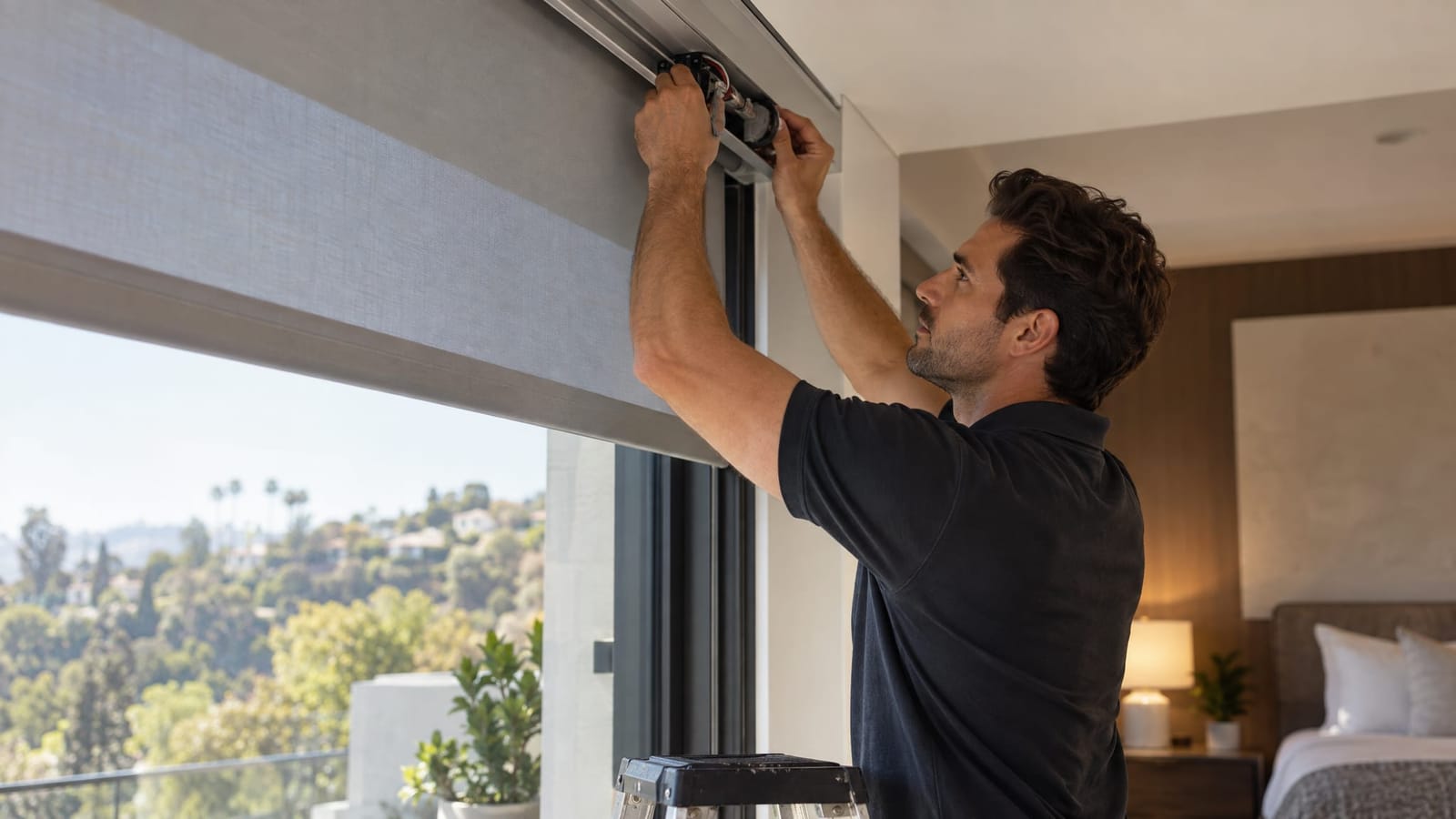
The bedroom calls for a different fabric decision. A solar shade that provides comfortable daytime screening can become see-through when the interior is illuminated and the exterior is dark. Outward visibility during daylight is not evidence of nighttime privacy.
In this example, a dual-layer arrangement separates the functions: a light-filtering shade for daytime use and an opaque shade for evening privacy. Motorized shades paired with drapery offer another architectural approach, particularly where softer textures suit the room.
Privacy and darkness also deserve separate consideration. Blackout fabric blocks light through the fabric itself, but light can still enter around the edges of the installation. A bedroom intended for substantial darkening needs attention to side gaps, mounting depth, and coverage above and below the glazing.
The relevant sightlines include neighboring windows and outdoor gathering areas, not just the view directly in front of the glass.
The Window Detail: Conceal the Mechanism, Preserve Access
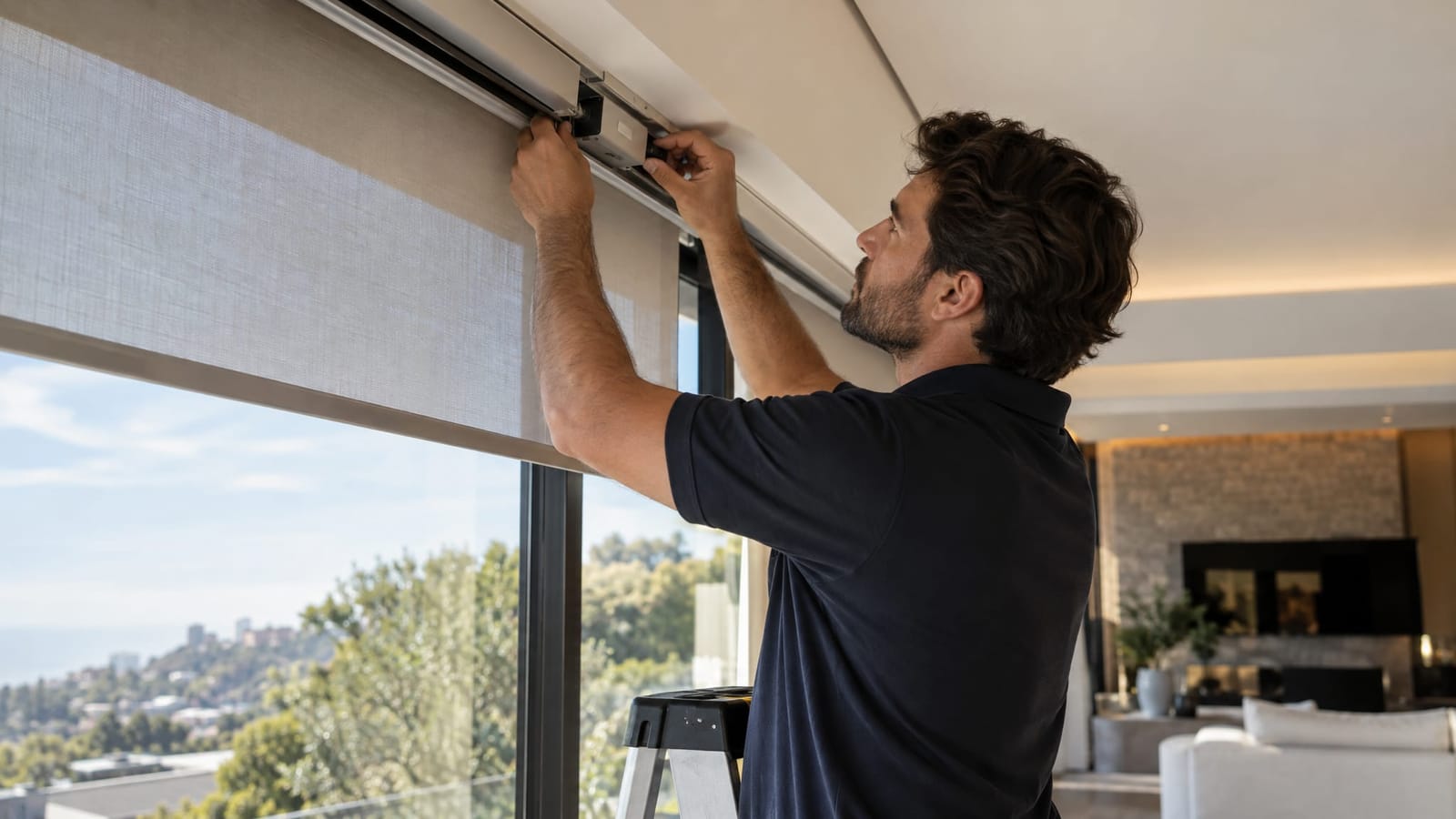
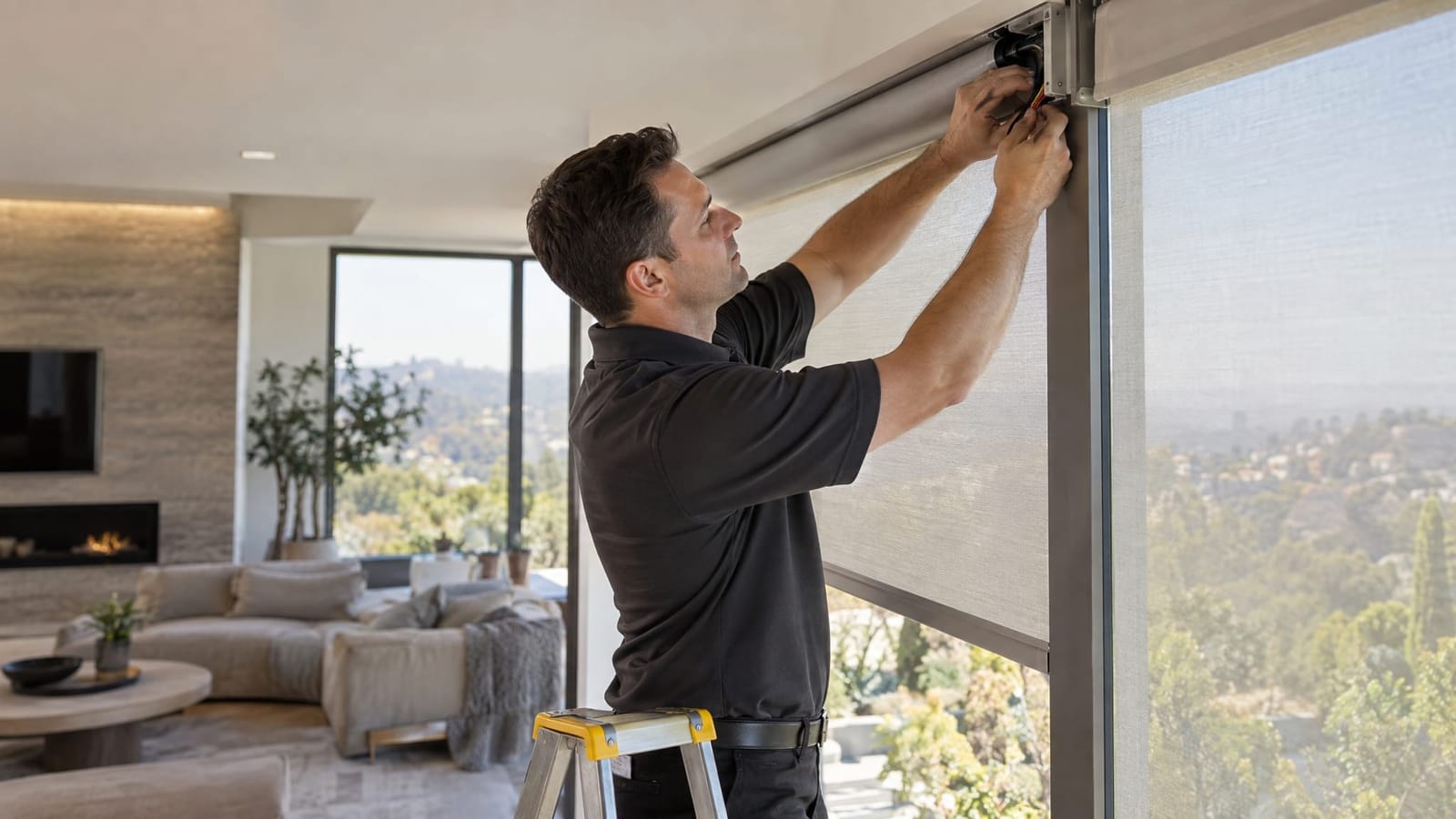
Discreet integration depends on decisions made before finishes are complete. A recessed shade pocket can conceal the roller, but it still needs space for the selected system and access for future servicing. A dual-layer arrangement requires more room than a single roller.
For this home, the architectural coordination includes:
- Aligning shade pockets with ceiling details and window heads.
- Keeping fabric clear of handles, doors, and projecting trim.
- Planning power locations without visible cabling.
- Providing an accessible local control for everyday adjustments.
In an existing room, a carefully proportioned fascia can be preferable to opening a finished ceiling solely to conceal the roller.
The Pergola: Solve the Sun Angle Before Choosing the System
An overhead pergola shade addresses sunlight arriving from above. It may do little for low afternoon sun entering from an open side. In this example, observing where the sun reaches the dining seats helps determine whether overhead shading, a vertical exterior screen, or a combination better suits the space.
Exterior shading is a separate product category, not simply an interior shade installed outdoors. Fabric, motors, guides, fasteners, and finishes all need to suit the installation’s exposure.
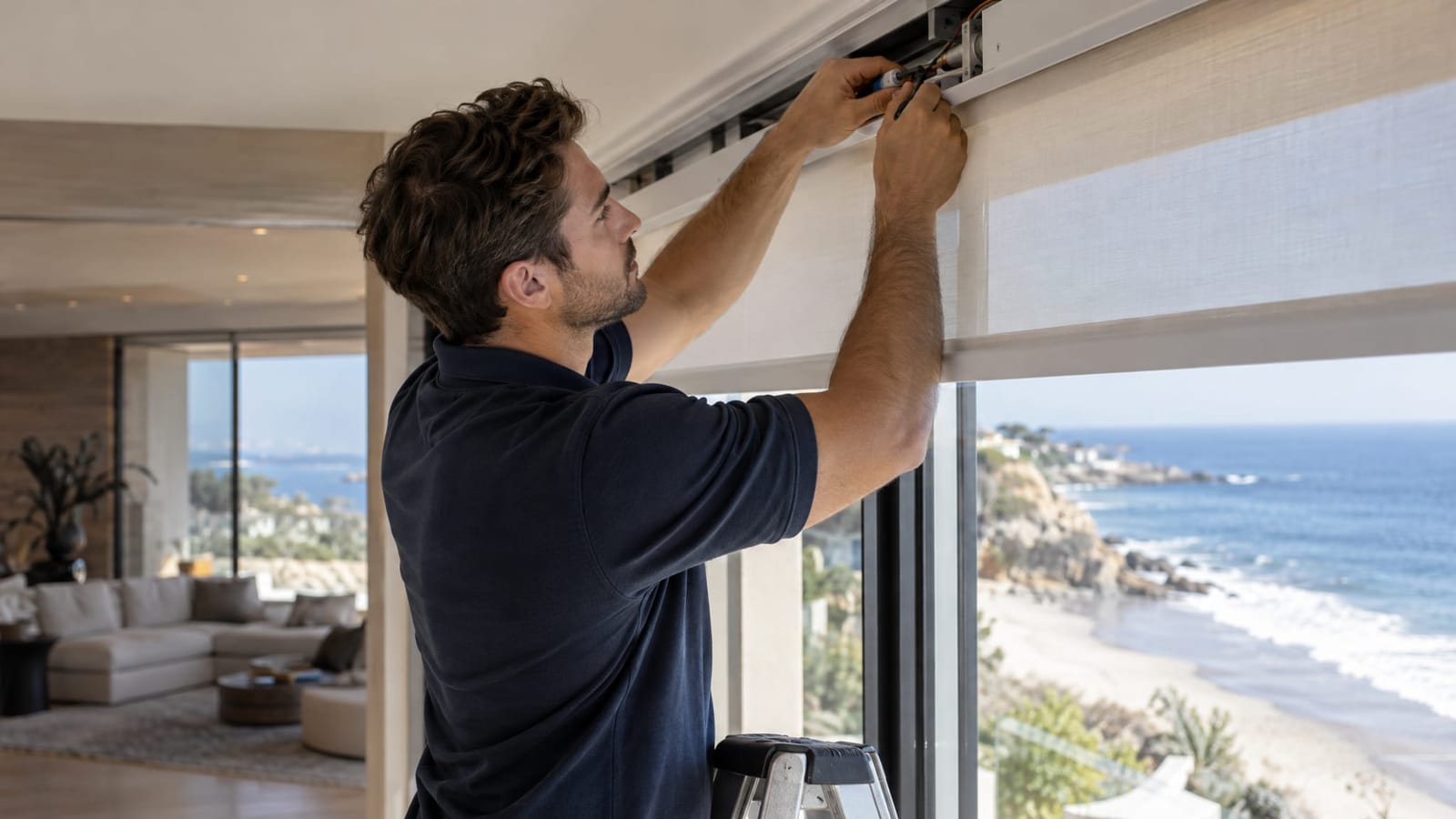
Coastal properties introduce an additional concern: salt-laden air can accelerate corrosion of metal components. For beachfront applications, the complete assembly’s stated suitability for coastal exposure matters more than a general description such as “weather-resistant.” Hardware connections, finish-care requirements, and cleaning access belong in that comparison.
Wind limits also affect exterior shade operation. Automated retraction can support operation within the product’s limits, but it does not turn a shade into an all-weather enclosure. The pergola plan needs a practical place for the shade to retract when conditions call for it.
The Daily Routine: Coordinate Rooms Without Moving Everything Together
The example becomes more useful when controls follow activities rather than a single whole-home schedule:
- Morning: Open selected living-room shades while keeping the bedroom privacy layer independent.
- Direct afternoon sun: Lower the affected living-room shades without closing shaded windows unnecessarily.
- Evening: Coordinate the bedroom’s opaque layer with its lighting scene.
- Entertaining: Keep terrace shading separately adjustable as guests move between indoor and outdoor seating.
A manual adjustment remains valuable. Guests, changing weather, and an unusually bright afternoon do not always follow a programmed routine.
Questions That Affect the Final Design
Can motorized shades work with existing windows?
Yes. The key considerations are mounting space, window hardware, power, and the desired appearance. A surface-mounted system avoids the construction involved in a recessed pocket, although its housing remains visible.
Are battery-powered shades suitable for high windows?
They can reduce the need to route new wiring, but battery access becomes part of the design. For difficult-to-reach glazing, compare that maintenance requirement with the work involved in providing wired power.
Can one shade cover an entire glass wall?
That depends on the system’s dimensions, fabric, and mounting requirements. Dividing the wall into aligned sections allows independent control and can follow the window framing, while a wider shade creates a more continuous surface.
A Separate Response for Each Space
The strongest shade design gives each room what it actually needs: filtered views in the living area, an opaque privacy layer in the bedroom, and exposure-appropriate shading outdoors. Coordinated controls then bring those distinct choices together without making the technology the focus of the home.