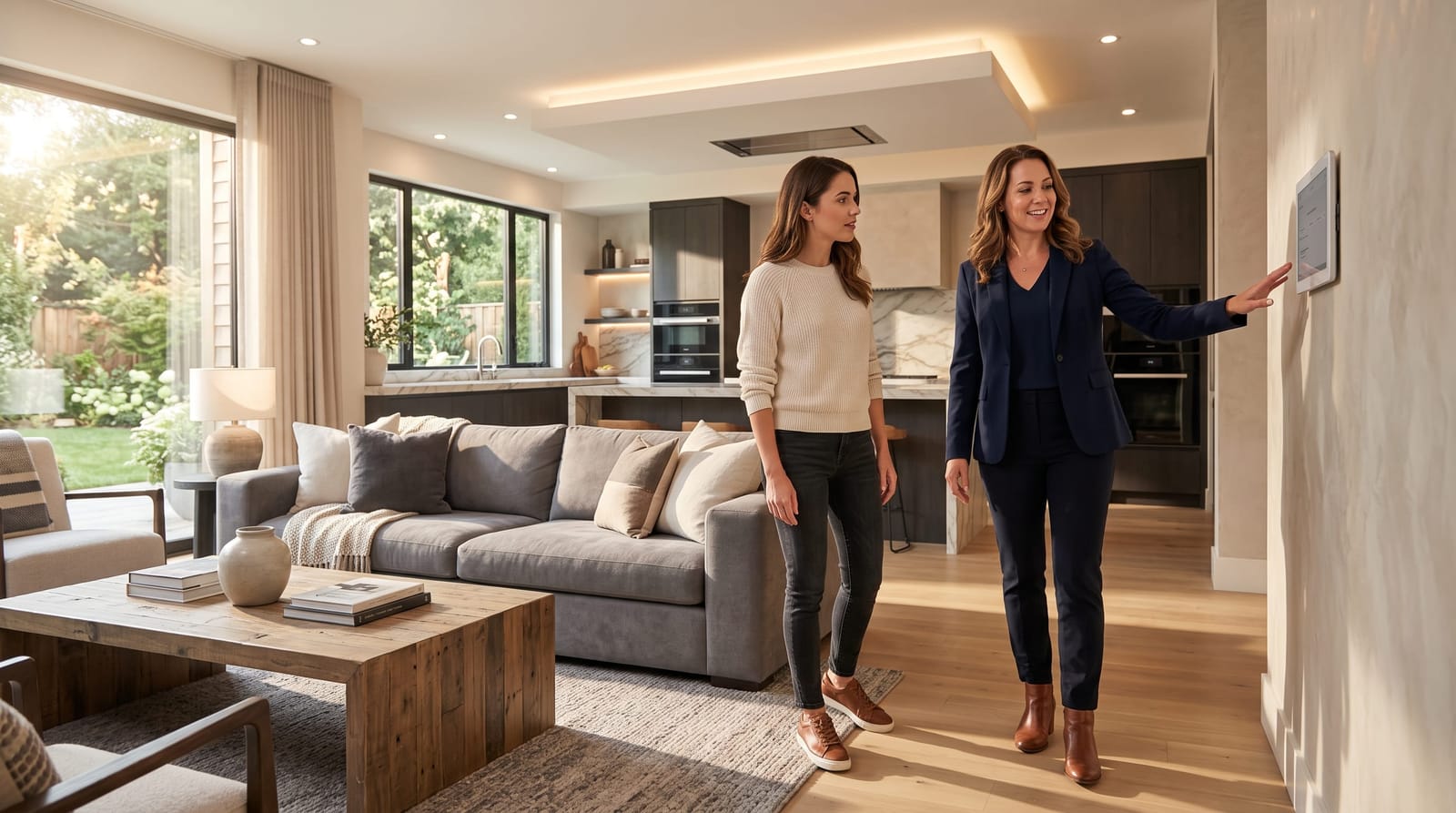
Smart Home Automation in Calabasas: Technology Solutions for Private Gated Estates
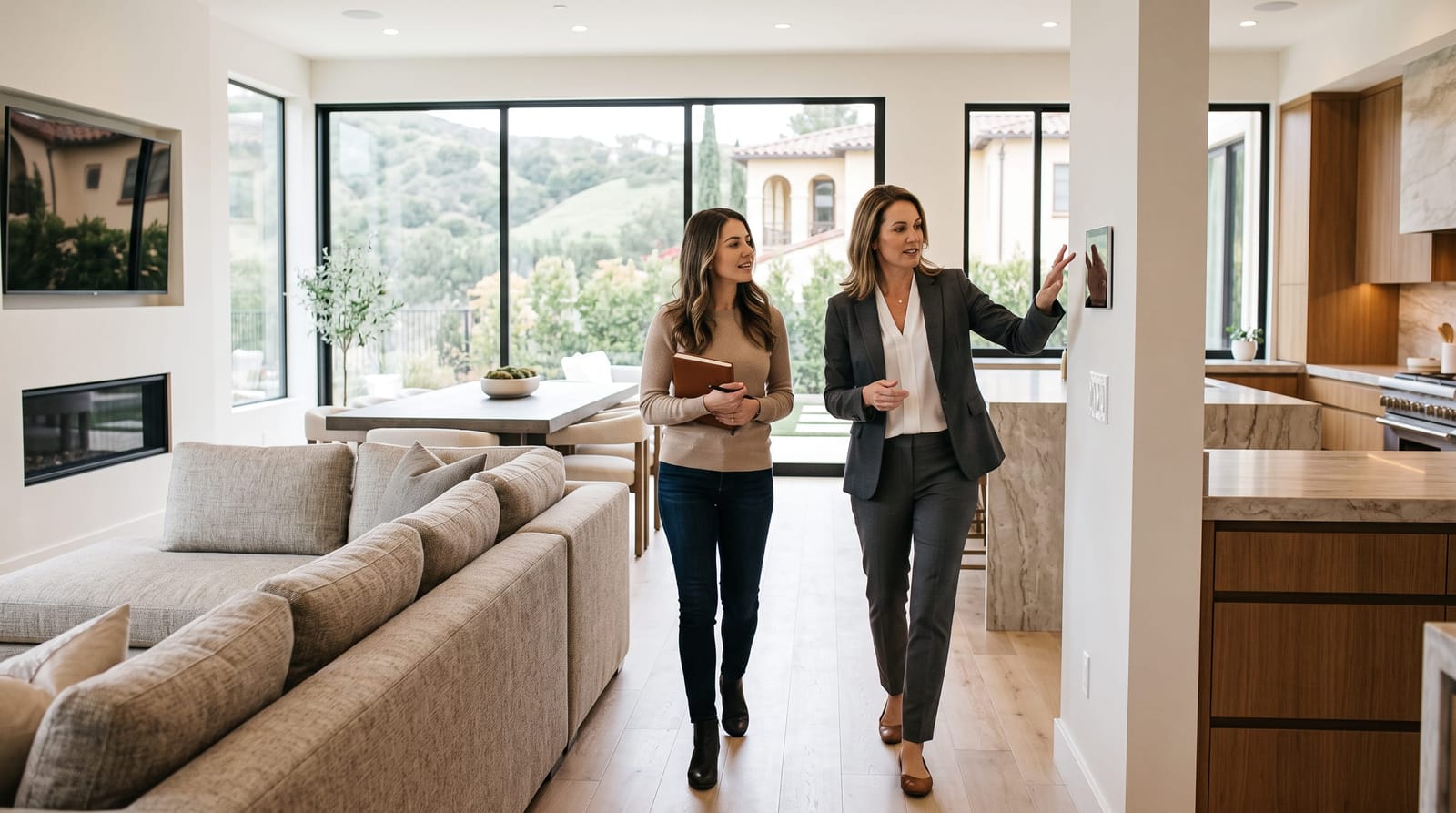
Calabasas homeowners face a unique challenge. Large gated estates demand technology that handles serious complexity: multiple entry points, sprawling square footage, and a high standard of privacy. Standard smart home apps sold at retail stores simply fall short. This reference guide covers the specific automation systems built for Calabasas properties: gate and intercom integration, large-estate networking, whole-home control platforms, and lifestyle automation scenes designed around how residents in this community actually live.
Why Calabasas Estates Require a Different Automation Approach
Most smart home content focuses on smaller suburban homes. A typical Calabasas estate operates on an entirely different scale. Properties in neighborhoods like The Oaks and Hidden Hills commonly exceed 6,000 square feet. Many sit on lots of one acre or more, with detached guest houses, motor courts, and outdoor entertainment zones spread across the property.
This scale creates three problems consumer-grade systems cannot solve:
- Coverage gaps. Wi-Fi routers designed for 2,500 square feet leave dead zones across large properties. Automated devices lose connection. Scenes fail to trigger.
- App fragmentation. A typical DIY setup uses separate apps for lighting, security cameras, thermostats, and audio. Managing a 7,000-square-foot home across five apps is not a luxury experience.
- Entry point complexity. A gated estate may have a main gate, a service gate, a detached garage, and a guest house: each needing coordinated access control that consumer locks cannot provide.
Professional smart home automation in Calabasas addresses all three problems through unified control platforms, typically Crestron, Savant, or Control4, that integrate every system into a single interface. According to industry data, professionally integrated smart home systems reduce daily device interaction time by up to 70% compared to app-based setups.
Gate Access and Intercom Integration for Gated Communities
Gate and intercom integration is the most requested starting point for Calabasas clients. The goal is full visibility and control over every entry point without the friction of separate systems.
What a Professional Gate Integration Includes
- Automated gate triggers. Gates open automatically when an authorized vehicle arrives, using license plate recognition or vehicle proximity sensors. No keypad required.
- Video intercom with two-way audio. Visitors at the gate appear on a touchscreen inside the home. Residents speak with visitors and grant or deny entry from anywhere: inside the house or via mobile app while traveling.
- Coordinated entry scenes. When a recognized vehicle arrives, the gate opens, the driveway lights activate, and the front door unlocks, all as a single automated sequence.
- Service access scheduling. Housekeepers, landscapers, and delivery personnel receive time-limited access codes. Entry logs record every arrival and departure automatically.
Systems from providers like 2N and Doorbird integrate directly into Crestron and Savant platforms. This means gate activity appears in the same interface as lighting, climate, and audio, not in a separate app.
Large-Estate Networking: The Foundation Everything Else Depends On
Automation reliability is only as strong as the network beneath it. A professional integrator builds the network infrastructure before installing a single smart device.
Enterprise-Grade Wi-Fi for Residential Properties
Calabasas estates benefit from enterprise access point systems, brands like Araknis, Ubiquiti, or Cisco Meraki, distributed across the property. A properly designed network for a 7,000-square-foot home typically uses 8 to 12 access points. Each access point handles dedicated bandwidth for specific device categories. Automation devices, security cameras, personal devices, and guest networks each run on separate VLANs (virtual local area networks) to prevent congestion and improve security.
Structured Wiring and Low-Voltage Infrastructure
Professional installations run Category 6A or fiber cabling to every location where a device will live: camera positions, touchscreen panels, outdoor speakers, and network closets. This wired backbone eliminates the wireless interference problems that plague DIY systems in thick-walled Spanish colonial and modern estate architecture common throughout Calabasas.
A well-built network means 99.9% uptime for critical systems. Gates open. Cameras record. Climate systems respond. The entire home works as designed.
Lifestyle Automation Scenes for Calabasas Residents
The most powerful feature of a unified automation platform is the ability to program scenes: single commands that trigger dozens of simultaneous adjustments across the home. These are designed around real daily routines.
Common Scenes for Calabasas Estate Living
- Morning scene. At 7:00 a.m., shades rise gradually, thermostats shift to daytime targets, the kitchen audio activates, and the coffee maker starts, all without touching a single device.
- Entertaining scene. Pool deck lights illuminate, outdoor speakers activate with a selected playlist, patio heaters turn on, and the kitchen and great room lights shift to a warm social setting.
- Privacy scene. All motorized shades lower simultaneously across the home, exterior cameras shift to perimeter monitoring mode, and smart locks confirm every door is secured.
- Departure scene. Pressing one button as you leave confirms all locks, lowers shades, adjusts thermostats to an away setting, and arms the security system: taking roughly 3 seconds instead of 15 manual steps.
- Goodnight scene. Lights dim and turn off room by room on a timed sequence, exterior lighting activates, the alarm arms, and climate systems shift to overnight setpoints.
For residents interested in expanding beyond convenience, wellness smart home technology can layer health-supportive features into these scenes, including circadian lighting schedules and air quality monitoring, aligned with how technology can support daily wellbeing.
Choosing a Smart Home Integrator in Calabasas
Not all installation companies operate at the same level. Calabasas estates require integrators with specific credentials and experience.
What to Look for in a Local Integrator
- Platform certifications. Look for Control4 Certified, Crestron Certified, or Savant Certified installers. These credentials require ongoing manufacturer training and prove the integrator works directly with the platform, not as a general electrician attempting automation work.
- Estate-scale project experience. Ask specifically about projects over 5,000 square feet in Calabasas, Agoura Hills, or adjacent communities. References from similar properties matter more than general positive reviews.
- Ongoing service agreements. A professional integrator offers monitoring and support after installation. Systems this complex require a service relationship, not a one-time installation.
- In-house network design. Avoid companies that subcontract the network installation. Automation and networking must be designed together by the same team.
Local firms serving the Calabasas market, including Iron Lion A.V., KP Audio & Video, and Get Wired Tec: offer integrated services covering AV, automation, and networking from a single point of contact. This matters when something needs troubleshooting quickly.
Frequently Asked Questions
How much does smart home automation cost for a Calabasas estate?
Project costs vary significantly based on home size, system complexity, and the platforms selected. A whole-home Crestron or Savant installation for a large estate typically ranges across a wide spectrum. A qualified integrator will provide a detailed project scope and line-item quote after an on-site assessment. Consulting with multiple certified integrators before committing to a project is always advisable.
Can smart home automation work in homes already built in Calabasas, or only new construction?
Retrofit installations are very common. Experienced integrators use wireless Z-Wave and Zigbee protocols, wireless lighting control systems, and surface-mounted access points to minimize wall cuts in existing homes. Many Calabasas clients install full automation systems in homes built decades ago without major construction disruption.
How does smart home automation improve privacy for gated estate residents?
Automation directly supports privacy through coordinated motorized shades, perimeter camera monitoring, visitor management via intercom, and detailed access logs for every entry point. Residents can confirm the entire property is secured from a single interface, or remotely while traveling, without relying on staff to manually check locks and gates.
How long does a full smart home installation take for a large Calabasas property?
A complete whole-home installation on a property over 5,000 square feet typically takes between 4 and 12 weeks, depending on scope and whether the home is under construction or occupied. Network infrastructure, device installation, and programming each represent separate phases. Your integrator will provide a project timeline during the proposal stage.
Conclusion
Smart home automation in Calabasas works best when it is designed specifically for gated estate living: starting with a professional-grade network, integrating gate and intercom systems into a unified platform, and building lifestyle scenes around real daily routines. The result is not a collection of connected gadgets. It is a home that operates intelligently, protects privacy, and responds to residents rather than requiring constant attention. For the full framework behind whole-home automation decisions, the complete guide to luxury smart home automation in Los Angeles provides the broader context this post builds from.