The Complete Guide to Luxury Smart Home Automation in Los Angeles
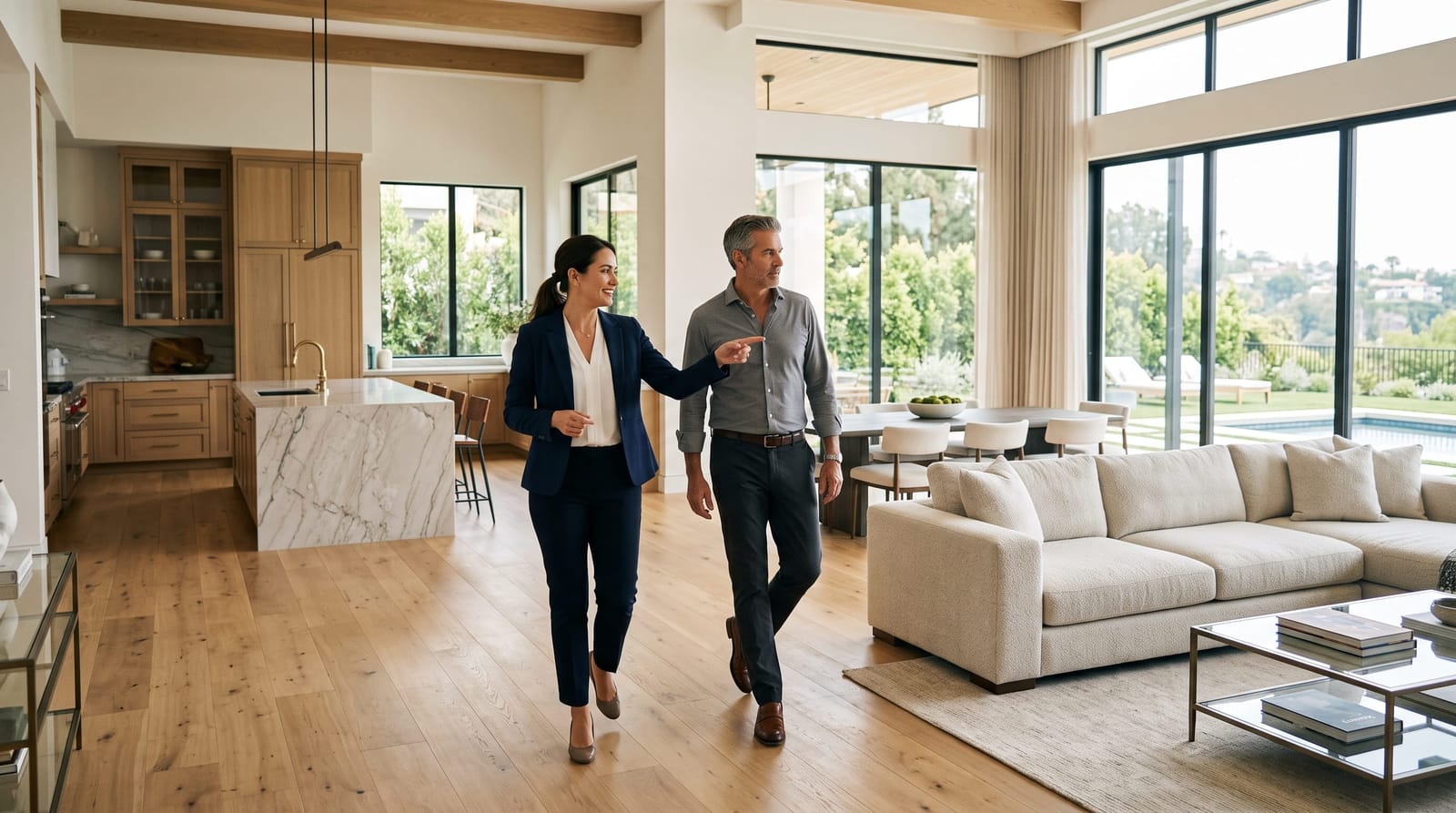
Imagine walking into your Brentwood estate after a long day. The lights ease on at the perfect level, the temperature is exactly where you like it, your favorite playlist begins playing softly through invisible speakers, and the security system confirms everything is locked and monitored, all without touching a single app or speaking a single command. That is not a vision of the future. For homeowners across Beverly Hills, Malibu, Bel Air, and Pacific Palisades, it is the standard that professional smart home automation delivers today.
But here is where many high-net-worth homeowners get stuck: they have experimented with consumer smart devices, a Nest thermostat here, a Ring doorbell there, maybe a handful of Philips Hue bulbs, and instead of simplicity, they have accumulated a fragmented collection of apps, incompatible platforms, and technology that demands their attention rather than fading into the background. The promise of the smart home has not matched the reality.
This guide exists to change that. Whether you are building a new construction estate in the Hollywood Hills, retrofitting a historic property in Hancock Park, or simply ready to replace a patchwork system with something that actually works, this complete guide walks you through everything you need to know about smart home automation in Los Angeles: what it truly means at the luxury level, which systems can be unified, how professional integration differs from DIY, what the design process looks like, and how to select the right partner to bring it all together.
What Whole-Home Automation Actually Means for Luxury Estates
The term "smart home" is used so broadly that it has lost much of its meaning. A doorbell with Wi-Fi connectivity is technically a smart device. But whole-home automation at the luxury level is an entirely different category: one defined not by individual gadgets but by unified intelligence that treats the entire property as a single, responsive environment.
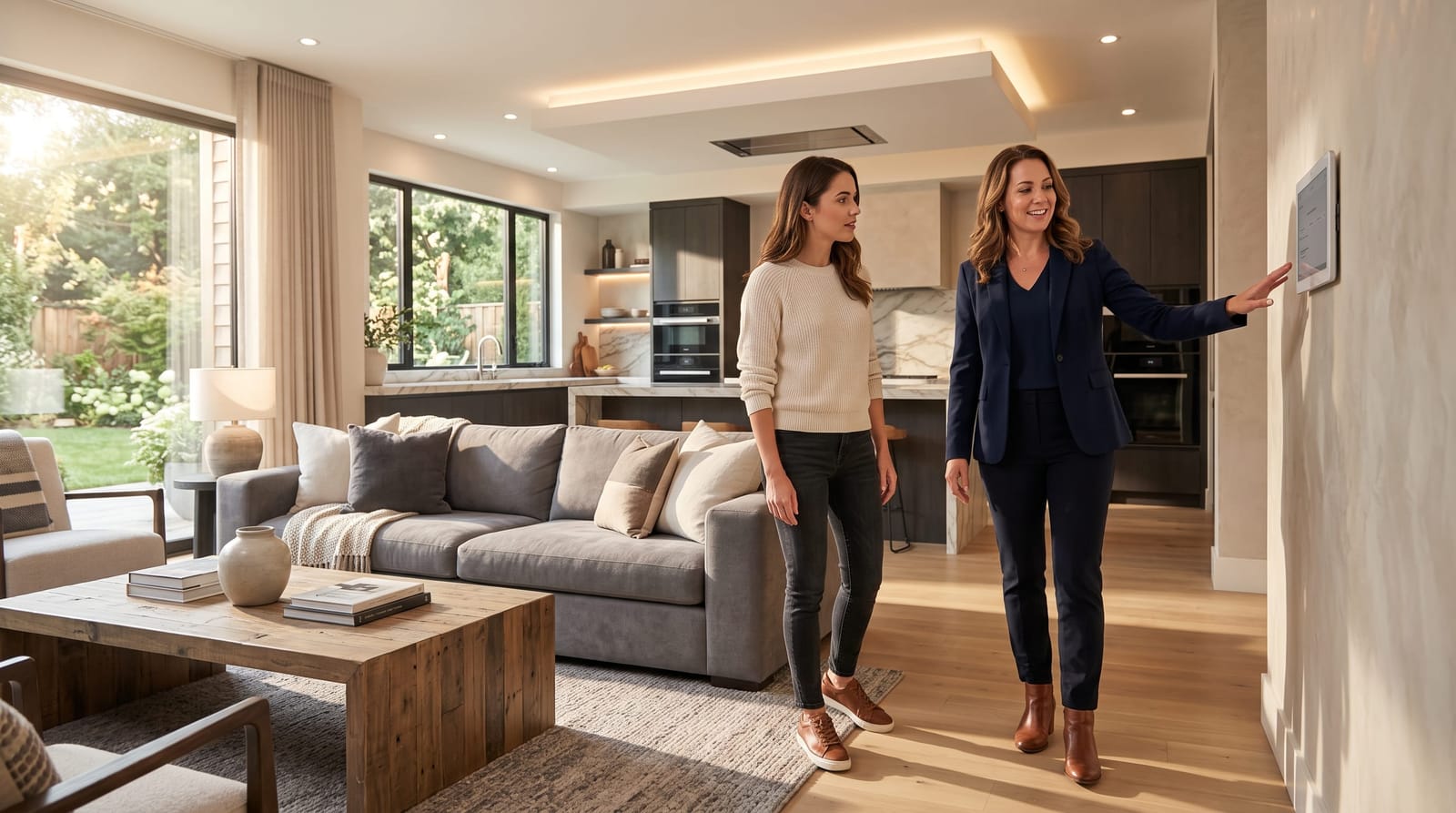
At its core, professional smart home automation in Los Angeles means every system in your home, lighting, motorized shades, multi-room audio and video, climate control, security and access, and networking, operates on a single, centralized platform. These systems communicate with each other in real time, respond to your routines and preferences, and can be managed through one intuitive interface rather than a different app for each device.
The Difference Between Smart Devices and a Smart Home
A true smart home is greater than the sum of its parts. Consider a practical example: a "Good Morning" scene on a professionally integrated system might gradually raise motorized blackout shades in the primary suite, warm the lighting from 2700K to 3000K as daylight increases, adjust the HVAC to your wake-up temperature preference, begin brewing coffee in the kitchen, and unlock the gym door, all triggered by a single tap on a bedside keypad or automatically based on your wake-up schedule. No consumer platform coordinates that experience across multiple subsystems with the reliability and polish that a luxury home demands.
According to industry research, the global smart home market was valued at over $80 billion in 2022 and is projected to exceed $338 billion by 2030: a compound annual growth rate of approximately 20%. Los Angeles consistently ranks among the top U.S. metropolitan markets for luxury home technology adoption, driven by a combination of high property values, architectural innovation, and a design-forward culture where technology is expected to disappear seamlessly into the home environment.
Why Luxury Homeowners Have Unique Requirements
A Malibu bluff estate with 8,000 square feet, a 12-zone audio system, a home theater, a wine cellar with climate monitoring, a guesthouse, and a gate-controlled motor court presents challenges that no consumer-grade platform is engineered to handle. Reliability, aesthetic integration, scalability, and the ability to customize every behavior to the owner's lifestyle are not optional features: they are baseline requirements. That is why the professional integration market exists as a distinct discipline from DIY smart home products.
The Systems That Can Be Unified in a Professionally Integrated Home
One of the most compelling aspects of professional smart home automation is the breadth of systems that can be brought under a single platform. Below are the primary subsystems that a qualified integrator unifies in a luxury Los Angeles home:
Lighting Control
Architectural lighting is one of the most visible expressions of smart home design. Professional lighting control goes far beyond simple dimming: it encompasses color temperature tuning (human-centric lighting that shifts throughout the day to support your circadian rhythm), scene programming for different activities and times of day, and integration with shading to balance natural and artificial light automatically. Lutron, a leading manufacturer in the professional space, reports that well-designed lighting control can reduce energy consumption by up to 40% compared to standard switching.
Motorized Shading and Window Treatments
In Los Angeles, where sunlight is both an asset and a solar heat challenge, motorized shading is one of the highest-impact integrations available. Sheer, blackout, and solar shades can be programmed to respond to sun position, time of day, or specific scenes. Integrated with lighting, they maintain a consistent ambiance as conditions change throughout the day, with no manual adjustment required.
Multi-Room Audio and Home Theater
Distributed audio allows music, podcasts, or other content to follow you through the home at consistent volume levels, with each zone independently controllable. A dedicated home theater with 4K projection, acoustic treatment, and a Dolby Atmos sound system represents the apex of entertainment integration, all managed from the same platform that controls your lights and shades.
Security, Access Control, and Surveillance
Professional security integration for luxury estates goes well beyond alarm systems. It includes:
- High-definition IP camera networks with remote monitoring and AI-assisted motion detection
- Access control for gates, entry doors, and interior spaces with individual credential management
- Video intercom systems that route to any device: phone, tablet, or in-wall touchscreen
- Integration with lighting so that specific zones illuminate when motion is detected after hours
- Smart locks that grant temporary access to housekeepers, contractors, or guests without physical keys
HVAC and Climate Control
Multi-zone HVAC control, integrated with occupancy sensing and scheduling, ensures every room in a large estate maintains the right temperature without wasting energy in unoccupied spaces. For properties with wine cellars, art storage rooms, or humidity-sensitive spaces, dedicated climate monitoring with automated alerts is an essential integration.
Networking and Infrastructure
Every smart home system depends on a robust, reliable network. Professional-grade networking, enterprise-class Wi-Fi access points, managed switches, network segmentation for security, and redundant internet connections, is the invisible foundation that makes everything else work. A consumer router from a big-box store cannot reliably support 150+ connected devices across an 8,000-square-foot property. The network infrastructure is never glamorous, but it is the single most important investment in a smart home project.
How Professional Integration Differs from DIY Smart Home Platforms
The DIY smart home market, dominated by platforms like Apple HomeKit, Google Home, Amazon Alexa, and Samsung SmartThings, has made home automation more accessible than ever. But accessibility and suitability for luxury estates are very different things. Understanding the gap between consumer and professional platforms is essential for any homeowner making a serious investment in home technology.
Platform Reliability and Stability
Consumer platforms are dependent on cloud servers operated by third parties. When Amazon Web Services experiences an outage, which happens multiple times per year, Alexa-controlled devices stop responding. Professional platforms like Control4, Crestron, and Savant are designed for local processing, meaning the system continues to operate independently of internet connectivity. For a luxury home where guests, family, and lifestyle routines depend on the system working every time, local processing is not optional.
Customization Depth
DIY platforms offer limited customization within predefined parameters. Professional platforms allow an integrator to program virtually any behavior: custom button functions, complex multi-step scenes, conditional logic ("if the front door opens after 10 PM, turn on the entry lights at 30% and send a notification"), and manufacturer-specific integration with thousands of compatible devices. The depth of customization available through professional platforms is orders of magnitude beyond what any consumer app supports.
Long-Term Support and Serviceability
When a consumer smart device is discontinued or its app is abandoned by the manufacturer, it simply stops working. Professional integrators maintain ongoing service relationships with clients, provide system updates, and ensure that as technology evolves, the system can be updated rather than replaced wholesale. That ongoing relationship, part technical support, part lifestyle concierge, is a core part of the value professional integration delivers.
Aesthetic Integration
Professional systems offer customizable keypads, touchscreens, and interfaces that are designed to complement luxury architecture and interior design rather than clash with it. Lutron Palladiom keypads, for example, are available in dozens of finishes and can be engraved with custom labels. A professionally integrated home should have technology that feels like a natural extension of its design, not an afterthought bolted on top.
The Luxury Smart Home Design and Installation Process
One of the most common misconceptions about professional smart home automation is that it begins when an installer shows up with equipment. In reality, the design process, the thinking, planning, and documentation that precedes any installation, is where the quality of the final system is determined. Here is how the process typically unfolds for a luxury estate in Los Angeles:
Discovery and Lifestyle Consultation
A professional integrator begins by understanding how you actually live in your home. Who lives there? How do you entertain? Do you travel frequently and need remote monitoring? What are your daily routines? What technology frustrates you today? This conversation is the foundation of a system designed around your life rather than a generic template. The best integrators in Los Angeles spend significant time in this phase before recommending a single piece of equipment.
System Design and Documentation
Based on the discovery conversation, the integrator produces a detailed system design: floor plans showing device locations, lighting layouts, network infrastructure diagrams, equipment specifications, and a complete scope of work. This documentation is what separates a professional installation from a trial-and-error approach. It also allows the system to be serviced, modified, or handed off to another technician years in the future without starting from scratch.
Pre-Wire and Infrastructure
For new construction or major renovation projects, the most critical phase happens before any walls are closed. Proper structured wiring, for audio, video, networking, lighting control, and security, must be planned and installed during framing. Changes made after drywall is up are expensive and often involve compromises. Coordination between the integrator, architect, interior designer, and general contractor during this phase is essential and distinguishes experienced integrators from those who operate only in finished spaces.
Equipment Installation and Programming
Once infrastructure is in place, equipment is installed and the real artistry begins: programming. This is where the scenes, automations, schedules, and behaviors that define the user experience are created. Programming a high-end Control4 or Crestron system for a large estate can take hundreds of hours of skilled labor. It is not a commodity: it is a craft, and the quality of programming is what determines whether the system delights or frustrates the homeowner.
Client Training and Handoff
Even the most intuitive interface requires a thoughtful orientation. A good integrator walks every member of the household through the system, provides clear documentation, and ensures everyone, from the homeowner to the property manager to the housekeeper, is comfortable with daily operation. This handoff is often underinvested in consumer-grade installations and is a hallmark of professional service.
Los Angeles-Specific Considerations for Luxury Smart Home Projects
Smart home automation in Los Angeles comes with a specific set of considerations that homeowners and integrators must account for. The region's unique geography, climate, and architectural diversity all shape how systems are designed and installed.
Outdoor Living Integration
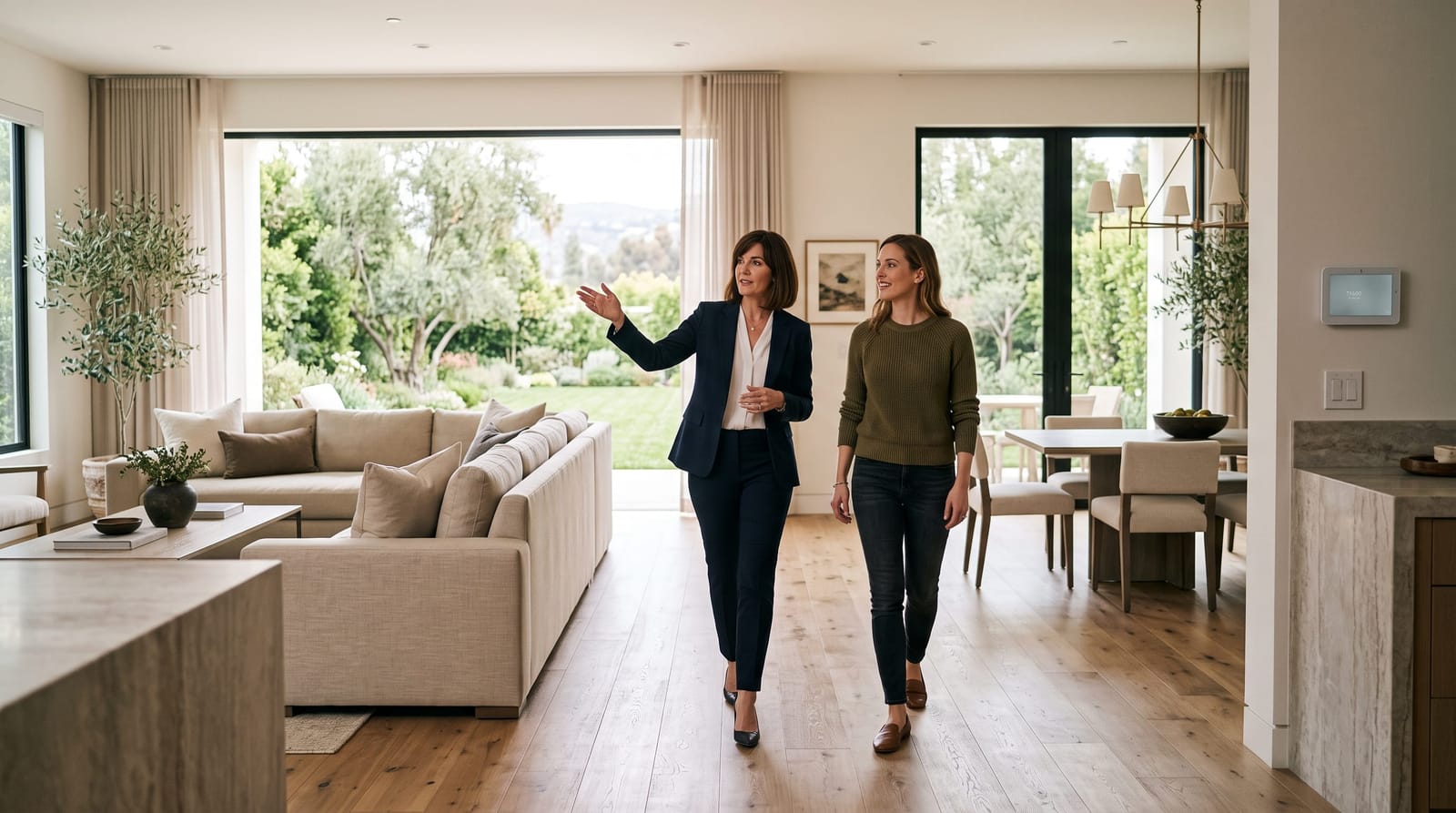
Los Angeles lifestyles are defined by indoor-outdoor living. A luxury smart home system must extend seamlessly to covered patios, pool decks, outdoor kitchens, and landscaped grounds. Weatherproof outdoor speakers, motorized pergola screens, outdoor lighting scenes, and pool and spa automation are all standard inclusions in a comprehensive system for properties in Malibu, Pacific Palisades, or Bel Air.
Seismic Resilience and Utility Considerations
Southern California's seismic environment is a real factor in smart home infrastructure design. Equipment racks should be properly secured, and critical systems should be supported by uninterruptible power supplies (UPS) to protect against both earthquakes and the power fluctuations that are common during fire season. Integration with whole-home generators or battery backup systems (such as Tesla Powerwall installations) is increasingly standard in high-end Los Angeles projects.
Historic Properties and Architectural Constraints
Many of Los Angeles's most prestigious neighborhoods, Hancock Park, Windsor Square, the flats of Beverly Hills, include historic properties with architectural restrictions that complicate traditional wiring approaches. Experienced integrators working in these neighborhoods have refined techniques for retrofitting systems into architecturally sensitive spaces with minimal invasiveness, using technologies like wireless lighting control and structured wiring pathways that preserve historic finishes.
Multi-Property and Remote Management
Many high-net-worth Angelenos maintain multiple residences: a primary estate in Brentwood, a beach house in Malibu, perhaps a mountain retreat. Professional platforms with robust remote access allow homeowners to monitor and control all properties from a single interface, receive security alerts regardless of location, and prepare each property for arrival automatically.
Selecting the Right Smart Home Integrator in Los Angeles
The integrator you choose matters more than any specific piece of equipment. A talented integrator can make a good system exceptional. An inexperienced one can make an excellent platform frustrating. Here are the key criteria for evaluating a professional smart home company in Los Angeles:
- Certifications and manufacturer partnerships: Look for integrators who are certified by the platforms they install: Control4 Certified, Crestron Certified, or Savant Elite dealers. These certifications require demonstrated technical competency and ongoing training.
- Portfolio of completed luxury projects: Ask to see completed projects in your neighborhood or property category. Residential complexity in Holmby Hills is different from a condominium: confirm the integrator has relevant experience.
- Design-phase process: An integrator who leads with listening and design rather than immediately recommending equipment is a strong signal of professional maturity.
- Ongoing service and support model: Understand exactly what happens after installation. Is there a service agreement? Response time commitments? Remote monitoring? A professional relationship should extend far beyond the initial project.
- Collaboration with your design team: The best integrators in Los Angeles work fluidly alongside architects, interior designers, and general contractors. Ask how they coordinate with other project stakeholders.
- References from current clients: Speak directly with homeowners who have similar properties and have been clients for at least two to three years. Long-term satisfaction is the most reliable indicator of quality.
For a deeper look at what a professional integration partner actually does and how to evaluate them, see our guide on working with a smart home integrator Los Angeles homeowners rely on for high-end projects.
Understanding Investment and Value in Luxury Smart Home Projects
Smart home automation at the luxury level is a significant investment, and understanding what drives cost, and what drives value, helps homeowners approach the process with realistic expectations. While specific pricing varies widely based on property size, system complexity, and scope, there are several important frameworks for thinking about investment in this category.
A whole-home automation project for a large luxury estate in Los Angeles typically encompasses equipment, design, installation labor, and programming, with ongoing service agreements representing a separate ongoing cost. Projects range from targeted room-by-room upgrades to comprehensive whole-home integrations covering every system and every space. The scope, quality of equipment specified, and complexity of programming are the primary drivers of total investment.
From a value perspective, professionally integrated smart homes in premium Los Angeles markets consistently command attention from sophisticated buyers who view technology infrastructure similarly to how they view kitchen finishes or HVAC quality, as evidence of how thoughtfully the property was built or curated. A well-documented, professionally designed system is an asset, not just an amenity.
For a detailed breakdown of what luxury smart home projects cost and what factors influence investment at each tier, our comprehensive smart home automation cost Los Angeles guide covers the full picture.
Deep Dive Topics: Explore Every Dimension of Luxury Smart Home Automation
This guide provides the comprehensive foundation for understanding smart home automation in Los Angeles at the luxury level. Each section of this topic has its own dedicated deep-dive resource that goes further on the details that matter most. Explore the topics most relevant to your situation:
- How unified platforms actually work: If you want to understand the technical architecture behind a professionally integrated home, how devices communicate, what a control processor does, and why platform choice matters, our guide to smart home system integration explains it in plain language for homeowners.
- Investment and project costs: For a realistic picture of what luxury smart home projects cost at different scopes, what drives those numbers, and how to evaluate value versus price, see the complete smart home automation cost Los Angeles breakdown.
- Customizing the system to your lifestyle: The difference between a smart home and your smart home lies in customization. Our guide to building a custom smart home system Beverly Hills homeowners actually use covers the lifestyle design process in detail.
- The role of a professional integrator: Understanding what a qualified integration company does, and how that differs from a general AV installer or a security company, is essential before engaging anyone for a luxury project. Our overview of what a smart home integrator Los Angeles provides covers the full scope of professional services.
- New construction vs. retrofit: The approach to smart home automation is fundamentally different depending on whether you are building new or working within an existing structure. Our guide to smart home automation new construction Los Angeles projects and retrofits explains the key differences, trade-offs, and opportunities for each scenario.
- Choosing the right platform: Control4, Crestron, and Savant are the three dominant platforms in the luxury residential market, and each has meaningful differences in architecture, user experience, and ideal use case. Our comparison of the best smart home platform luxury homes can support walks through each in detail to help inform your conversation with an integrator.
Conclusion: Technology That Disappears Into Your Lifestyle
The best smart home is one you forget is there, not because it failed to deliver, but because it works so reliably and so intuitively that it simply becomes part of how your home feels. Lights that always set the right mood. A temperature that is always right. Music that follows you. Security you never have to think about. That is the standard professional smart home automation delivers for luxury estates across Los Angeles.
Getting there requires more than buying the right equipment. It requires a design process that begins with understanding your lifestyle, a technical foundation built on reliable infrastructure, and a programming artistry that translates your preferences into behaviors the system executes flawlessly every day. It requires the right integration partner: one with the experience, the certifications, and the service commitment to support your home for years, not just weeks after installation.
Smart Homes Innovations works exclusively with luxury homeowners across Brentwood, Beverly Hills, Malibu, Bel Air, and the greater Los Angeles area to design and deliver smart home systems that genuinely enhance how you live. If you are ready to explore what a professionally integrated home looks and feels like, we welcome the conversation.
Contact Smart Homes Innovations to schedule a complimentary design consultation for your Los Angeles estate.