What Does a Smart Home Integrator Do? The Role of a Professional Automation Company

If you've been exploring the world of smart home automation in Los Angeles, you've likely encountered two very different types of providers. One sells you a box and a warranty. The other designs a system around your home, your lifestyle, and your long-term goals. Understanding that difference is essential, especially when your home represents a significant investment. A professional smart home integrator in Los Angeles does far more than install devices. They engineer complete living environments. This article breaks down exactly what that process looks like, who it's right for, and why homeowners of luxury properties consistently choose professional integration over retail-grade alternatives.
The Big Difference: Retailer vs. Professional Integrator
Walk into a big-box electronics store and you'll find smart home products on every shelf. Smart speakers, video doorbells, app-controlled thermostats: it all looks compelling. The problem is that these products are designed to work independently. Each one has its own app, its own cloud service, and its own logic. Connecting them creates friction, not convenience.
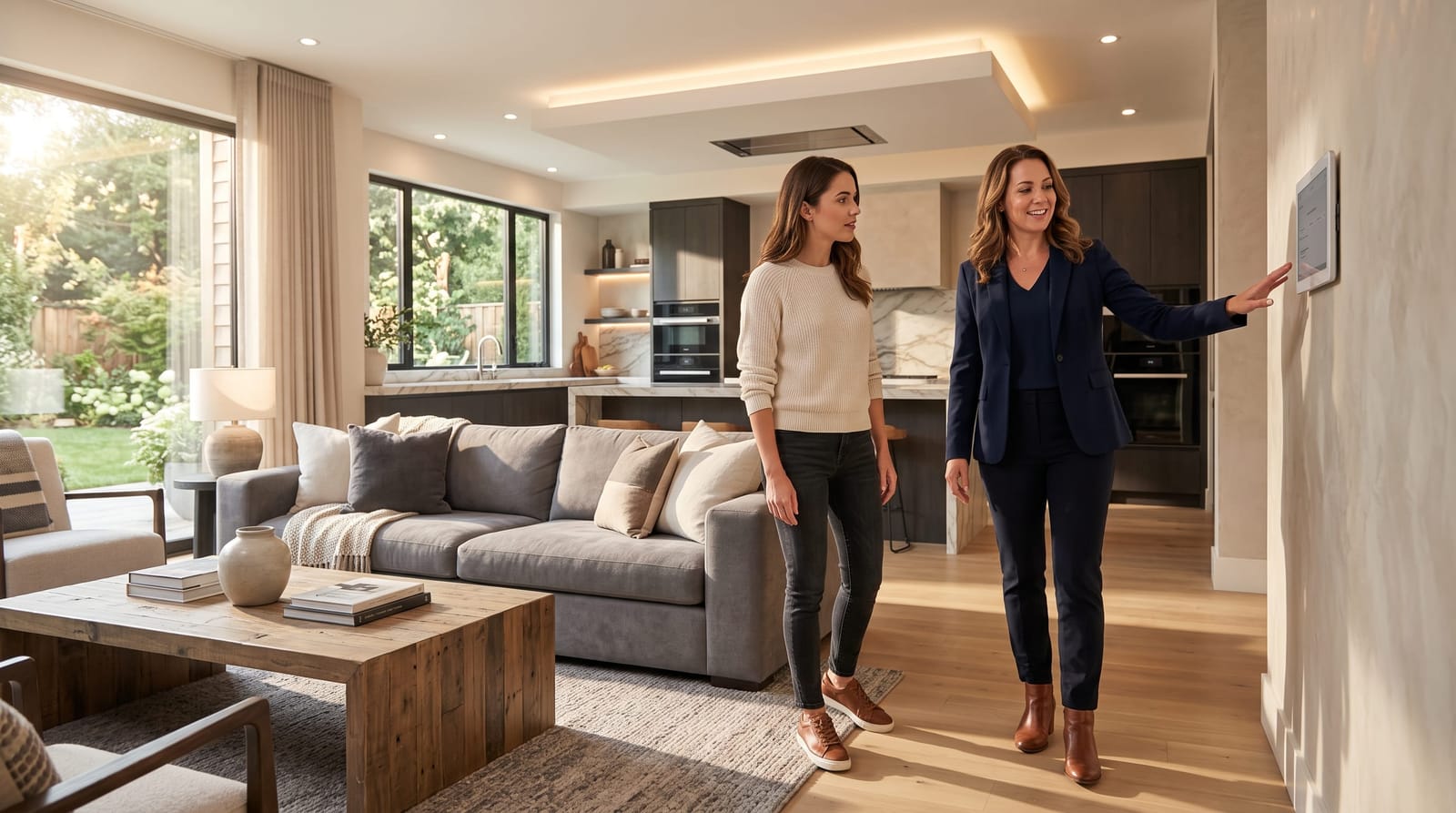
A professional smart home integrator in Los Angeles takes a fundamentally different approach. Instead of selling you products, they design a unified system. Every device, lighting, climate, security, audio, video, motorized shading, operates through a single platform. You don't manage ten apps. You manage one experience.
What Sets Professional Integration Apart
- Custom system design based on architectural drawings and your daily routines
- Commercial-grade hardware that outperforms consumer products in reliability and longevity
- Dedicated programming that creates intelligent automation logic, not just remote control
- Ongoing support relationships rather than one-time transactions
- Accountability: one company owns the entire system, not a patchwork of manufacturers
For homes valued at $3 million and above, this distinction isn't a luxury: it's a baseline expectation. The complexity of larger estates demands professional engineering. A sprawling Bel Air compound with twelve zones of audio, a home theater, a pool house, and a guest wing cannot be responsibly managed with consumer-grade equipment and a smartphone app.
Phase One: Design Consultation and Discovery
Every professional integration project begins with listening. A qualified smart home integrator in Los Angeles spends considerable time understanding how you actually live before recommending a single piece of hardware.
This discovery phase typically involves a detailed conversation about your daily routines, your family's habits, your aesthetic priorities, and your future plans for the home. Are you entertaining frequently? Do you travel often and need remote monitoring? Do you have family members with specific accessibility needs? Are you planning a renovation that could affect wiring?
What a Design Consultation Covers
- A walkthrough of the physical space: room by room, indoors and outdoors
- Review of existing infrastructure, including electrical panels and network cabling
- Identification of architectural constraints and opportunities
- Discussion of preferred control interfaces: touchscreens, keypads, voice, mobile
- Budget scoping and phasing options if a staged rollout makes sense
This phase produces a design document, often called a scope of work or system design proposal. It maps out every subsystem, specifies the hardware, and outlines how everything connects. You're not buying equipment. You're buying a plan that has been engineered specifically for your home.
Phase Two: System Engineering and Pre-Programming
Once the design is approved, the engineering work begins. This is where professional integration earns its value, and where the gap between a big-box installer and a true integrator becomes impossible to ignore.
System engineering involves creating the logical architecture of your smart home. Which devices communicate on which network segments? How does the automation controller handle simultaneous inputs from multiple zones? What happens to your lighting scenes when the security system triggers an alarm? These questions require technical expertise that goes well beyond plugging in a hub.
Pre-Programming: Building the Intelligence Before Installation
Many professional integrators complete a significant portion of programming before setting foot in your home on installation day. Controllers are staged, software is configured, and automation logic is tested in a controlled environment. This approach reduces installation time and minimizes disruption to your household.
Pre-programming also allows the integrator to simulate how the system will behave before committing to final configurations. It's the difference between a bespoke suit and an off-the-rack garment: every detail is measured and adjusted before the final fitting.
To understand how these subsystems connect into a single coherent platform, the article on smart home system integration provides a useful technical foundation.
Phase Three: Installation and On-Site Configuration
Installation day, or in the case of large estates, installation weeks, is where the physical work happens. A professional integrator coordinates a skilled team that typically includes low-voltage technicians, network engineers, and licensed electricians working in close collaboration.
Structured cabling is pulled and terminated. Equipment racks are built and populated. Devices are mounted, calibrated, and connected. But the most important work during this phase is on-site configuration: adapting the pre-programmed system to the reality of the physical space.
What Happens During Installation
- Network infrastructure deployment: access points, switches, and dedicated subnets for IoT devices
- Equipment rack build-out in mechanical rooms or dedicated AV closets
- In-wall and in-ceiling device placement: speakers, keypads, sensors, cameras
- Final programming adjustments based on real-world acoustic and lighting conditions
- Integration testing across all subsystems simultaneously
Understanding how long this process realistically takes is an important part of planning. For estates over 5,000 square feet, the smart home installation timeline for a luxury estate varies considerably based on the number of subsystems and whether the home is under active construction.
Phase Four: Client Training and System Handoff
A system that the homeowner doesn't understand is a failed system. Professional integrators know this. A proper handoff includes dedicated training sessions, not a rushed five-minute walkthrough, that cover how to use every interface, what to do if something doesn't behave as expected, and how to request support.
Training should be role-appropriate. The primary homeowner may want to understand the full system. A household manager may need focused instruction on specific functions. Children or guests may interact with simplified interfaces designed for ease of use. A professional integrator accounts for all of these scenarios.
Documentation and System Records
Every professional-grade project should conclude with thorough documentation: network diagrams, device IP addresses, programming logic summaries, and warranty records. This documentation protects your investment. If the integrator ever needs to service the system, or if you decide to work with a different company in the future, the records allow any qualified technician to understand the system quickly.
If you're evaluating which platform your system should be built on, the comparison of best smart home platform options for luxury homes, including Control4, Crestron, and Savant, is worth reviewing before the design phase begins.
Phase Five: Ongoing Support and System Evolution
A smart home is a living system. It changes as your household changes. Software updates are released. New devices are added. Family members move in or out. The integrator relationship shouldn't end at installation: it should evolve into an ongoing partnership.
Reputable firms offer service agreements that include remote monitoring, proactive maintenance, and priority response for issues. Remote access tools allow integrators to diagnose and often resolve problems without requiring a site visit. This level of support is only possible when the original integrator documented the system properly and maintains the client relationship actively.
When Your Needs Change
Luxury homes are often renovated, expanded, or repurposed over time. A professional integrator can adapt your system to accommodate a new home theater, an outdoor living area addition, or a guest house buildout. Because the core platform was designed for scalability, adding new zones and devices is a structured process, not a workaround.
If you're comparing the integration process for a new build versus an existing home, the guide on smart home automation for new construction versus retrofit in Los Angeles addresses the practical differences in detail.
Related Details Worth Exploring
If you're moving toward hiring a professional smart home integrator in Los Angeles, two specific topics will help you make a more informed decision. First, knowing the right questions to ask a smart home company before hiring them can reveal a great deal about an integrator's depth of experience and service model. Second, understanding realistic project timelines will help you coordinate installation with any ongoing renovation or move-in schedule.
Conclusion
A professional smart home integrator in Los Angeles isn't just a contractor who installs technology. They're a design partner, a systems engineer, a project manager, and a long-term service provider, all in one. For homeowners who have invested significantly in their property, the quality of that partnership directly affects how well the home functions every single day. The difference between a fragmented collection of smart gadgets and a truly unified, intuitive living environment comes down to who designs and builds the system. If you're ready to explore what professional integration looks like for your home, contact Smart Homes Innovations for a design consultation.