What Is a Wellness Smart Home and Is It Right for You?
If you've spent any time researching smart home upgrades, you've likely encountered the phrase "wellness smart home" appearing alongside the usual conversation about convenience and control. But wellness-focused technology represents something meaningfully different from a standard smart home, and for homeowners in Los Angeles who invest seriously in their health, the distinction matters. This guide breaks down exactly what a wellness smart home is, how it differs from conventional automation, and helps you decide whether this kind of system belongs in your residence.
The Core Definition: What Makes a Home a "Wellness Smart Home"?
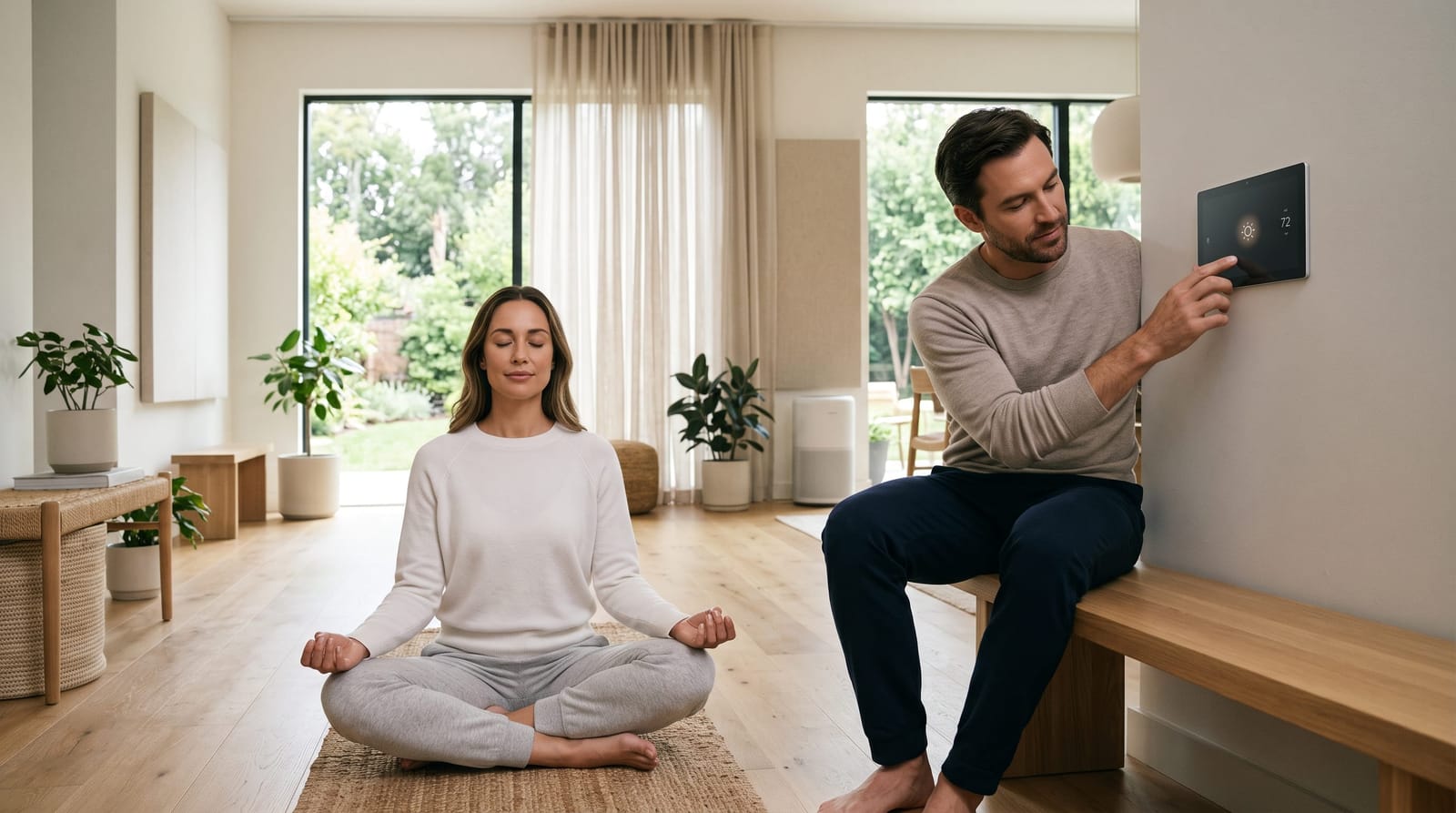
A wellness smart home is a residential environment where technology is deliberately designed and integrated to support your physical health, mental clarity, and emotional well-being, not just your comfort or convenience. While a standard smart home might let you dim your lights from your phone or lock your front door remotely, a wellness smart home asks a deeper question: How can this home help you feel better, sleep better, breathe better, and live longer?
The distinction is intentional and architectural. A wellness smart home treats your residence as an active participant in your health routine. It uses sensors, automation, and often data from wearable devices to continuously optimize the environment around you. That might mean your home automatically adjusts humidity levels when your bedroom air gets too dry, shifts lighting temperature to align with your circadian rhythm, or activates air purification when outdoor pollution spikes, without you touching a single button.
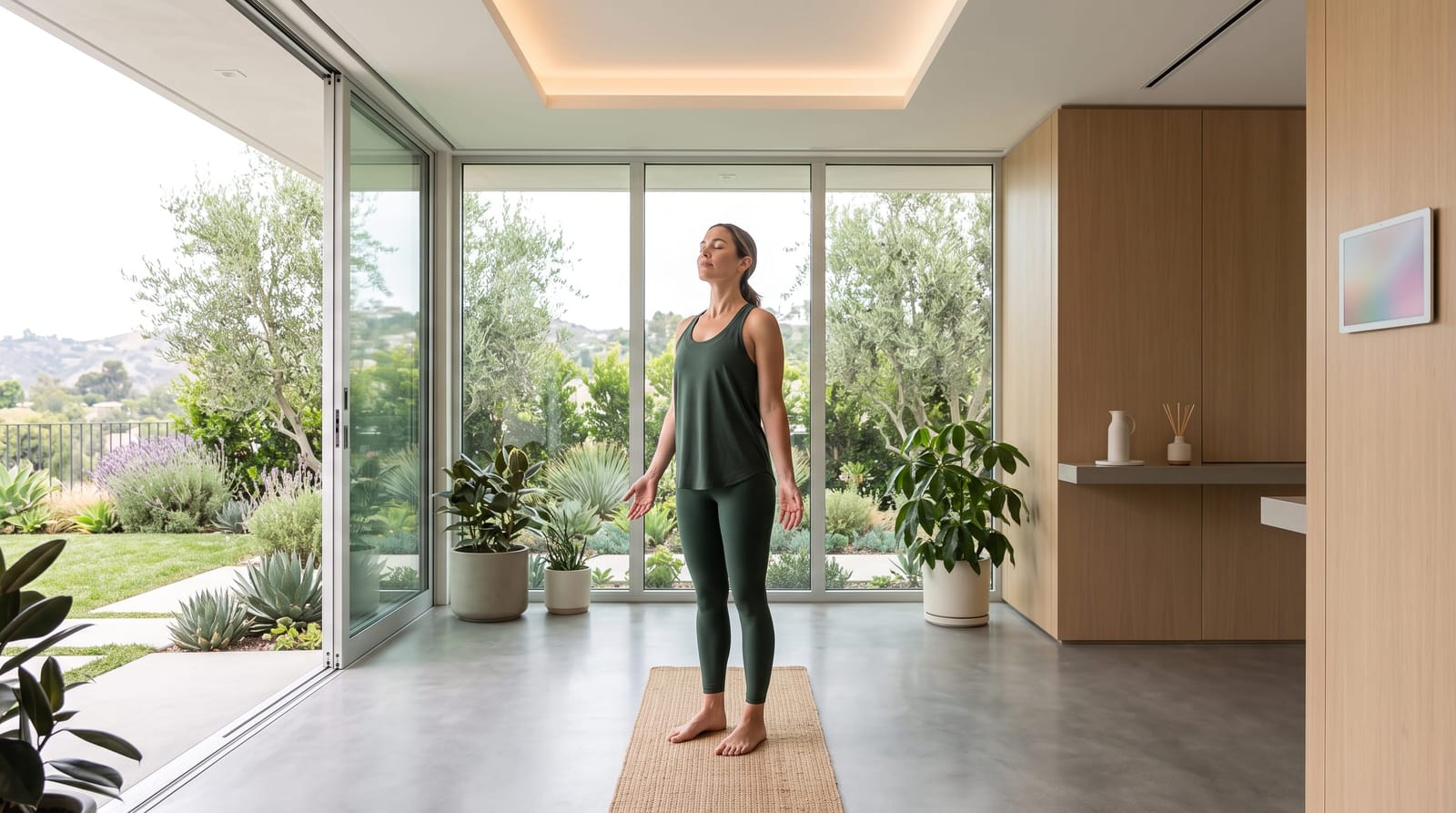
Think of it less like a gadget collection and more like a health infrastructure layered invisibly into your walls, ceilings, and daily rhythms. For luxury homeowners in Los Angeles, where wellness culture, air quality concerns, and demanding schedules converge, this framing resonates deeply.
How a Wellness Smart Home Differs from a Standard Smart Home
Standard smart homes are built around control and automation. You tell your home what to do: turn off the lights, play music, set the thermostat to 70 degrees. The system responds. It's reactive and user-commanded. The value proposition is convenience.
A wellness smart home operates on a different logic: one that is proactive, health-driven, and often invisible in its operation. Here's how the two diverge across key areas:
- Air Quality: A standard smart home might include a smart thermostat. A wellness smart home integrates real-time air quality monitoring with HEPA and activated carbon filtration systems that respond automatically to VOC levels, particulate matter, and CO₂ concentrations, all calibrated to clinical thresholds, not just comfort preferences.
- Lighting: Smart lighting in a conventional home is about ambiance. In a wellness home, lighting is tuned to your biology: delivering high-intensity, blue-enriched light in the morning to suppress melatonin and increase alertness, then shifting to warm amber tones in the evening to prepare your brain for sleep. This is called circadian or human-centric lighting, and it's a foundational element of wellness design.
- Sleep Environment: Where a standard system might let you set a "good night" scene, a wellness smart home creates a precisely engineered sleep sanctuary: managing temperature, sound masking, blackout shade timing, and even bedroom air quality in a coordinated sequence that begins hours before you climb into bed.
- Data Integration: Advanced wellness systems can sync with wearables like Oura Rings or Apple Watch to read biometric data and adjust home conditions accordingly. If your sleep data shows elevated resting heart rate, the system might lower room temperature slightly the following night to support recovery.
The short version: a standard smart home makes your life easier. A wellness smart home makes your life healthier.
The Core Systems That Define a Wellness Smart Home
For homeowners exploring this category seriously, it helps to understand the five primary systems that most wellness smart homes incorporate:
1. Indoor Air Quality Management
Given Los Angeles's ongoing air quality challenges, wildfire smoke, urban particulates, and high-allergen seasons, this is often the first system luxury homeowners prioritize. Expect multi-zone air monitoring, hospital-grade filtration, automated ventilation control, and humidity balancing. Some installations include ERV (Energy Recovery Ventilator) systems that bring in fresh filtered outdoor air without temperature loss.
2. Circadian Lighting Systems
These go well beyond dimming. Systems like Ketra or Lutron's Ketra integration dynamically shift color temperature and intensity throughout the day based on time, season, and even your personal schedule. The science behind circadian lighting and its impact on sleep quality is substantial, and it's one of the highest-ROI wellness upgrades available.
3. Sleep Optimization Technology
The bedroom in a wellness smart home is engineered with the same rigor as a performance athlete's recovery room. Automated blackout shading, acoustic management, smart mattress integration, and temperature regulation work in concert. If you're curious about how these systems function as a coordinated daily ritual, how smart home automation supports sleep health in luxury residences covers the mechanics in detail.
4. Nutrition and Hydration Support
Higher-end wellness integrations include smart kitchen systems: refrigerators with inventory tracking, filtered and mineral-balanced water delivery systems, and even appliances that connect to nutrition apps to support dietary consistency.
5. Mental and Emotional Wellness Environments
Spa rooms, meditation spaces, and biophilic design elements, living walls, natural light maximization, integrated nature soundscapes, round out the emotional dimension of a wellness smart home. Sound systems tuned to specific acoustic frequencies, aromatherapy automation, and light therapy panels are increasingly common in Los Angeles luxury installations.
Is a Wellness Smart Home Right for You?
This is the question that deserves an honest answer. A wellness smart home is a significant investment: both financially and in terms of planning, installation, and ongoing calibration. It's right for you if:
- You actively invest in your health and view your home as an extension of that commitment, not just a place to sleep.
- You or a family member manage health conditions influenced by environment: respiratory issues, sleep disorders, chronic stress, or immune sensitivities.
- You work from home and need your environment to support sustained cognitive performance across long days.
- You travel frequently and want your home environment optimized for recovery when you return.
- You're building or undergoing a significant renovation and can integrate wellness systems at the infrastructure level, where they deliver the greatest impact and most seamless experience.
It may be less urgent if your primary goals are entertainment, security, or convenience automation. Those needs are better served by traditional smart home systems, though many wellness platforms are modular enough to start with one area (like air quality or lighting) and expand over time.
One useful framing: if you already spend meaningfully on gym memberships, personal training, sleep specialists, or nutritionists, a wellness smart home is essentially bringing that same investment into the 18+ hours a day you spend inside your residence. The ROI argument becomes quite clear.
Many homeowners also find that once their morning routine is automated around wellness principles: something explored in depth in morning routine automation and how a wellness smart home starts your day: the compounding effect on energy, mood, and productivity becomes difficult to ignore.
Frequently Asked Questions
How much does a wellness smart home cost in Los Angeles?
Costs vary significantly by scope. A focused wellness upgrade, circadian lighting and air quality monitoring in the primary bedroom and living areas, might range from $30,000 to $75,000 installed. A whole-home wellness integration across a 5,000+ square foot residence can run $200,000 to $500,000 or more when all systems are included. Los Angeles installations often carry a premium due to labor costs and the complexity of retrofitting into existing architecturally significant homes.
Can wellness smart home systems be added to an existing home, or do they require new construction?
Both are possible. New construction or major renovation offers the cleanest integration: wiring, ductwork, and infrastructure can be planned around the system. Retrofit installations are entirely feasible in existing homes, particularly for lighting, air quality monitoring, and smart shading, though they may involve more creative solutions and some visible infrastructure. A qualified integrator experienced in Los Angeles luxury homes can assess your specific situation.
Are wellness smart homes difficult to use day-to-day?
When properly designed, a wellness smart home requires minimal daily interaction: that's the point. The best systems operate in the background, adjusting automatically based on time, occupancy, and environmental conditions. You should feel the results without managing the technology. User interfaces, when needed, are typically consolidated into a single intuitive app or control panel.
What's the difference between wellness smart home technology and biohacking?
Biohacking tends to focus on individual interventions: supplements, cold plunges, specific devices. Wellness smart home systems work at the environmental level, continuously optimizing the conditions around you rather than requiring you to take deliberate action. Think of biohacking as what you do; a wellness smart home is where you live while you do it. They're complementary, not competing approaches.
The Bottom Line
A wellness smart home is not a luxury upgrade in the traditional sense: it's a health infrastructure investment that happens to be embedded in the place where you spend most of your life. For Los Angeles homeowners who already prioritize wellness in how they eat, move, and manage stress, extending that commitment to the home environment is a natural and high-impact next step. Understanding the full scope of what these systems can do is the first step, and it's exactly what the broader Wellness Smart Home Systems framework is designed to help you navigate.