What Types of Motorized Shades Are Available for Luxury Homes?
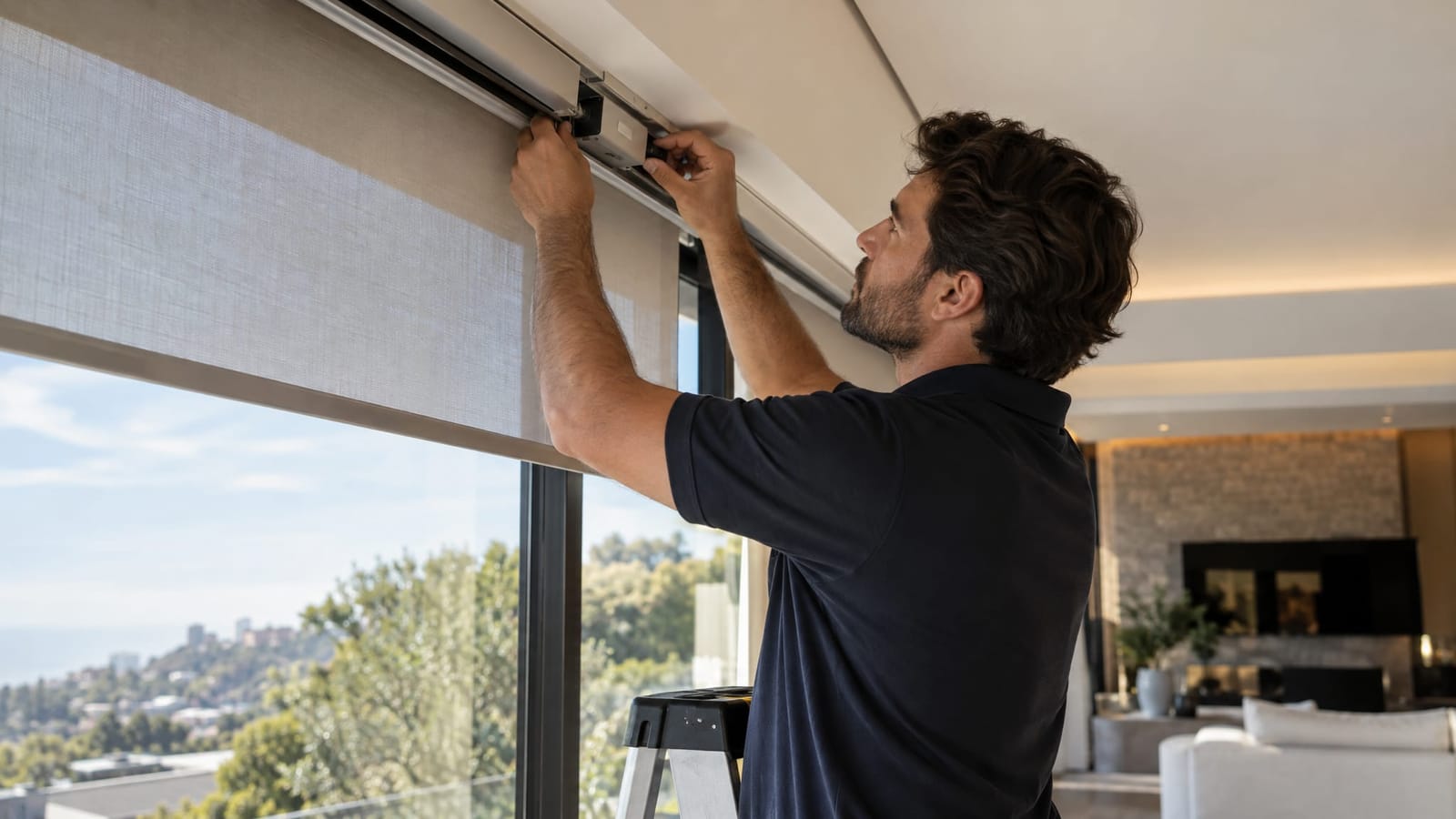
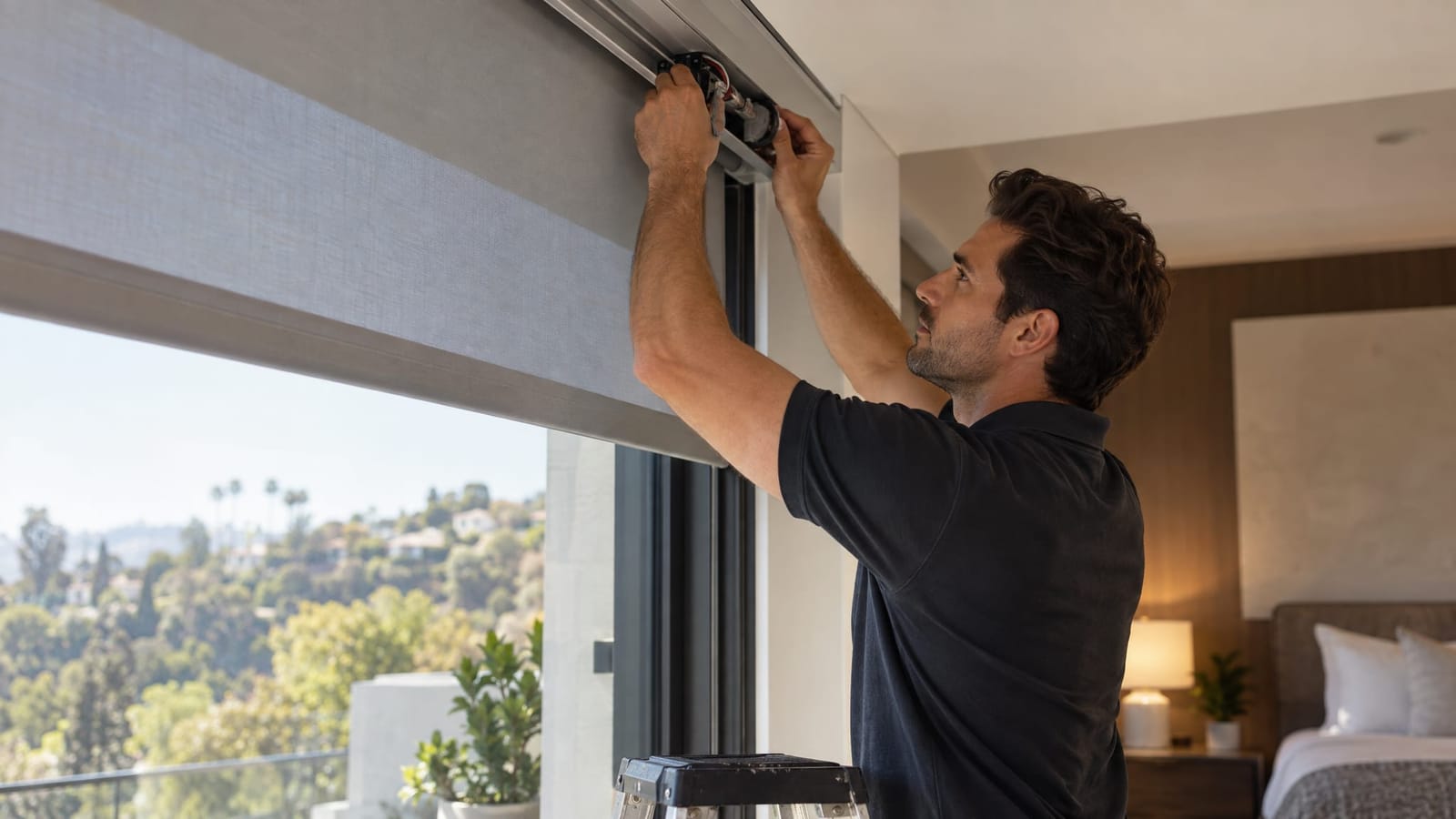
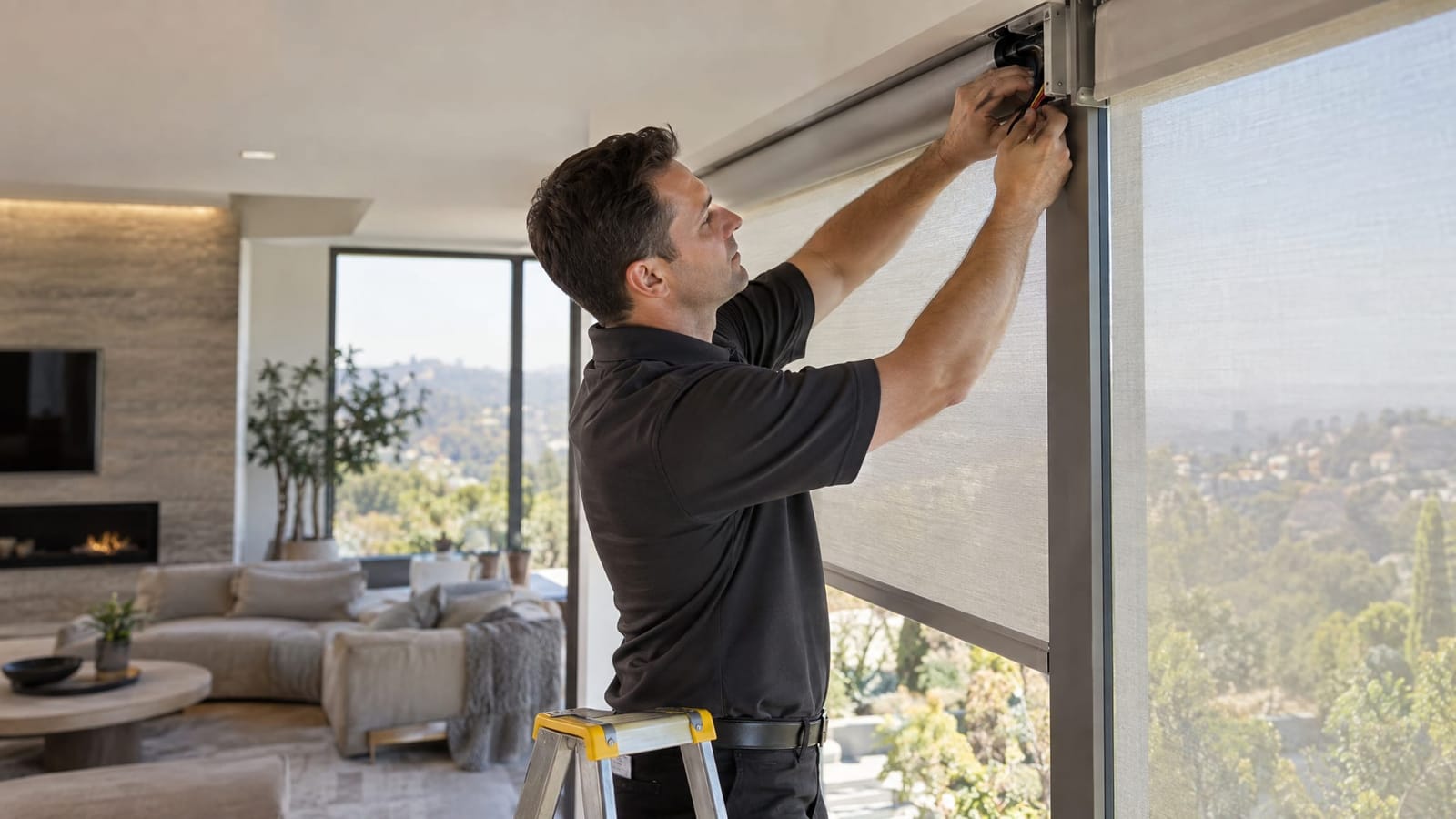
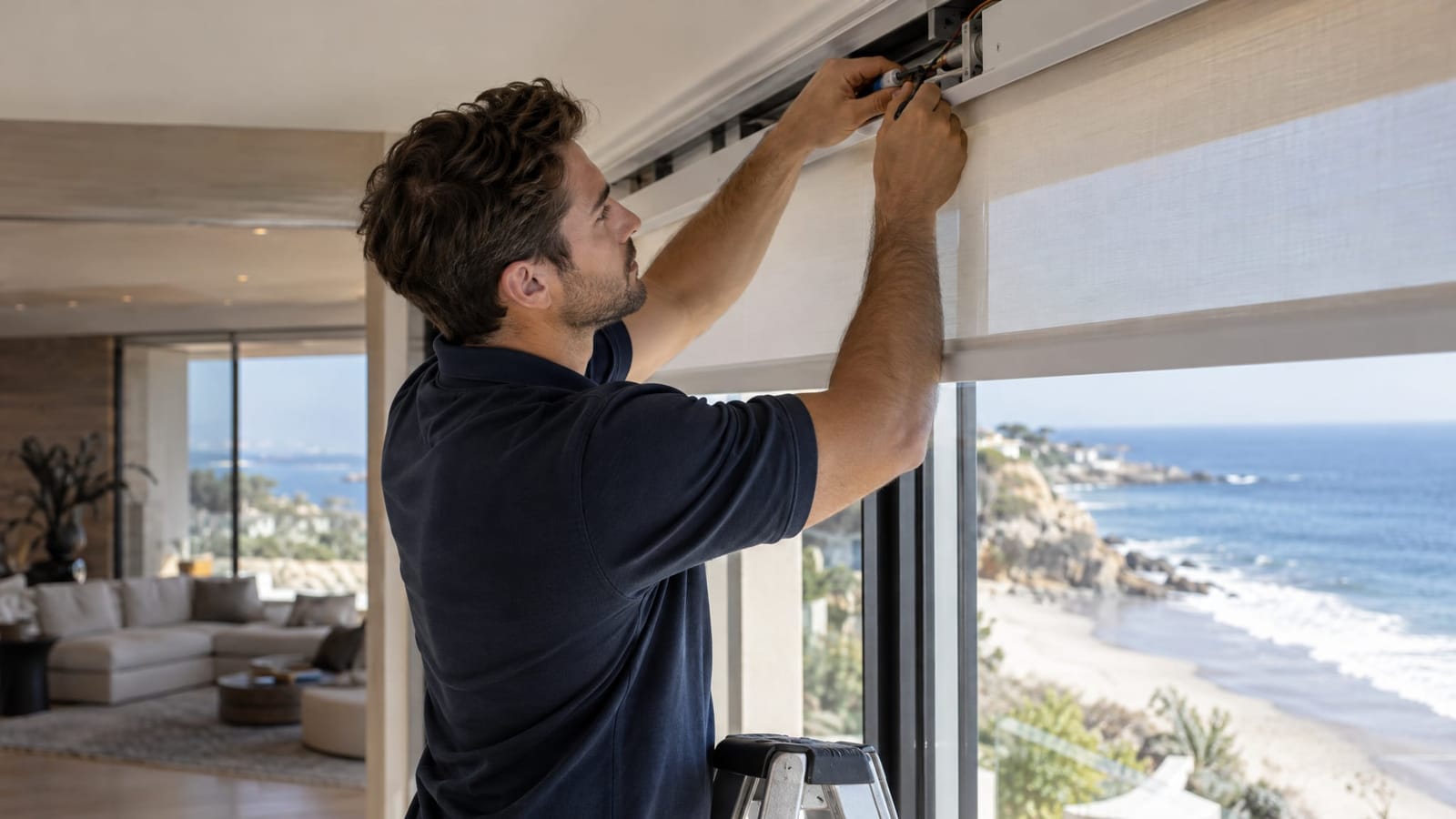
The main motorized shade options are roller, Roman, cellular, woven wood, layered sheer-and-blackout systems, and exterior solar shades. Roller shades favor clean architectural lines, Roman and woven wood shades introduce texture, and layered systems provide separate control over daylight and privacy.
The right choice depends on the window as much as the room: its orientation, surrounding finishes, available recess depth, and how much glass you want visible when the shade is open. These ten options include distinct shade styles, fabric configurations, and specialized applications, rather than ten entirely different mechanisms.
1. Light-Filtering Roller Shades for Minimalist Interiors
A light-filtering roller shade softens daylight while keeping the window treatment visually restrained. Its single fabric panel rolls into a compact housing, making it a natural fit for contemporary living rooms, kitchens, and open-plan spaces.
A recessed installation can conceal the roll, while an exposed window may need a coordinated cover. Fabric translucency matters: a softly illuminated shade is not necessarily opaque, so evaluate silhouettes and privacy with the room illuminated after dark.
2. Interior Solar Shades for View-Focused Rooms
Solar shades use an open-weave fabric to temper direct sunlight while retaining some outward visibility. They suit glass-lined living rooms, home offices, and dining areas where the view is part of the architecture.
Fabric openness describes how much open space exists in the weave. More open fabrics generally preserve more of the view; tighter weaves screen more light. Neither provides dependable nighttime privacy when the interior is brighter than outside. Bedrooms often need a separate opaque layer.
3. Blackout Roller Shades for Bedrooms and Media Rooms
Blackout fabric blocks light through the material, making it useful where room darkening takes priority. The important distinction is between blackout fabric and a fully darkened room: light can still enter around the sides, top, and bottom.
For a primary bedroom or dedicated theater, compare mounting positions, overlap, and side-channel options alongside the fabric. A concealed installation looks refined, but the surrounding detailing determines how effectively it manages perimeter light.
4. Motorized Roman Shades for Tailored Softness
Roman shades lift into folds, bringing the character of a textile furnishing rather than a flat architectural screen. They work particularly well in transitional interiors, formal dining rooms, and bedrooms with upholstered finishes.
The tradeoff is the fabric stack that remains when the shade is raised. On a window with a carefully framed view, account for that stack in the mounting height. Fabric weight, fold style, and lining also affect the shade’s finished appearance.
5. Cellular Shades for a Discreet Pleated Finish
Cellular, or honeycomb, shades contain pockets of air within their structure, adding an insulating layer at the window. Their regular pleats offer a different visual rhythm from the smooth surface of a roller shade.
They can suit bedrooms, studies, and secondary living spaces where privacy and a compact raised stack matter. Light-filtering and room-darkening versions serve different purposes. Compare pleat scale against the window proportions, particularly when several windows share one wall.
6. Woven Wood Shades for Coastal and Organic Interiors
Woven wood shades introduce materials such as bamboo, reeds, and grasses. Their texture complements limestone, oak, plaster, and relaxed coastal interiors without adding the volume of drapery.
An open weave can admit light and reveal silhouettes, so the liner is a functional decision, not merely a finishing detail. A liner adds opacity but changes the softly backlit appearance. Review the woven material and liner together against the room’s other finishes.
7. Independent Sheer-and-Blackout Shades for Flexible Rooms
A dual-roller arrangement places two independently controlled shades at the same opening. A sheer or solar layer manages daytime light, while a separate blackout layer provides greater opacity and room darkening.
This configuration is especially useful in primary suites and rooms that alternate between everyday living and movie viewing. Its main design tradeoff is space: two rolls need more room than one. Planning the recess early helps keep the assembly discreet.
8. Banded Sheer Shades for Adjustable Light and Privacy
Banded shades, sometimes called zebra shades, alternate sheer and opaque horizontal bands. Moving the fabric changes how those bands align, adjusting the balance between filtered light and coverage.
Unlike an independent sheer-and-blackout system, this is one layered treatment rather than two separately selected fabrics. It suits contemporary studies and sitting rooms where a visible horizontal pattern feels intentional. Closed bands do not automatically provide blackout performance, and their alignment deserves attention across adjacent windows.
9. Exterior Solar Shades for Patios and Covered Terraces
Exterior solar shades screen sunlight outside the glazing or along the open sides of a covered terrace. They are useful where low-angle sun interrupts an otherwise comfortable seating or dining area.
These are purpose-built exterior systems, not indoor rollers relocated outdoors. Compare mounting structure, fabric visibility, side guides, and operating limits for wind and weather. On coastal properties, exposure also belongs in the material-selection discussion. The housing and guides need coordination with the exterior architecture.
10. Motorized Skylight Shades for Overhead Glazing
Skylight shades address overhead daylight that ordinary vertical treatments cannot reach. They can soften light above stairwells, kitchens, and double-height spaces while leaving wall windows unobstructed.
Sloped and horizontal glazing require systems designed to support fabric in those positions. Match the treatment to the skylight’s dimensions and angle, then account for power and future service access. A standard vertical roller shade is not an interchangeable solution.
Questions That Help Narrow the Selection
Are hardwired or battery-powered shades better?
Hardwired shades suit new construction and substantial renovations because power can be planned before finishes are complete. Battery-powered options can simplify retrofits but introduce periodic charging or battery replacement. For high or difficult-to-reach windows, access for that maintenance becomes an important deciding factor.
Does every room need the same shade type?
No. Consistency can come from color, hardware finishes, and aligned mounting heights rather than identical treatments. A living room might use solar rollers while an adjoining bedroom uses dual shades. Across a shared elevation, the outward-facing appearance also deserves consideration.
Can motorized shades work with lighting scenes?
Yes, with compatible controls. At Smart Homes Innovations, based in Van Nuys, we integrate motorized shades with lighting control and tailor the system to the homeowner’s routines. A scene can coordinate the two while preserving individual adjustment when daylight or preferences change.
Choose the Function Before the Finish
Start each room’s selection with its light, view, privacy, and room-darkening requirements. Then compare fabric samples, mounting details, and the space occupied when the treatment is raised. That sequence keeps the result both practical and architectural: the shade serves the room without becoming its dominant feature.