Whole-Home Audio and Mental Wellness: How Sound Design Enhances Your Home Environment
Creating a truly healthy smart home means thinking beyond air purifiers and circadian lighting. Sound is one of the most powerful, and most overlooked, forces shaping how you feel inside your home. The music playing in your kitchen on a Tuesday morning, the ambient noise bleeding through your bedroom walls, the jarring silence of a poorly designed open floor plan, all of it affects your mood, focus, and stress levels in measurable ways. Whole home audio and mental wellness are more connected than most homeowners realize. This post explores how intentional sound design works, why it matters for your daily wellbeing, and how a professionally integrated whole-home audio system turns your Los Angeles residence into an environment that actively supports your mental and emotional health.
The Science Behind Sound and Emotional Health
Sound influences the brain on a physiological level. This is not opinion: it is well-documented in research on music therapy, cognitive performance, and stress response. When you hear certain types of music or ambient sound, your nervous system responds. Heart rate slows. Cortisol levels shift. Focus improves or degrades depending on what is playing.
The relationship between sound and mood operates through several pathways:
- Emotional memory: Music triggers the limbic system, the brain's emotional center. Familiar songs can shift mood within seconds.
- Rhythm entrainment: The brain naturally synchronizes with external rhythms. Slow, steady beats promote calm. Fast, erratic sounds create alertness or tension.
- Masking and stress reduction: Unwanted noise, traffic, neighbors, HVAC hum, elevates stress unconsciously. Intentional sound design masks these intrusions with something purposeful.
- Cognitive load: The wrong audio environment forces your brain to work harder to filter distractions. The right one reduces that burden entirely.
Understanding these mechanisms helps explain why whole home audio and mental wellness belong in the same conversation. Sound is not background decoration. It is an active participant in how your home makes you feel.
What Whole-Home Audio Actually Means for Wellness
Whole-home audio, sometimes called multi-room audio, allows music, podcasts, or soundscapes to play throughout your home. Each room can run independently or in sync with others. That technical capability is the starting point. The wellness application is what happens next.
Zone-Based Sound Programming
A well-integrated system divides your home into logical audio zones. The primary bedroom operates differently from the home gym. The kitchen has different needs than the library or home office. Zone-based programming means each space gets sound tailored to its purpose and the time of day.
In a luxury estate, this might look like:
- Soft classical or lo-fi ambient music fading up in the primary suite at 6:45 a.m.
- Upbeat curated playlists activating in the home gym as a workout session begins
- Nature soundscapes, rain, forest, ocean, playing in a reading room during afternoon hours
- Jazz or acoustic playlists transitioning through the main living spaces during dinner
- A calm, slow-tempo wind-down sequence beginning in the bedroom ninety minutes before a set sleep time
None of this requires manual input once programmed. The system responds to schedules, occupancy sensors, or one-touch scenes. For more on how these daily sequences are built, whole home audio routines wellness covers morning and evening programming in depth.
Sound Quality as a Wellness Factor
Audio quality matters more than most people expect. Low-fidelity speakers distort frequencies. Distorted frequencies are fatiguing to the brain. This is why background music in poorly designed spaces feels grating over time: the problem is often the speaker system, not the music itself.
High-quality in-ceiling, in-wall, and architectural speakers reproduce sound accurately. The result is audio that feels natural and effortless. Your nervous system does not have to work to interpret it. That ease is itself a wellness outcome.
Designing Sound Environments for Mental States
Intentional sound design means matching the audio environment to the mental state you want to support. This is not random playlist selection. It is a deliberate approach to programming your home's acoustic atmosphere throughout the day.
Morning: Activation Without Alarm
The way a morning begins shapes the entire day's emotional tone. Harsh alarms spike cortisol. Gradual audio transitions work with the body's natural waking process instead of against it.
A well-programmed morning audio scene might start with low-volume ambient or acoustic music fifteen to twenty minutes before the scheduled wake time. Volume increases gently. By the time the household is moving through the kitchen and preparing for the day, the audio environment is energizing but not overwhelming. This kind of gentle activation is one practical application where whole home audio and mental wellness intersect in daily life.
Daytime: Focus and Flow
Home offices have become permanent fixtures in Los Angeles luxury homes. The acoustic environment in a home office directly affects concentration and cognitive output.
Research into work performance consistently shows that moderate, non-lyrical background music or ambient soundscapes support sustained focus better than silence or unpredictable noise. A whole-home audio system can deliver exactly this: a consistent, calibrated acoustic environment that supports deep work without requiring headphones or manual adjustments.
Evening: Decompression and Rest Preparation
The transition from an active day to restful evening is where intentional sound design delivers some of its most significant mental wellness benefits. The audio environment can signal to the nervous system that the day is winding down.
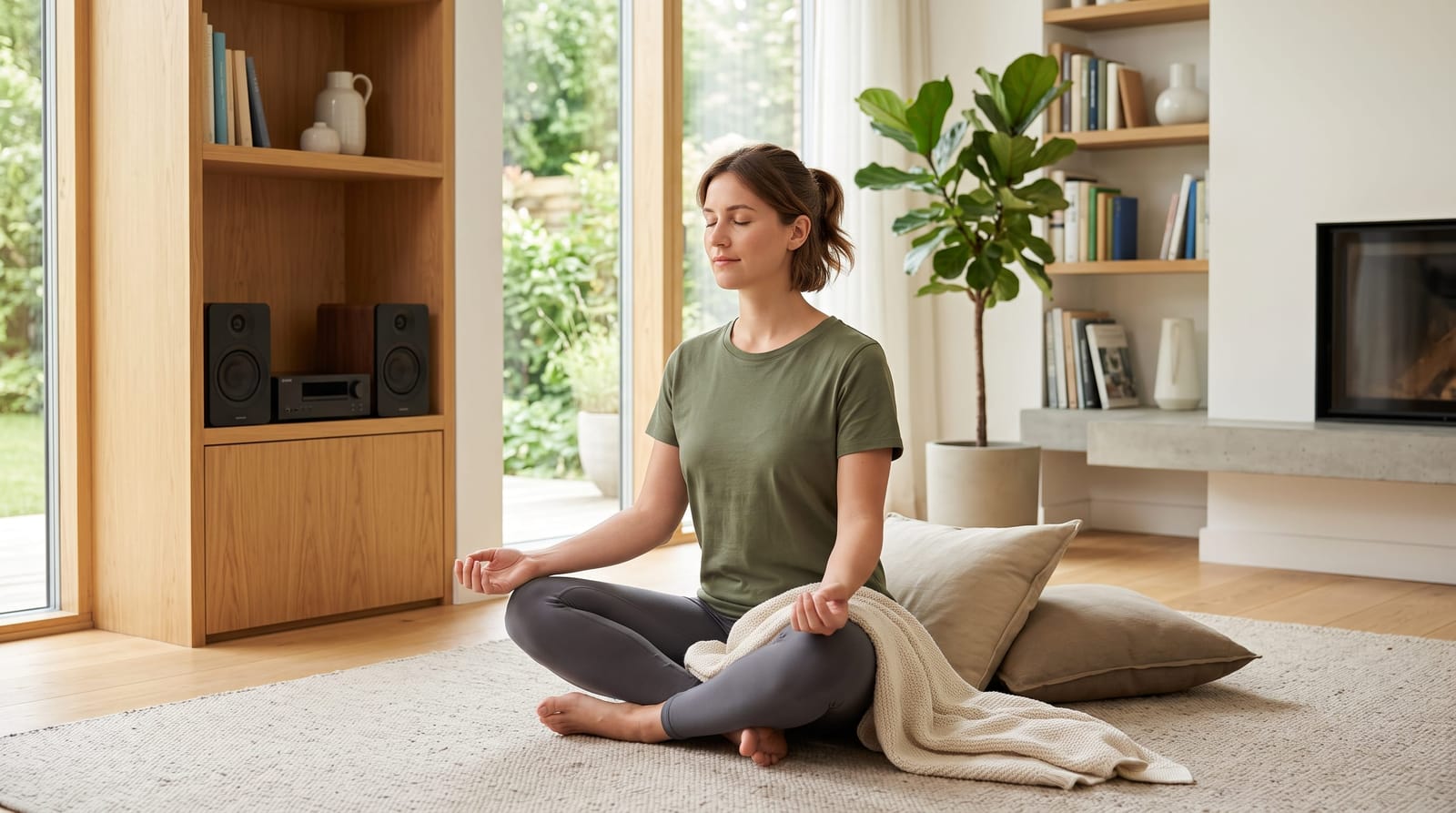
Slower tempos, softer dynamics, and nature-based soundscapes all support parasympathetic activation: the physiological state associated with rest and recovery. When the whole-home system shifts to this mode automatically, the home itself becomes a cue for relaxation.
How Professional Integration Makes the Difference
Consumer audio equipment can play music in multiple rooms. What separates a professionally integrated whole-home audio system from a collection of smart speakers is design, calibration, and control intelligence.
Acoustic Calibration for Each Room
Every room has a unique acoustic profile. Hard surfaces reflect sound. Soft furnishings absorb it. High ceilings create reverb. A professional integrator measures and calibrates speaker output for each room's specific characteristics. The result is accurate, fatigue-free sound that feels right in the space, not just loud enough to hear.
Unified Control and Automation
A professionally integrated system connects whole-home audio to the broader smart home ecosystem. Audio scenes can trigger alongside lighting, shading, and HVAC adjustments. A single "Good Morning" scene might raise the shades, shift lighting to a warm energizing tone, and begin a curated playlist, all simultaneously.
This kind of integration is exactly what we describe in our discussion of healthy smart home air quality light sound: the idea that light, air, and sound work together as a system, not as isolated features.
Custom Scene Programming
Wellness-focused audio scenes are built around the household's actual routines and preferences. This is not a one-size-fits-all configuration. A professional integrator learns how the family uses each space and what outcomes they want to support, then builds the programming to match.
Sound and the Broader Healthy Smart Home
Whole-home audio does not operate in isolation. It is one component of a broader approach to creating homes that support physical and mental wellbeing. The most effective luxury homes in Los Angeles layer multiple systems together.
Homeowners who are exploring healthy home technology Los Angeles luxury installations consistently find that audio is among the systems with the most immediate perceived impact on daily life. Unlike air quality improvements, which are real but invisible, intentional sound design is felt within minutes of activation.
Sound also interacts with stress in ways that connect directly to home automation. Reducing friction, decision fatigue, and manual management of the home environment lowers background stress levels. When whole-home audio operates automatically and intelligently, it removes one more cognitive demand from the household's daily load. This connects closely to the conversation around how smart home automation reduces stress large estate management for homeowners with complex properties.
What to Consider Before Installing Whole-Home Audio
If you are evaluating a whole-home audio installation with wellness outcomes in mind, a few considerations will shape the project significantly.
- Speaker placement and coverage: Wellness-focused audio depends on consistent, even sound distribution. Gaps in coverage or uneven volume create a disjointed experience that undermines the intent.
- Content curation: The system is only as effective as the playlists and soundscapes programmed into it. Work with an integrator who understands how to build wellness-oriented content libraries, not just technically functional ones.
- Integration depth: The greater the integration with lighting, shading, and climate control, the more powerful the wellness outcomes. Treat audio as part of a system, not a standalone feature.
- Scalability: Needs evolve. A well-designed system can be expanded, reprogrammed, and updated as the household's routines change.
For homeowners interested in how these morning and evening audio routines are specifically structured within a healthy home system, the detailed breakdown available through whole home audio routines wellness provides practical examples and programming logic.
Conclusion
Whole home audio and mental wellness represent one of the most accessible and immediately impactful intersections of smart home technology and daily health. Sound shapes how you feel in every room of your home, whether or not that sound is intentionally designed. Choosing to design it deliberately puts that influence to work for you rather than against you.
For luxury homeowners in Los Angeles who want their homes to actively support mental clarity, emotional balance, and genuine rest, a professionally integrated whole-home audio system is a foundational investment, not a luxury add-on. Contact Smart Homes Innovations to discuss how a custom sound design strategy can be built into your home environment.