Motorized Shades vs Manual Window Treatments: Which Fits a Luxury Home?
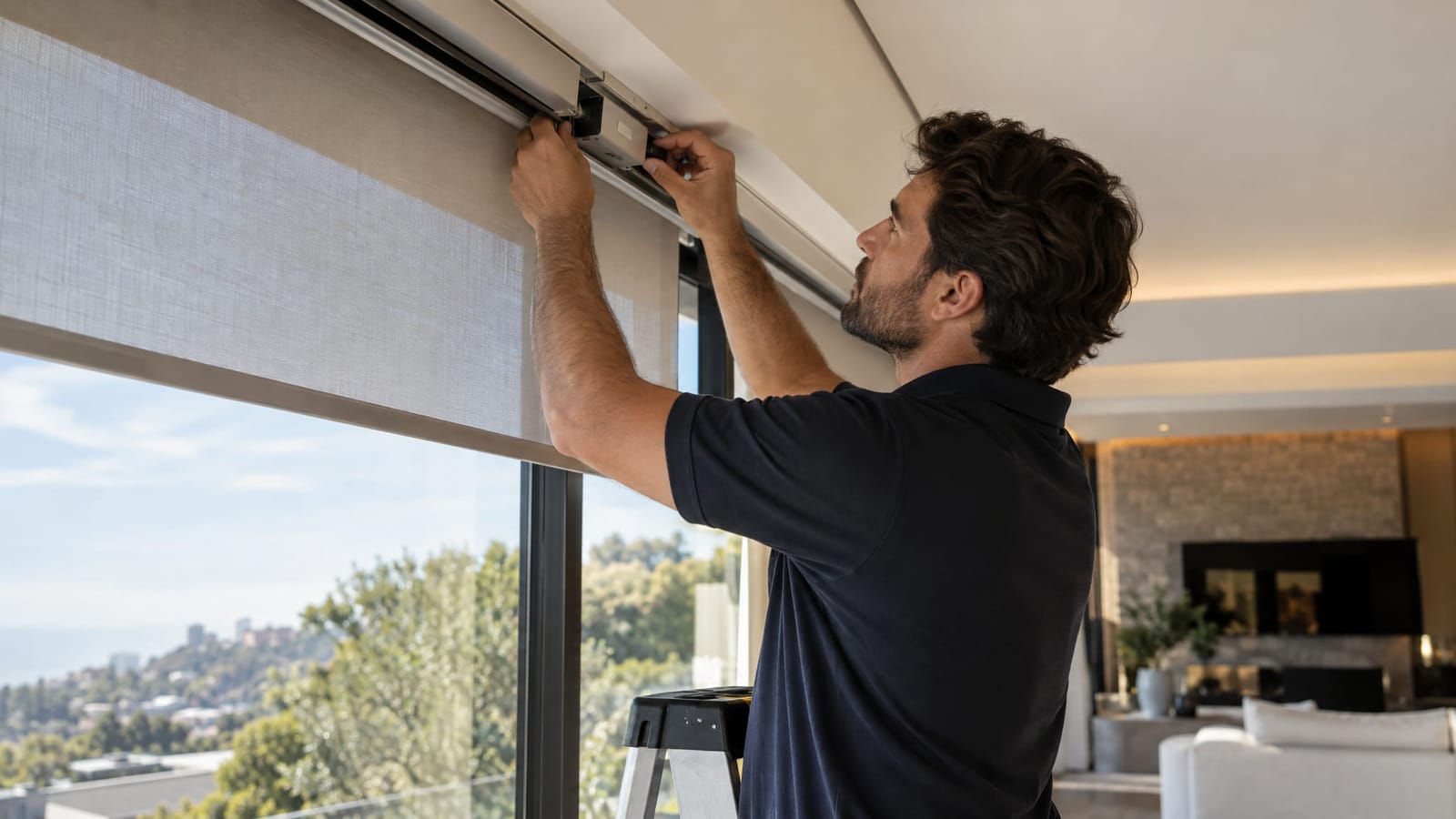
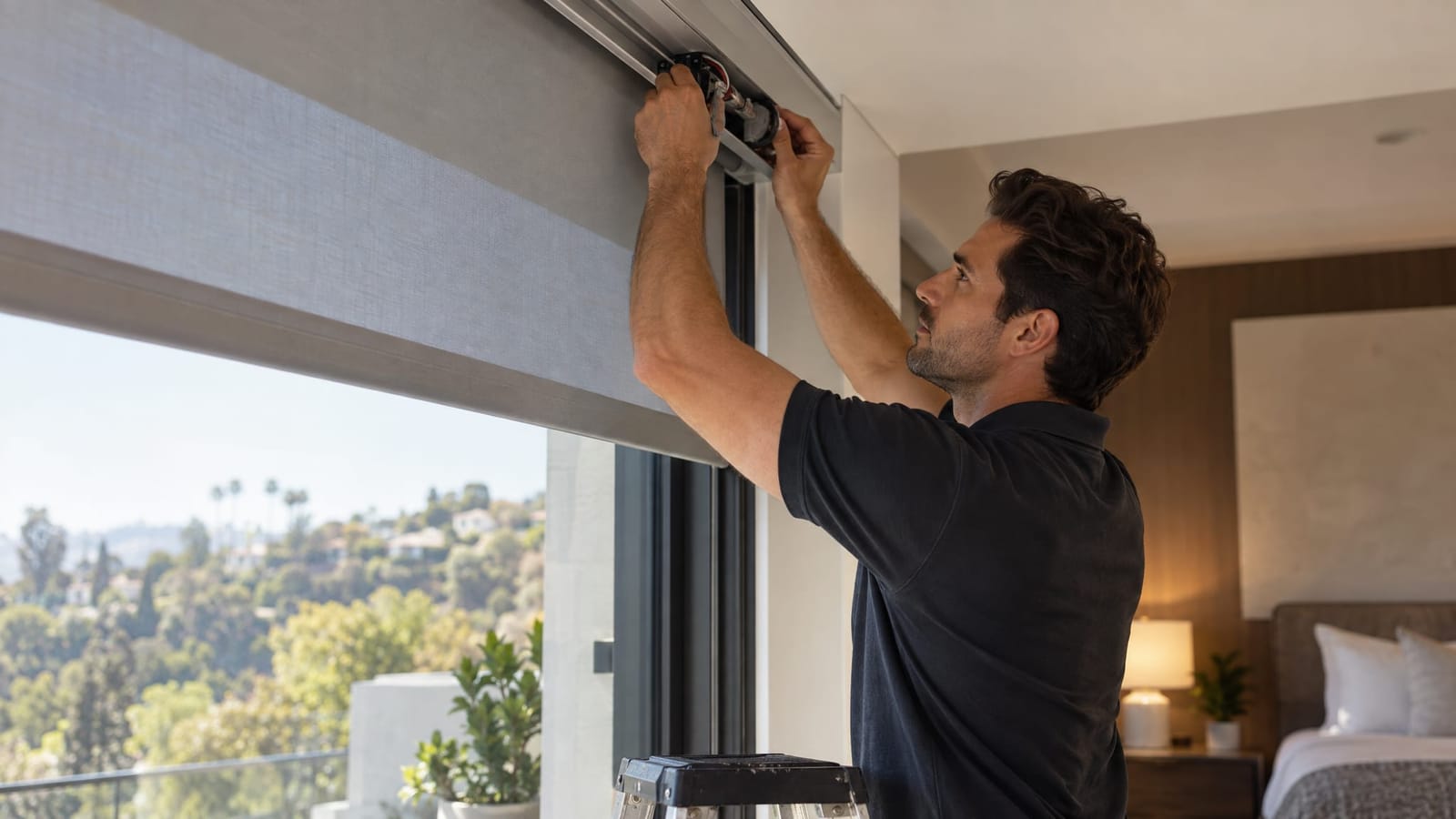
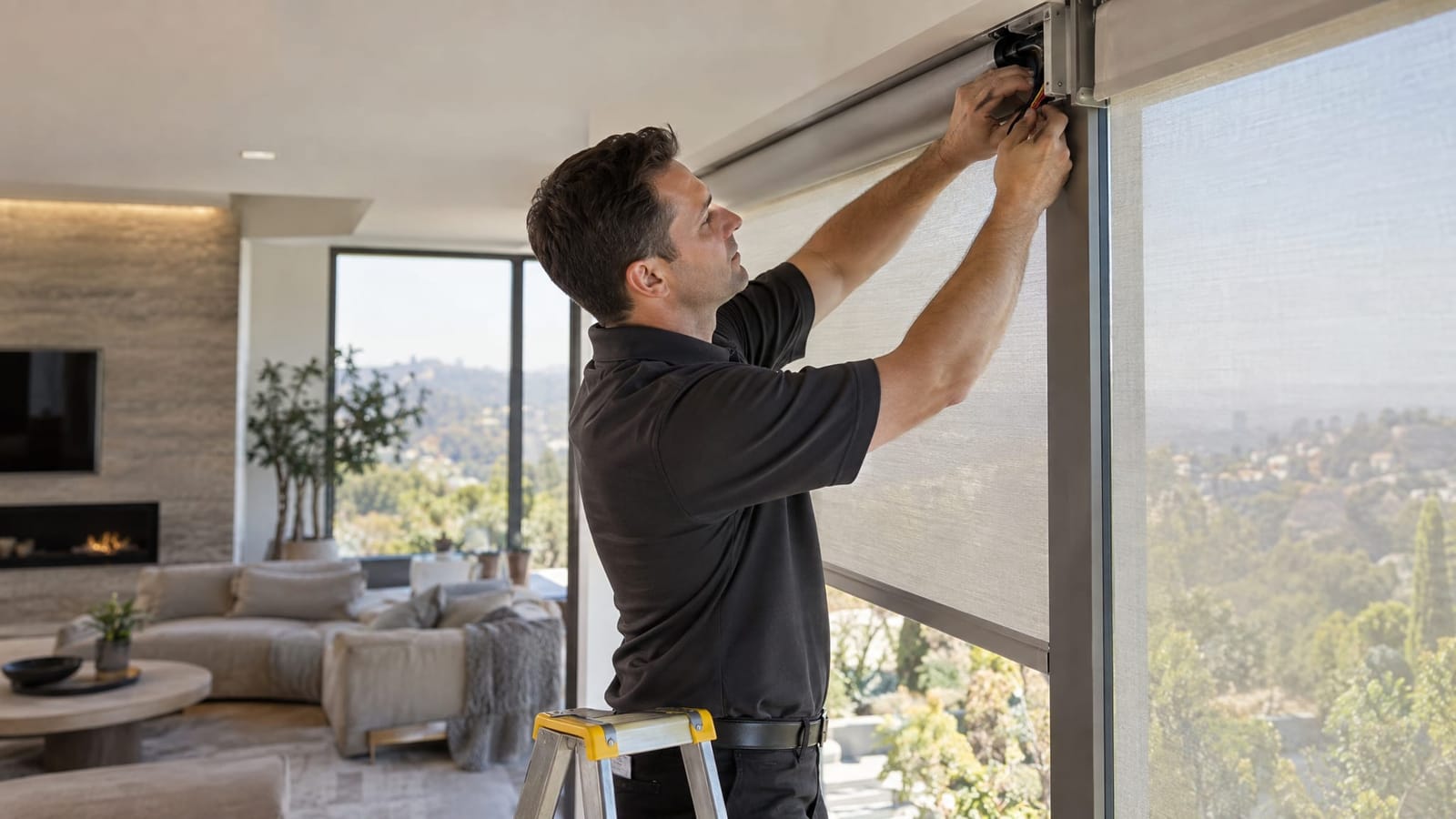
Motorized shades are most useful where window treatments need frequent adjustment, span multiple panes, or sit beyond comfortable reach. Manual treatments remain a sensible choice for accessible windows that rarely change position. In a luxury home, the decision is less about adding technology than making daylight and privacy easier to manage without compromising the architecture.
The distinction becomes especially important with floor-to-ceiling glass. Adjusting one shade is simple. Repeating that task across an open-plan living room, around furniture, and again as daylight changes can make beautifully specified window treatments inconvenient to use.
There is also an important comparison to make before considering cost: motorization describes how a treatment operates, not its style or fabric. A manual roller shade and a motorized roller shade can look nearly identical when stationary. Their differences emerge in daily operation, coordination, installation planning, and maintenance.
Motorized vs Manual: The Practical Differences
| Consideration | Motorized treatments | Manual treatments |
|---|---|---|
| Aesthetics | Can eliminate visible operating chains and support coordinated shade positions. | Can use equally refined fabrics and detailing, with operating hardware depending on the design. |
| Convenience | Useful for grouped windows, tall glazing, and frequent adjustments. | Straightforward for a small number of accessible windows. |
| Precision | Compatible systems can recall preset positions. | Positions are adjusted individually by hand. |
| Integration | Can coordinate with lighting and scheduled routines when specified for compatibility. | Operates independently of the home's control system. |
| Ownership | Adds power, controls, and servicing considerations. | Has fewer electronic components, but mechanisms and fabrics still require care. |
Aesthetics: Concealed Operation vs Simpler Installation
Both options can complement a carefully designed interior. Fabric texture, proportion, mounting position, and the relationship to the window frame often influence the finished appearance more than the operating method.
Motorization offers a visual advantage when it removes chains or cords from a prominent glass elevation. It can also make maintaining consistent shade positions across adjacent windows easier. But a motor alone does not create a discreet installation. The shade housing, power route, and access for future servicing all need a place in the design.
In new construction, planning these details alongside ceilings and millwork creates opportunities to conceal equipment. In a finished room, a neatly detailed exposed housing may be more appropriate than opening an otherwise complete ceiling simply to hide it.
Manual cordless treatments can also provide a restrained appearance where the operating rail is comfortably reachable. For a single study window, that may deliver the desired finish without powered operation.
Choose the treatment style before judging the value of automation. The types of motorized shades available for luxury homes offer different visual effects, stacking arrangements, and light-control characteristics.
Convenience: Managing a Room vs Adjusting Every Window
The strongest argument for motorization is often the layout, rather than the size of the home alone.
Consider a living and dining space with glazing behind a sofa, beside a dining table, and above a stair landing. Manual operation means reaching each treatment separately. Furniture placement can turn an easy adjustment into an awkward task, while a tall window may require an extended operating mechanism that becomes visually prominent.
Motorized operation allows compatible shades to work individually or as groups. A single command can adjust the living area's glazing without requiring every window in the open-plan space to move.
Group windows by how the space is used
One control for an entire floor can be too broad. More useful groups might separate:
- Living room glazing affected by afternoon glare.
- Dining windows where the view remains desirable during a meal.
- A glazed door that needs independent access.
- Upper windows that are difficult to reach.
For example, lowering the shades beside a television need not close off the garden view from the dining table. Thoughtful grouping makes that distinction easy.
Manual treatments are still practical where access is uncomplicated and adjustments are infrequent. A guest room shade used occasionally presents a different convenience calculation from a wall of glass in the main living space.
Precision: Repeatable Positions vs Adjustment by Eye
Motorized systems with position presets can return shades to selected stopping points. This is useful when partially lowered shades form a visible horizontal line across several windows, or when a particular position balances daylight with a seated view.
Manual treatments can achieve a similar arrangement, but each shade needs adjustment by eye. Across multiple windows, small differences become more noticeable.
Preset positioning is not the same as perfectly synchronized movement. Different shade sizes, motor specifications, and control arrangements can affect how shades travel. If uniform movement is important to the design, evaluate that feature separately from whether the shades share a control button.
Neither operating method changes the fabric's fundamental performance. Privacy, glare control, and room darkening depend on the material, coverage, and gaps around the treatment. A sheer fabric does not become a privacy fabric when motorized, and automation alone does not eliminate light around the edges.
Review samples in the actual room, including after dark when interior lighting changes visibility through the glazing.
Integration: Coordinated Scenes vs Independent Control
A motorized shade can operate from a dedicated remote without becoming part of a whole-home system. Integration adds another layer: compatible shades and lighting can respond together through a shared control or routine.
An Evening scene, for example, could lower selected shades and bring architectural lighting to chosen levels. A media-room setting could adjust window treatments alongside the room's lighting. These are useful relationships because they replace several separate actions with one intentional change.
At Smart Homes Innovations, we integrate motorized shades with lighting control and tailor systems to the homeowner's lifestyle, serving homes in Bel Air, Beverly Hills, Malibu, and other Los Angeles communities.
Keep everyday control direct
Automation works best when it does not make a simple adjustment dependent on finding a phone. A clearly labeled wall control or dedicated remote can provide a straightforward way to change a shade position or override a schedule.
Before choosing a system, define which functions matter: individual control, room groups, preset positions, timed operation, or lighting scenes. Compatibility needs to cover those specific functions, not merely the ability to connect devices.
Manual treatments offer a different benefit: operation remains independent of apps, network connections, and electronic controls. That simplicity can be valuable in rooms with modest requirements.
Cost: A Higher Initial Outlay vs Less Daily Friction
Compared with an otherwise equivalent manual treatment, motorization generally adds the cost of motors, power arrangements, and controls. Whole-home integration can also add design, programming, and commissioning work. The premium becomes easier to assess when the comparison separates the window treatment itself from its operating system.
Compare equivalent specifications
A useful proposal comparison keeps these elements consistent:
- Fabric and lining: Match the material and intended light-control performance.
- Coverage: Compare the same window dimensions and number of independently operated treatments.
- Architectural finish: Include comparable housings, recesses, side details, and finishing work.
- Power and controls: Identify the power method, local controls, integration, and setup included.
- Ongoing care: Distinguish installation support, manufacturer warranty coverage, and later servicing.
Comparing a custom recessed motorized shade with a basic surface-mounted manual blind does not isolate the cost of automation. It compares two different finish levels as well.
The lifestyle value is strongest when motorization removes a recurring inconvenience. A frequently adjusted wall of glass offers more opportunities to benefit than a small window whose shade stays in one position.
A selective approach can preserve that value. Prioritize difficult-to-reach glazing and heavily used rooms, then consider manual operation where it remains easy. This treats automation as a design decision, not an all-or-nothing upgrade or a promise of financial return.
Longevity: Fewer Components vs Planned Serviceability
Manual treatments have fewer electronic components, but they are not maintenance-free. Fabrics, lift mechanisms, cords, chains, and mounting hardware can all need attention. Motorized treatments add motors, power supplies or batteries, and controls to the ownership picture.
Neither operating method alone determines useful life. Construction quality, appropriate sizing, frequency of use, and access for repairs all matter.
Choose power with future access in mind
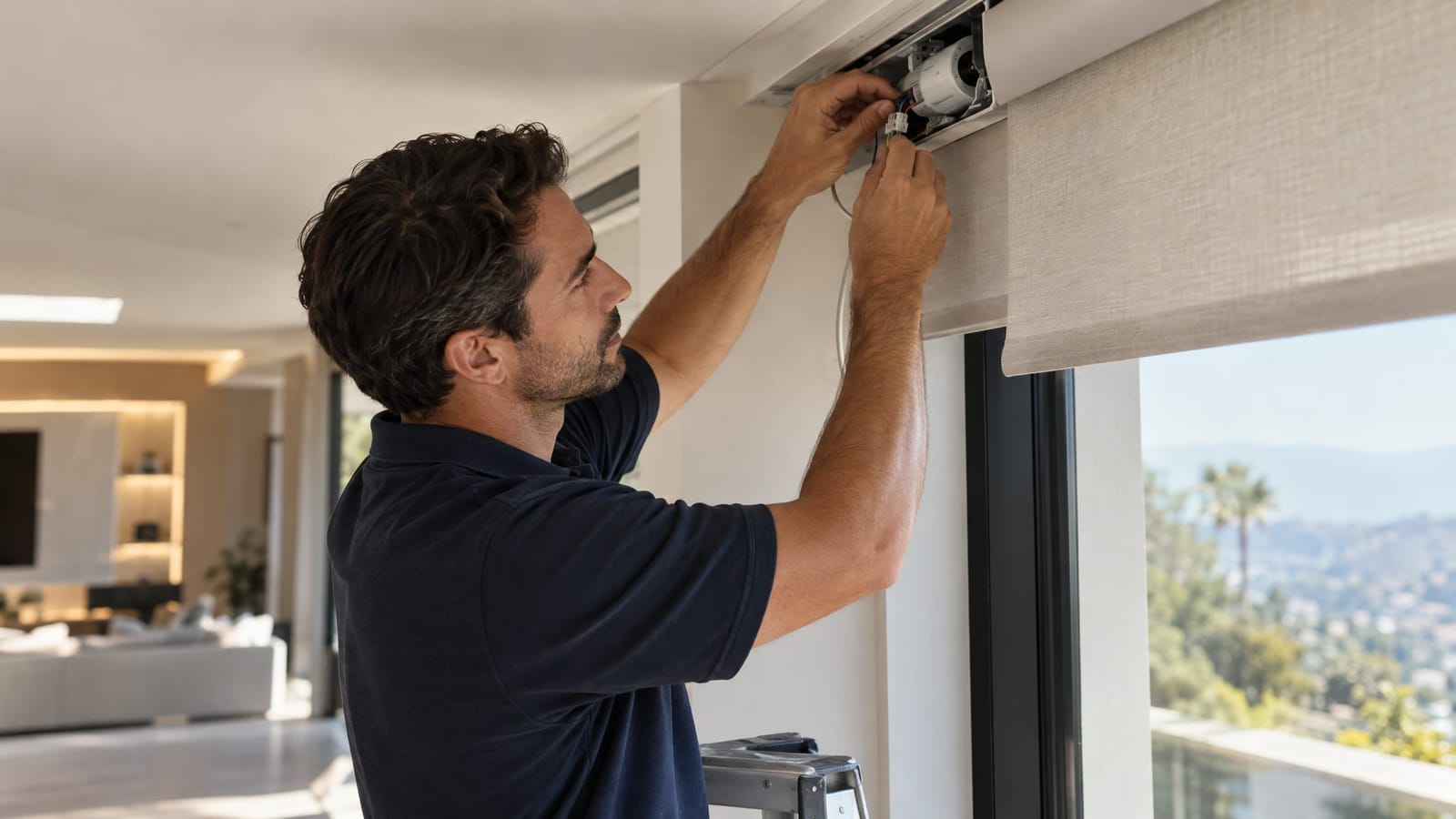
Battery-powered options can avoid routing power wiring to each window, which may suit finished interiors. Their tradeoff is periodic charging or battery replacement. That task deserves particular attention for high windows, where difficult access was the original reason for choosing automation.
Hardwired power avoids routine battery charging at the shade, but requires a planned power route and accessible supporting equipment. Concealing everything permanently behind finished surfaces can make later service unnecessarily disruptive.
Evaluate sound as part of the experience
Motorization introduces operating sound that manual treatments do not produce in the same way. It may be more noticeable in a quiet bedroom than in a busy living area. Compare the proposed treatment in operation, paying attention to starting, travel, and stopping rather than relying on the word “quiet.” Our explanation of how quiet motorized shades are explores what to consider.
For long-term ownership, clarify how the motor, power components, and controls can be serviced separately from the decorative treatment. Ease of maintenance is part of discreet design.
The Better Choice May Be Different in Every Room
Motorized shades are the stronger fit when several conditions overlap: frequent adjustments, multiple windows, difficult access, a desire for repeatable positions, and a useful connection to lighting scenes.
Manual treatments remain compelling where there are few windows, access is comfortable, and independent operation meets the room's needs. They can deliver the same carefully chosen fabric and architectural finish without adding powered controls.
Walk through the floor plan and note three things for each window: how often its treatment changes, how easily it can be reached, and whether it needs to move with other shades. Those answers reveal where automation will meaningfully improve daily use.
For a luxury home, the most considered solution is not necessarily motorization everywhere. It is the right operating method at each window, supported by coherent materials, well-resolved detailing, and controls that feel natural to use.